Tucked away in the quiet folds of the Garhwal Himalayas, Chakrata remains one of Uttarakhand’s best-kept secrets. While Mussoorie and Nainital draw crowds by the thousands, this small cantonment town continues to guard its charm with dense deodar forests, misty ridgelines, and a waterfall so striking that it deserves far more attention than it currently receives — Tiger Falls. Standing at roughly 312 feet, Tiger Falls is one of the tallest waterfalls in Uttarakhand, yet it remains blissfully untouched by mass tourism. For travelers seeking silence, unspoiled nature, and a sense of discovery, this cascading giant in the hills is nothing short of a paradise.
Where Is Tiger Falls Located?
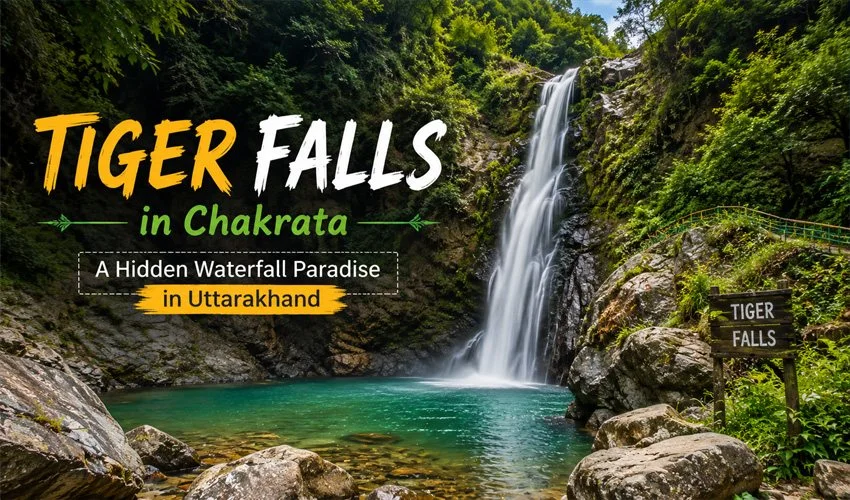
Tiger Falls lies near the village of Deoban, about 6 kilometers from Chakrata town in the Dehradun district of Uttarakhand. The falls get their name not from any resident big cats, but from the shape and roar of the water as it plunges down a sheer rocky cliff, evoking the image of a tiger leaping into the gorge below. The region falls within a restricted military zone, since Chakrata houses a significant Indian Army cantonment, which is precisely why this pocket of the Himalayas has stayed so pristine. Limited access has kept large-scale commercial development away, preserving the raw, untamed beauty of the landscape.
The Journey to the Falls
Reaching Tiger Falls is an adventure in itself. From Chakrata, a motorable road takes visitors partway toward the site, after which a trek of about 1.5 to 2 kilometers through dense pine and oak forest leads to the base of the waterfall. The trail is not particularly difficult, but it does involve a fairly steep descent, which means the return climb can be tiring for those unaccustomed to hill walks. Wooden and stone steps have been built along parts of the path to assist trekkers, and local guides are often available near the starting point for those who prefer company or additional safety on the way down.
The trek itself is a reward. Sunlight filters through a canopy of tall trees, birdsong replaces traffic noise, and the air carries the earthy scent of a Himalayan forest untouched by pollution. As you get closer, the distant rumble of falling water grows louder, building anticipation until the forest opens up to reveal the waterfall in its full glory.
The Waterfall Experience
Tiger Falls cascades down in a single dramatic drop, crashing into a rocky pool at the base that has, over centuries, been carved smooth by the constant flow of water. The scale of the fall is genuinely impressive — mist rises off the pool and drifts across the gorge, cooling the surrounding air even on a warm day. During the monsoon and immediately after, the falls swell with volume and roar down with tremendous force, making for a spectacular sight, though swimming is strongly discouraged during this period due to the strength of the current.
In contrast, during the drier months of autumn and winter, the flow softens into a more gentle, photogenic stream, and the pool at the base becomes calmer and safer for a quick dip for those brave enough to handle the chill of Himalayan water. Many visitors choose to simply sit on the rocks, have a packed lunch, and soak in the sound of the falls rather than enter the water at all.
Best Time to Visit
The ideal time to visit Tiger Falls is between March and June, when the weather is pleasant, the trail is dry, and the waterfall still carries a healthy flow from the winter snowmelt. September to November is another excellent window, offering clear skies, crisp mountain air, and vibrant forest colors as autumn sets in.
The monsoon months of July and August bring the waterfall to its most powerful and visually dramatic state, but the trekking path becomes slippery and risky, and heavy rainfall can make the region prone to landslides. Winter, from December to February, transforms Chakrata into a quiet, cold retreat, occasionally dusted with snow at higher elevations, though the trek to the falls can be chilly and the water flow reduces significantly.
Beyond the Falls: Exploring Chakrata
A trip to Tiger Falls is often paired with a broader exploration of Chakrata and its surrounding attractions, since the town itself offers a handful of scenic spots worth a visit.
- Deoban is a forested ridge near the falls known for its panoramic views of snow-capped peaks, including glimpses of the Bandarpoonch and Swargarohini ranges on a clear day. It is a favorite spot for photographers and nature lovers who want uninterrupted vistas without the crowds.
- Chirmiri Peak, one of the highest points in the region, offers another vantage point for admiring the Himalayan skyline, along with a small temple that draws local pilgrims.
- Budher Caves, a set of natural limestone caves near Chakrata, are steeped in local legend and folklore, adding a layer of mystery to the region’s already atmospheric charm.
- Kanasar, a dense forest area with towering deodar trees, is ideal for those who enjoy quiet nature walks away from any tourist infrastructure.
Together, these spots make Chakrata a compact but rewarding destination for a two- to three-day getaway, with Tiger Falls typically serving as the highlight of the trip.
Permits and Practical Information
Because Chakrata falls under a protected cantonment area, Indian tourists need to obtain an entry permit, which is usually issued free of cost at the check post near Chakrata after showing a valid ID proof. Foreign nationals currently require special permission and are generally not permitted to visit without prior clearance, so it’s worth checking the latest regulations before planning a trip if you’re traveling from abroad. Carrying a government-issued photo ID is essential for every visitor, regardless of nationality, as verification checks are common along the route.
There is no entry fee for Tiger Falls itself, but visitors should be prepared to pay a small guide fee if they choose to hire local assistance for the trek. Basic tea stalls and small eateries are available near the trailhead, though it’s wise to carry sufficient water and snacks, since options thin out quickly once you’re on the forest path.
Tips for Visitors
Wear sturdy trekking shoes with good grip, as the trail includes uneven stone steps and can be slippery, especially if there has been recent rain. Start the trek early in the day to avoid the afternoon heat and to allow enough daylight for both the descent and the climb back up. Carry a reusable water bottle and pack out any trash, since the area’s pristine condition depends entirely on visitors treating it with respect. Mobile network connectivity is patchy to nonexistent near the falls, so inform someone of your plans in advance and download offline maps if needed. Photography enthusiasts should aim to visit in the early morning when the light filters through the canopy at a lower angle, casting a golden glow across the mist rising from the falls.
Where to Stay
Chakrata town offers a limited but adequate range of accommodation, from small guesthouses and homestays to a few forest rest houses managed by the state tourism department. Staying in Chakrata rather than commuting from Dehradun or Mussoorie is recommended, since it allows for an early start to the trek and more time to explore the surrounding viewpoints without rushing back before dark.
Conclusion
Tiger Falls in Chakrata represents everything that makes the lesser-known corners of Uttarakhand so compelling: a dramatic natural feature reached through genuine effort, surrounded by forests that feel untouched by time, and a sense of solitude that has all but disappeared from India’s more popular hill stations. For travelers willing to trade convenience for authenticity, this hidden waterfall offers a rare, unhurried encounter with the raw power and quiet beauty of the Himalayas — a paradise that rewards those who make the journey to find it.