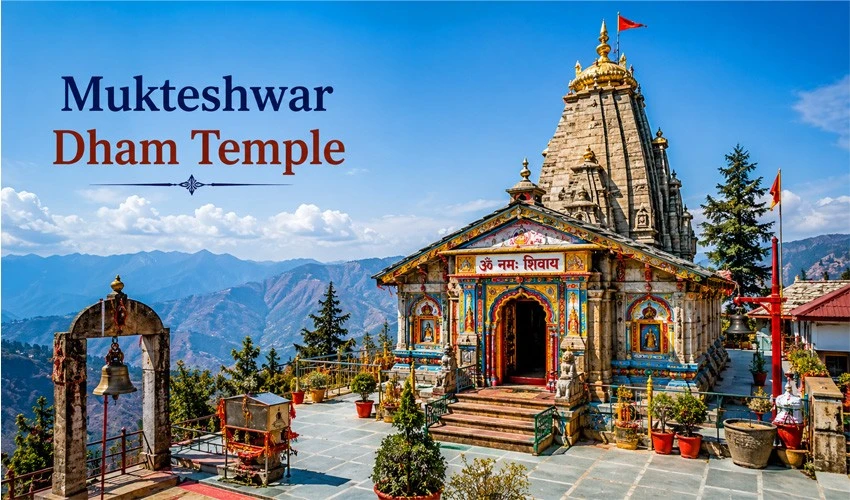
Tucked away in the Kumaon hills of Uttarakhand, Mukteshwar Dham Temple is one of those rare places that manages to be both a spiritual sanctuary and a nature lover’s paradise at the same time. Perched at an elevation of roughly 2,312 meters above sea level, this centuries-old shrine dedicated to Lord Shiva offers pilgrims and travelers alike a chance to soak in panoramic Himalayan views while connecting with a deeply rooted local legend. Unlike the more crowded hill stations of Uttarakhand, Mukteshwar retains an unhurried, almost untouched charm, making it an ideal escape for anyone craving quiet mountain air, apple orchards, and a slower pace of life.
The Story Behind the Temple
Mukteshwar Dham is believed to be around 350 years old, and the small town that surrounds it actually takes its name from the shrine itself. Local legend holds that the temple was built by the Pandavas during their period of exile, as devoted followers of Lord Shiva seeking mukti, or liberation, from their hardships. Another popular tale connects the site to a mythological episode in which Lord Shiva defeated a demon at this very spot, granting the demon salvation. Because of this association with liberation, some devotees consider Mukteshwar to be among the more spiritually significant Shiva shrines in the region.
Inside the temple, the presiding deity is a white marble Shiva Linga paired with a copper yoni, and the sanctum also houses idols of Goddess Parvati, Lord Brahma, and Lord Vishnu. The temple can be reached by climbing a stone stairway that leads up the hill, and the modest scale of the shrine only adds to its peaceful, meditative atmosphere. Many visitors describe simply sitting near the temple courtyard, gazing at the mountains, as one of the most calming parts of their trip.
Why the Views Matter So Much Here
What truly sets Mukteshwar Dham apart from countless other hill temples is the vantage point it offers. On a clear day, visitors can see an impressive stretch of snow-capped Himalayan peaks, including Nanda Devi, Nanda Kot, Nanda Ghunti, and Trishul. Nanda Devi, in particular, holds the distinction of being India’s second-highest mountain, and spotting it from the temple grounds is often the highlight of the visit. Sunrise and sunset here have a character of their own, with the light playing across the ridgelines in a way that photographers and casual travelers both find hard to stop watching.
Top Attractions Around Mukteshwar Dham Temple
While the temple itself is the anchor of any visit, Mukteshwar as a whole has plenty to keep travelers occupied for a day or two.
- Chauli Ki Jali: Just a short walk from the temple lies this dramatic rock formation, a hanging cliff that offers some of the most striking Himalayan panoramas in the area. It has also become popular with adventure enthusiasts, since the cliff face is regularly used for rock climbing and rappelling. Even for those who aren’t interested in the adventure sports, the viewpoint alone is worth the short hike.
- Indian Veterinary Research Institute (IVRI): Mukteshwar is home to a well-known veterinary research institute with a long history in the field of animal science. The campus occasionally welcomes visitors interested in its work and setting, and its colonial-era buildings add a touch of old-world charm to the town.
- Apple Orchards and Meadows: The slopes around Mukteshwar are dotted with terraced apple orchards, along with potato fields cut into the hillside using traditional irrigation methods. Wandering through these orchards, especially when the trees are in bloom or laden with fruit, is a simple pleasure that captures the rural character of the region.
- Dhokaney and Bhalu Gaad Waterfalls: For travelers willing to trek a little further, these waterfalls near Mukteshwar reward the effort with secluded, scenic spots away from the main tourist trail.
- Nearby Hill Stations and Lakes: Many visitors combine their Mukteshwar trip with stops at Nainital’s Naini Lake, Kainchi Dham, Ramgarh, and Khurpatal, all of which are within a comfortable driving distance and pair well with the quieter appeal of Mukteshwar itself.
How to Reach Mukteshwar Dham Temple
Mukteshwar is well connected by road, though it is not directly accessible by rail or air. The nearest major town, Nainital, is about 50 kilometers away, while Haldwani, which has both a railway station and better bus connectivity, sits roughly 62 to 72 kilometers from Mukteshwar. From Delhi, the journey covers approximately 340 to 350 kilometers and is typically done by private car, taxi, or a combination of train travel to Kathgodam followed by a road trip.
The drive up to the temple itself is part of the experience. Winding mountain roads cut through dense forest cover, opening up every so often to reveal sweeping valley views. Whether traveling by car or motorbike, most visitors find the journey genuinely enjoyable rather than just a means to an end, thanks to the fresh air and constantly shifting scenery.
Best Time to Visit
Summer, roughly from March through June, is generally considered the most comfortable time to visit Mukteshwar, offering pleasant daytime temperatures and clear mountain views. Monsoon season, which typically runs from July to September, brings heavier rainfall and occasional landslides, so travel during this period requires extra caution. Winters can bring snowfall, occasionally as early as December or January, transforming the town into a quiet, frosty retreat for those who enjoy colder weather and don’t mind limited accessibility on some routes.
Practical Travel Tips
- Timings: The temple is generally open from early morning until early evening, so plan to arrive well before sunset to enjoy both the darshan and the views in good light.
- What to wear: Since the temple sits at altitude, temperatures can be noticeably cooler than in the plains even during summer. Carrying a light jacket, regardless of season, is a smart move.
- Footwear: The final approach to the temple involves a stone stairway, so comfortable, sturdy footwear makes the climb easier.
Photography: Early morning is usually the best window for photographing the Himalayan range, before haze or clouds roll in later in the day. - Stay options: Mukteshwar has a range of accommodations, from cozy homestays and guesthouses to resorts with orchard views, making it easy to extend a day trip into an overnight stay.
- Respect local customs: As with any active place of worship, it’s courteous to dress modestly and maintain a quiet demeanor within the temple premises.
- Combine your trip: Given its proximity to Nainital and other Kumaon hill towns, Mukteshwar works well as part of a broader Uttarakhand itinerary rather than a standalone destination.
Final Thoughts
Mukteshwar Dham Temple offers something increasingly rare in Indian hill tourism: a genuinely peaceful, uncrowded setting paired with serious spiritual and scenic significance. Whether the draw is the centuries-old legend of the Pandavas, the chance to spot Nanda Devi on a clear morning, or simply a break from the noise of more popular hill stations, Mukteshwar rewards those who make the journey with a quieter, more reflective kind of mountain experience.