“Kanha does not merely display nature; it envelopes you in a living, breathing realm of ancient Sal forests, vast golden meadows, and the timeless call of the wild.”
When you step into Kanha Tiger Reserve, you are not simply entering a forest—you are stepping into one of India’s oldest, most storied wildlife sanctuaries. Spread across the Maikal range of the Satpudas in Madhya Pradesh, Kanha is celebrated globally not only as a premier tiger habitat, but as a shining symbol of wildlife conservation.
Whether you are a seasoned photographer or planning your very first wilderness adventure, this complete guide will help you navigate the enchanted landscapes of Kanha.
The Soul of Kanha: History & Legend
Long before Kanha became a world-renowned national park in 1955 and an original constituent of Project Tiger in 1973, this vast swath of Central India was inhabited by the indigenous Gond and Baiga tribes. These forest-dwelling communities lived in deep harmony with the jungle, reading its subtle whispers long before modern tracking techniques existed.
Kanha’s conservation story is iconic. In the late 19th and early 20th centuries, large parts of these forests were reserved for timber and game hunting. However, foresighted naturalists recognized the urgent need to protect its fragile ecology. Kanha was created as a sanctuary in 1933, upgraded to a National Park in 1955, and later expanded into one of India’s largest tiger reserves
[1933: Sanctuary Created] ──> [1955: National Park Status] ──> [1973: Project Tiger Launch]
The Miracle of the Hard-Ground Barasingha
While the Bengal Tiger commands headline attention, Kanha’s true crown jewel is the Hard-Ground Swamp Deer (Rucervus duvaucelii branderi), locally known as the Barasingha (meaning “12-tined deer”).

The Brink of Extinction: By 1970, severe habitat loss and poaching had reduced the global population of this unique subspecies to fewer than 66 individuals, all restricted to Kanha.
The Comeback Story: Through an unprecedented conservation effort involving predator-proof enclosures, habitat restoration, and meticulous breeding, field biologists and park authorities saved the species.
Where They Stand Today: Today, over 800 hard-ground Barasingha roam the lush meadows of Kanha. Watching a majestic stag with antlers adorned in meadow grass against a misty morning sunrise is an experience unique to this landscape.
Understanding Kanha’s Safari Zones
Kanha is divided into four primary core safari zones, each offering distinct topographies and wildlife dynamics:
| Safari Zone | Landscape Highlight | Key Wildlife & Sighting Highlights |
| Kanha Core | Expansive open meadows, historical park history | High tiger density, iconic Barasingha herds, dense Sal groves |
| Mukki Core | Bamboo thickets, gentle rolling hills, riverbed trails | Exceptional tiger sightings, wild dogs (Dhole), Indian Gaur |
| Kisli Core | Towering Sal forests, dramatic ravines | Leopards, sloth bears, vibrant birdlife |
| Sarhi Core | Dry deciduous forests, scrubland, open terrain | Great for ungulates, blue bull (Nilgai), and elusive big cats |
Where to Stay: The Safari Lodge, Kanha
To truly absorb the rhythm of the forest, your choice of stay matters immensely. The Safari Lodge, Kanha by Safari Lodges India offers an intimate, eco-conscious sanctuary nestled right at the edge of the wilderness.

Why Stay at The Safari Lodge, Kanha?
- Unmatched Privacy: Spread across 15 acres of natural forest, the property houses just 15 handcrafted accommodations (including Premier Cottages, Grand Chalets, and Private Pool Chalets), ensuring total tranquility.
- Convenient Access: Located strategically with effortless access to Mukki, Kisli, and Kanha core zones.
- Farm-to-Plate Culinary Journey: Savor fresh, organic meals sourced directly from the lodge’s expansive kitchen garden.
- Immersive Nature Experiences: Beyond jeep safaris, indulge in sleepouts on the “Star Bed” under open forest skies, guided nature walking safaris, and tranquil forest cycling trails.
Essential Travel Information for First-Timers
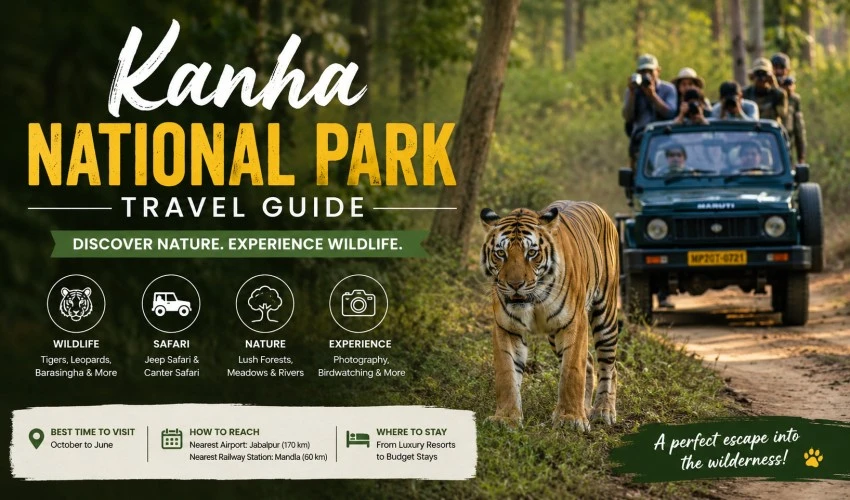
Best Time to Visit
- October to October/November (Post-Monsoon): Lush green forest, crisp air, vibrant birdlife.
- December to February (Winter): Chilly mornings, misty meadows, dramatic photographic lighting.
- March to June (Summer): Warm temperatures, but prime tiger sightings around remaining waterholes.
How to Reach
- By Air: Jabalpur Airport (160 km / ~3.5 hours) or Raipur Airport (220 km / ~4.5 hours).
- By Train: Gondia Railway Station (120 km) or Jabalpur Railway Station (160 km).
First-Timer Safari Tips
- Book Safaris Early: Core zone permits open 120 days in advance on the official MP Tourism portal and fill up rapidly.
- Layer Up: Winter morning safaris can be bitterly cold; bring thermals, windcheaters, gloves, and caps.
- Trust Your Naturalist: The jungle is not a zoo. Enjoy the sounds, bird calls, and tracking process rather than focusing solely on tiger sightings.
Conclusion
Kanha National Park is more than a destination for spotting tigers. It is a place where ancient Sal forests, open meadows, diverse wildlife, tribal heritage, and remarkable conservation stories come together to create an unforgettable wilderness experience. From watching Barasingha move through mist-covered grasslands to following tiger tracks through the forest, every safari offers something different.
For first-time visitors, planning the right season, safari zones, accommodation, and travel arrangements can make the experience even more rewarding. Choosing a comfortable and nature-focused stay such as The Safari Lodge, Kanha also allows you to slow down and experience the forest beyond the safari hours.
Whether your goal is wildlife photography, a family adventure, birdwatching, or simply reconnecting with nature, Kanha invites you to experience the wild at its own pace. Come prepared, respect the forest, and let Kanha’s landscapes, wildlife, and timeless wilderness leave you with memories that last long after you leave.