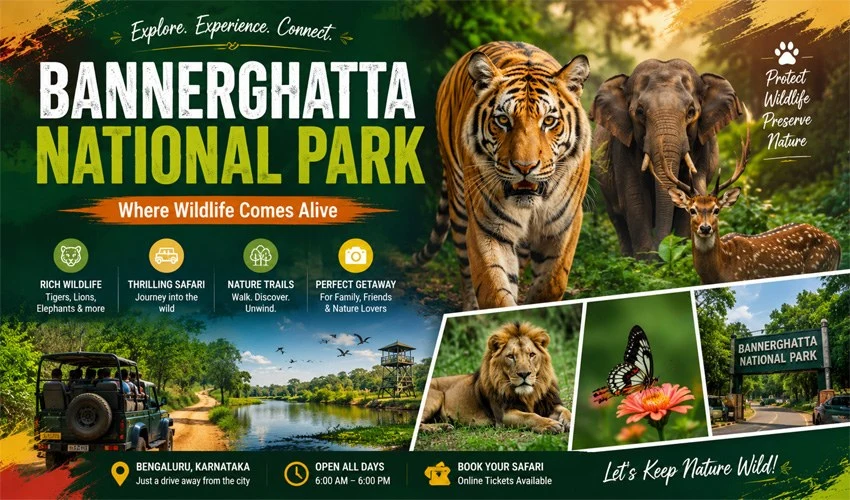
Tucked into the rolling hills just south of Bengaluru, Bannerghatta National Park is one of Karnataka’s most rewarding day-trip destinations for anyone who wants a taste of wildlife without leaving the city limits far behind. Spread across roughly 260 to 270 square kilometers of deciduous forest, scrubland, and rocky outcrops, the park sits at the edge of the Eastern Ghats and acts as a buffer zone connecting larger forest tracts further south. For families, students, photographers, and anyone curious about India’s big cats, Bannerghatta offers an accessible introduction to forest ecosystems, captive wildlife care, and safari-style viewing, all within an hour’s drive of the city center.
This guide walks through everything a first-time or repeat visitor needs to know, from ticket prices and safari options to timings, transport, and practical tips that will make the visit smoother.
A Quick Overview of Bannerghatta National Park
Established in 1974 and later expanded to include a biological park and a dedicated zoo section, Bannerghatta has evolved over the decades into a layered attraction. It is not a single open forest where animals roam entirely free of human infrastructure; rather, it combines several distinct zones. There’s a zoological garden with enclosures for various species, a butterfly park showcasing dozens of butterfly species in a netted garden, a rescue and rehabilitation center for animals that cannot be released into the wild, and the much-loved safari zone where visitors travel through enclosures in vehicles to see lions, tigers, herbivores, and bears at closer range than a typical zoo visit allows.
The park is particularly known for its lion and tiger safaris, which use specially designed buses to drive visitors through large fenced habitats. This format gives a sense of proximity to apex predators while maintaining safety for both visitors and animals. Because the safari areas are enclosed rather than fully wild, sightings are far more reliable here than in a true jungle safari, which makes Bannerghatta especially popular with families who want guaranteed animal encounters.
Location and How to Reach the Park
Bannerghatta National Park is located approximately 22 kilometers south of central Bengaluru, making it one of the most convenient wildlife destinations near a major Indian city. The drive typically takes between 45 minutes and an hour depending on traffic, particularly if departing from areas like Jayanagar, JP Nagar, or Electronic City.
Visitors arriving by road can drive their own vehicle, since the park has a sizeable parking area, or rely on app-based cabs, which are widely available throughout Bengaluru. Public buses operated by the Bengaluru Metropolitan Transport Corporation also connect the city to Bannerghatta, departing from various points including Shantinagar bus station, though schedules can be infrequent on weekdays. For visitors flying in, Kempegowda International Airport is roughly 60 to 70 kilometers away, translating to a journey of around two hours by road. The nearest railway station is Bengaluru City Junction, from which the park is reachable by taxi or bus in under an hour and a half.
Given the distance and the layout of the park, most visitors find it easiest to arrive by private vehicle or cab, especially if traveling with elderly family members or young children, since walking between the various sections can otherwise add up to a fair amount of distance.
Park Timings
Bannerghatta National Park generally operates seven days a week, though it’s worth checking for occasional closures or maintenance days, particularly around major public holidays or during the monsoon season when safari operations may be paused for safety reasons.
The park typically opens around 9:30 AM and the last entry is usually permitted by around 4:30 or 5:00 PM, with the entire facility closing shortly after. Safari rides have their own internal schedule and the last safari trip of the day is generally dispatched earlier than the general park closing time, often by mid-afternoon, since processing visitors through the safari route takes time. Because timings can shift slightly with seasons or local notifications, it’s a good practice to check the official park website or call ahead before planning a visit, especially if the safari is the main draw.
Weekdays tend to be considerably less crowded than weekends and public holidays, when the park sees a heavy influx of visitors, particularly families and school groups. Arriving as close to opening time as possible on a weekend can save significant time in ticket queues and safari lines.
Tickets and Entry Fees
Bannerghatta operates on a tiered ticketing structure, separating the basic park entry fee from the various safari options, which are priced individually. While exact rupee figures are revised periodically by the forest department and zoo authorities, the general structure has remained consistent over the years and is useful to understand before budgeting for a visit.
General park entry covers access to the zoological garden, the butterfly park, and walking areas, and is priced modestly, usually in the range of double-digit rupees for adults, with a separate, lower rate for children. This entry ticket alone does not include the safari rides.
Safari tickets are sold separately and are typically split by animal zone, meaning visitors can choose to take the herbivore safari, the lion safari, the tiger safari, or the bear safari individually, or purchase a combined package covering several zones at a discounted bundled rate. The lion and tiger safaris tend to be priced higher than the herbivore safari since they involve specially reinforced vehicles and additional safety protocols. Children usually get a reduced rate across all safari categories, and very young children below a certain height or age are often allowed in free of charge.
Camera and vehicle charges also apply in many cases. Carrying a professional camera, a video camera, or even a personal vehicle into certain zones may attract a small additional fee, and visitors with expensive equipment should be prepared for this.
Foreign nationals are typically charged a higher entry and safari rate compared to domestic visitors, a common practice across Indian wildlife parks and heritage sites.
Tickets can usually be purchased at the counters on arrival, though long queues are common on weekends. To avoid this, many visitors now book a portion of their tickets online in advance through the official Karnataka forest department or zoo authority booking portal, which allows for time-slot selection and reduces wait times considerably. Carrying a valid photo ID is advisable, since it may occasionally be requested for verification.
Safari Options Explained
The safari experience is the centerpiece of most visits to Bannerghatta, and understanding the different zones helps in planning which tickets to buy.
The lion safari takes visitors through a large enclosure housing Asiatic lions, where the bus moves at a slow pace allowing ample time for viewing and photography through the reinforced windows. Visitors typically see lions resting in shaded patches or moving near water points, especially during cooler parts of the day.
The tiger safari follows a similar format but through a separate enclosure dedicated to tigers. Tiger sightings can be more unpredictable since these animals are often more reclusive and tend to rest in dense cover during the heat of midday, so early safari slots generally offer better viewing odds.
The herbivore safari is usually the longest of the safari segments and covers a wider habitat where visitors can see species such as deer, antelope, and other grazing animals moving more freely within a large open enclosure. This safari often feels closer to an actual jungle drive compared to the predator zones.
The bear safari, when operational, showcases sloth bears in a dedicated habitat, and depending on the season and time of day, bears may be seen foraging or resting near rocky outcrops.
Each safari segment usually runs for a limited duration, often between fifteen and twenty-five minutes, and visitors are seated inside the safari vehicle for the entirety of the ride; getting out is strictly prohibited for safety reasons. Photography through the windows is generally allowed, though flash photography and loud noises are discouraged since they can disturb the animals.
What Else to See Inside the Park
Beyond the safari, Bannerghatta has several other attractions worth building into a day’s itinerary. The butterfly park is a netted enclosure designed to mimic a natural habitat, housing a wide variety of butterfly species alongside informative displays about metamorphosis and pollination. It’s a particularly good stop for younger children and is less physically demanding than walking through the zoo section.
The zoological garden houses a range of animals in more traditional enclosures, including various bird species, reptiles, and mammals not part of the safari program. While less dynamic than the safari, it rounds out the visit and gives a broader sense of biodiversity.
The park also runs a rescue and rehabilitation center for animals confiscated from illegal trade or injured in the wild, though access to this section may be more restricted depending on current park policy.
For those interested in a deeper nature experience, certain trekking trails within the broader Bannerghatta forest area, outside the main ticketed zones, are sometimes accessible with prior permission from forest officials, offering a quieter alternative to the more commercialized safari sections.
Best Time to Visit
The cooler months between October and February are generally considered the most comfortable time to visit, with mild daytime temperatures making the walking sections of the park more pleasant. Summer months, particularly April and May, can get quite hot, which affects animal activity, as many species retreat to shade during peak heat, reducing visibility during safaris.
Monsoon season, roughly June through September, brings lush greenery to the park but can also lead to muddy safari routes and occasional safari suspensions if rainfall is heavy, so it’s worth checking conditions beforehand if visiting during this period.
Early morning slots, when available, tend to offer the best animal activity and the most comfortable walking weather, while also helping visitors avoid the worst of the crowds that build up by midday on weekends.
Practical Tips for Visitors
Wearing comfortable walking shoes is recommended given the distances between the zoo, butterfly park, and safari boarding points. Carrying water is important, particularly in warmer months, since the walk between sections can be tiring under the sun. Visitors should also avoid carrying plastic bags or littering, as the park enforces environmental rules to protect the habitat.
Photography enthusiasts should bring zoom lenses for the safari sections, since vehicles maintain a safe distance from animals, and a longer lens captures clearer shots than a standard smartphone camera can manage through a moving vehicle’s window.
Food options inside the park are typically limited to a few canteens or snack stalls, so visitors with specific dietary needs may want to carry their own light snacks. Lockers or storage facilities may be available near the entrance for bags not permitted inside certain sections.
Finally, since ticket counters and safari queues can get crowded, especially on weekends and during school holidays, arriving early and considering advance online booking where available will make for a far smoother and more enjoyable day.
Final Thoughts
Bannerghatta National Park remains one of the most accessible ways for Bengaluru residents and visitors alike to experience India’s wildlife heritage without venturing deep into remote forest reserves. With its combination of structured safaris, a zoological garden, and a butterfly park, it offers something for nature lovers of every age, provided visitors plan around timings, ticket categories, and seasonal conditions. A little preparation, from checking the latest fee structure to choosing the right time of day, goes a long way toward making a Bannerghatta trip both smooth and memorable.