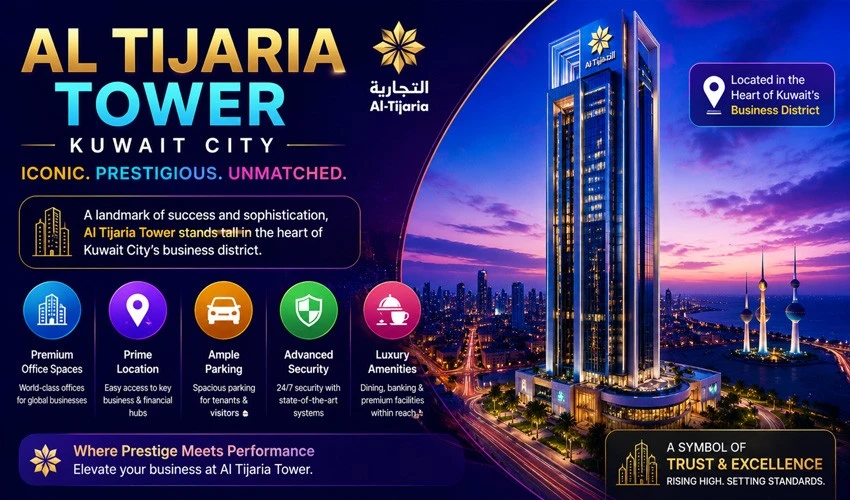
Kuwait City’s skyline is filled with striking modern architecture, but few buildings capture attention the way Al Tijaria Tower does. Rising above the Sharq district, this skyscraper is instantly recognizable for its dramatic twisting silhouette, which seems to spiral upward as it climbs toward the sky. Also known as the Kuwait Trade Center, the tower has become one of the country’s most photographed structures and a genuine symbol of Kuwait’s architectural ambition in the twenty-first century.
Whether you’re planning a trip to Kuwait, researching skyscraper design, or simply curious about one of the Gulf region’s most distinctive buildings, this article walks through ten interesting facts about Al Tijaria Tower that make it worth knowing about.
1. Its Design Is Inspired by a Spiral
The single most defining feature of Al Tijaria Tower is its spiral-inspired form. Rather than rising as a straight, uniform column like most office towers, the building’s structure gradually rotates as it climbs. Each floor plate twists slightly in relation to the one below it, and by the time you reach the top of the building, the cumulative rotation from ground level is dramatic. This isn’t just a cosmetic flourish — the twisting geometry is baked into the structural engineering of the tower, making it one of the more technically ambitious buildings constructed in the Gulf during the 2000s.
2. The Tower Twists 80 Degrees From Base to Top
To put a number on that spiral effect, the building rotates by roughly 80 degrees between its ground level and its topmost occupied floor. This transformation happens gradually, with each floor rotating about two degrees relative to the floor beneath it. The result is a facade that appears to ripple and twist as sunlight hits it from different angles throughout the day, giving the tower a completely different look depending on the time you view it and the direction you’re standing.
3. It’s Also Known as the Kuwait Trade Center
While most people know the building as Al Tijaria Tower, it also carries the name Kuwait Trade Center. Both names are used more or less interchangeably in architectural literature and local references, so don’t be confused if you come across the alternate title while researching or navigating to the building. The name “Tijaria” itself relates to trade and commerce in Arabic, fitting for a tower designed to house both retail space and corporate offices.
4. It Stands at Approximately 218 Meters Tall
Al Tijaria Tower reaches a height of about 218 meters (roughly 716 feet), making it one of the taller buildings in Kuwait City, though it’s far from the tallest in the country. For comparison, Kuwait is home to significantly taller structures like the Al Hamra Tower, which soars past 400 meters. Still, at 218 meters, Al Tijaria Tower holds its own as a major presence on the skyline, especially given its unconventional shape, which makes it stand out even among taller neighbors.
5. The Building Has Around 41 Floors
The tower comprises roughly 41 floors above ground, plus additional basement levels below. This floor count places it firmly among the city’s prominent high-rises. The lower floors of the building are dedicated to retail space, forming a shopping mall, while the upper floors house corporate offices. This mixed-use layout means the tower functions as both a commercial hub and a business address, drawing a steady flow of shoppers, diners, and office workers throughout the day.
6. It Combines a Shopping Mall With Office Space
Al Tijaria Tower isn’t just an office building — its lower levels form a multi-story podium that functions as a shopping mall. This includes retail outlets, restaurants, and cafes, along with an open-air garden terrace built on top of the podium roof. Above this retail base, the tower rises as a dedicated office structure. This layered approach, blending commerce, leisure, and business, reflects a broader trend in Gulf architecture where towers are designed to serve multiple purposes rather than a single function.
7. The Interior Features Dramatic Atrium Gardens
Step inside the shopping levels of Al Tijaria Tower and you’ll find more than just retail corridors. The building includes vertically stacked atrium spaces, several stories tall, that bring in natural light and greenery. These atriums are often decorated with artwork, intricate wall designs, and lush plantings, creating a sense of openness that contrasts with the compact, twisting form of the exterior. The combination of dark stone flooring, ornamental detailing, and greenery gives the interior a distinctly upscale, resort-like atmosphere.
8. It Overlooks Al Shaheed Park
One of the tower’s most notable locational advantages is its position directly across from Al Shaheed Park, one of Kuwait City’s largest and most popular green spaces. Situated along Al Soor Street in the Sharq district, the tower’s location places it near a major public park, giving office workers and shoppers a rare view of open, landscaped greenery in the middle of a dense urban environment. This proximity to the park has also made the tower a recognizable visual landmark for anyone visiting or photographing the park itself.
9. Construction Took Place in the Mid-to-Late 2000s
Work on Al Tijaria Tower began in the mid-2000s, with construction wrapping up by around 2009. The project involved a design team and structural engineers tasked with translating the ambitious twisting concept into a buildable, wind-resistant structure — no small feat, given that unconventional geometry introduces significant engineering challenges around wind loads and structural stability. A cylindrical core wall running through the center of the tower helps provide the horizontal stability needed to keep the building steady despite its unusual, rotating form.
10. It Belongs to a Prominent Kuwaiti Real Estate Company
Al Tijaria Tower is owned and operated by a major Kuwaiti commercial real estate company, reflecting the significant private investment that has gone into shaping Kuwait City’s modern skyline. Since opening, the tower has become a fixture of the city’s commercial life, hosting a mix of international retail brands, dining venues, and office tenants. Its ongoing popularity as both a shopping destination and business address is a testament to how well the building’s design and location have held up since its completion.
Why Al Tijaria Tower Is Worth Visiting
Beyond its engineering pedigree, Al Tijaria Tower offers visitors a genuinely memorable experience. The mix of high-end retail, dining with skyline views, and one of the more architecturally daring silhouettes in the Gulf region makes it a worthwhile stop for travelers exploring Kuwait City. Photographers in particular are drawn to the tower’s twisting form, which looks strikingly different depending on the angle and lighting — a quality that has helped the building earn a spot among the world’s notable examples of spiral-inspired skyscraper design.
Whether you’re interested in modern architecture, planning a shopping trip, or simply want to see one of Kuwait’s most photogenic buildings in person, Al Tijaria Tower delivers a unique blend of form and function that few towers in the region can match.
Final Thoughts
Al Tijaria Tower stands as one of Kuwait City’s clearest examples of how architecture can be both functional and expressive. From its 80-degree structural twist to its lush interior atriums and prime location beside Al Shaheed Park, the tower brings together design ambition and everyday practicality in a way that continues to draw attention more than a decade after its completion. For anyone curious about the Gulf’s evolving skyline, Al Tijaria Tower remains one of the most fascinating buildings to learn about — and to see in person.