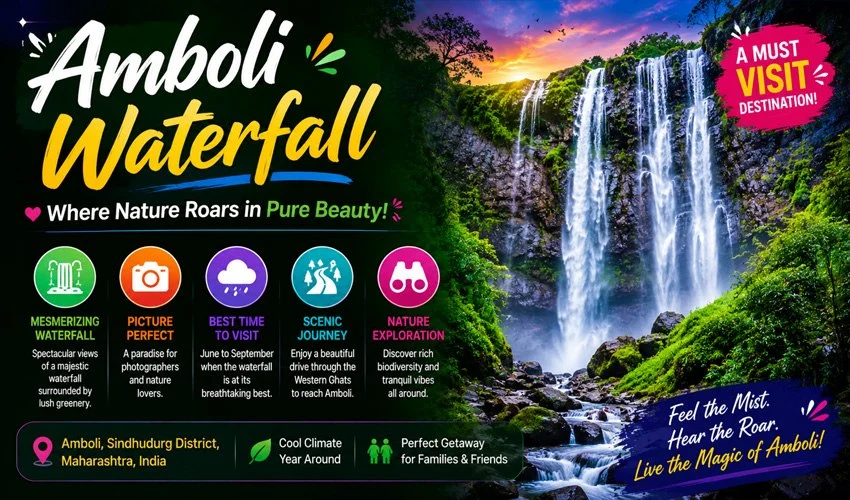
Tucked away in the lush, mist-covered hills of the Sahyadri range, Amboli is one of Maharashtra’s best-kept secrets when it comes to natural beauty. While hill stations like Mahabaleshwar and Lonavala often steal the spotlight, Amboli offers something quieter, greener, and arguably more magical — especially during the monsoon season. At the heart of this charming hill station lies its most celebrated attraction: Amboli Waterfall. Cascading down moss-covered rocks amid dense forest cover, this waterfall has become a magnet for nature lovers, trekkers, photographers, and anyone looking to escape the chaos of city life.
If you are planning a getaway that combines scenic beauty, cool weather, and a refreshing dose of nature, Amboli Waterfall deserves a top spot on your travel list. In this article, we explore everything that makes this destination so special, from its natural charm to practical tips for visiting.
Where Is Amboli Located?
Amboli is a small hill station situated in the Sindhudurg district of Maharashtra, close to the border of Goa and Karnataka. Perched at an elevation of around 690 meters above sea level, it lies along the Western Ghats, a mountain range recognized globally as a biodiversity hotspot. This unique geographical positioning gives Amboli its characteristic cool climate, dense forests, and abundant rainfall, all of which contribute to the spectacular waterfalls the region is known for.
The waterfall itself is located just a short distance from the main market area of Amboli, making it easily accessible for visitors of all ages. Its proximity to Goa also makes it a popular add-on destination for tourists looking to combine a beach holiday with a refreshing hill retreat.
The Magic of the Monsoon Season
While Amboli Waterfall can be visited throughout the year, it truly comes alive during the monsoon months, typically from June to September. During this period, the entire region transforms into a lush green paradise, with mist rolling over the hills and waterfalls gushing at full force. The waterfall, which may appear relatively modest in the drier months, swells dramatically during the rains, cascading down with tremendous energy and creating a mesmerizing sight and sound.
The sheer volume of water, combined with the surrounding greenery and cool, misty air, creates an almost surreal atmosphere. Many visitors describe the experience of standing near the waterfall during peak monsoon as therapeutic, with the sound of rushing water and the fresh, earthy smell of rain-soaked forest offering a complete sensory escape from urban life.
However, it is worth noting that during heavy rains, the water flow can become quite strong, and authorities often restrict close access to the waterfall for safety reasons. Visitors should always follow local guidelines and avoid venturing too close to the edge, especially during intense downpours.
A Haven for Nature Lovers and Photographers
Amboli’s appeal extends far beyond just the waterfall itself. The entire region is part of the Western Ghats, which is renowned for its rich biodiversity. Dense forests surrounding Amboli are home to a variety of flora and fauna, including several species found nowhere else in the world. Birdwatchers, in particular, flock to this region to spot rare and endemic bird species, while the area is also known for its diverse population of amphibians and reptiles, including several rare frog species that come alive during the monsoon.
For photographers, Amboli Waterfall and its surrounding landscape offer endless opportunities. The interplay of mist, water, and greenery creates dramatic visuals throughout the day, but especially during early mornings when fog often blankets the hills. Sunset views from certain points near Amboli are equally stunning, with the sky turning brilliant shades of orange and pink over the rolling hills.
Nature enthusiasts can also explore nearby viewpoints that offer panoramic views of the Konkan coastal plains below. On clear days, some of these points even offer a distant glimpse of the Arabian Sea, adding to the region’s charm as a destination that beautifully bridges the mountains and the coast.
Other Attractions Near Amboli Waterfall
While Amboli Waterfall is undoubtedly the star attraction, the hill station has several other spots worth exploring, making it easy to plan a full day or even a multi-day itinerary around the area.
Hiranyakeshi Temple and Cave: Located near Amboli, this site marks the origin of the Hiranyakeshi River and holds religious significance for locals. The cave, dedicated to Lord Shiva, is a peaceful spot surrounded by natural beauty.
Sunset Point: As the name suggests, this viewpoint offers spectacular sunset views over the Sahyadri hills and is a popular spot for tourists to unwind in the evening.
Kavalesad Point and Mahadevgad Point: These viewpoints provide sweeping views of the valley below and are especially beautiful during the monsoon when clouds drift below eye level, creating a surreal, almost heavenly landscape.
Nangartas Waterfall: Another scenic waterfall near Amboli, slightly less crowded, offering a quieter alternative for those looking to escape even the modest tourist crowds that gather at the main waterfall.
Exploring these nearby attractions allows visitors to experience the full range of natural beauty that this region has to offer, rather than limiting their trip to a single stop.
Best Time to Visit
While the monsoon season (June to September) is undoubtedly the most popular time to visit Amboli Waterfall due to its dramatic water flow and lush surroundings, the region also has appeal in other seasons.
Post-monsoon, from October to November, the landscape remains green while the waterfall still carries a decent flow, and the weather becomes more pleasant for outdoor exploration without the risk of heavy, continuous rainfall.
Winter months, from December to February, bring cooler temperatures, making it an ideal time for those who prefer pleasant weather for sightseeing and trekking, even though the waterfall’s flow will be significantly reduced compared to the monsoon.
Summer months are generally less recommended for visiting the waterfall itself, as water levels drop considerably, though the hill station still offers relief from the sweltering heat of the plains.
How to Reach Amboli
Amboli is well connected by road, making it accessible for both self-drive travelers and those relying on public transport. The nearest railway station is Sawantwadi Road, from where Amboli is a short drive away. For those flying in, Dabolim Airport in Goa is the closest major airport, making Amboli a convenient extension for travelers already visiting Goa.
The drive to Amboli itself is an experience worth savoring, with winding roads through dense forest cover, occasional glimpses of valleys below, and numerous small waterfalls visible along the route during the monsoon season.
Travel Tips for Visiting Amboli Waterfall
For those planning a trip, a few practical tips can help ensure a smooth and enjoyable experience:
- Carry appropriate footwear: The paths leading to the waterfall can be slippery, especially during the monsoon, so sturdy, non-slip footwear is essential.
- Pack rain gear: Given the region’s heavy rainfall during monsoon months, a good quality raincoat or umbrella, along with waterproof bags for electronics, is highly recommended.
- Respect safety barriers: During periods of heavy rainfall, local authorities may restrict access to certain areas near the waterfall for safety reasons. It’s important to heed these warnings rather than attempting to venture closer for a better view or photograph.
- Plan for leeches: The dense, moist forests around Amboli during monsoon season are known to have leeches. Wearing long socks and applying appropriate repellents can help minimize discomfort.
- Stay overnight if possible: While Amboli can be visited as a day trip from Goa or nearby cities, staying overnight allows visitors to experience the misty mornings and quiet evenings that are part of the region’s unique charm.
Why Amboli Waterfall Deserves a Spot on Your Travel List
In a state known for popular hill stations and beach destinations, Amboli offers a refreshing alternative that combines the best of both worlds. Its relatively untouched natural beauty, rich biodiversity, and the sheer spectacle of its waterfall during the monsoon make it a destination that appeals to a wide range of travelers, from adventure seekers and nature photographers to families looking for a peaceful retreat.
Unlike more commercialized hill stations, Amboli retains a sense of quiet charm, allowing visitors to truly connect with nature without the overwhelming crowds often found at more popular destinations. Whether you’re chasing waterfalls, exploring biodiversity, or simply seeking a peaceful escape into the hills, Amboli offers an experience that lingers long after the trip ends.
Final Thoughts
Amboli Waterfall stands as a testament to the raw, unspoiled beauty that Maharashtra’s Western Ghats have to offer. Its dramatic monsoon flow, surrounded by dense forests and rolling hills, creates a sensory experience that is hard to match elsewhere in the state. Combined with nearby attractions, pleasant weather, and relatively easy accessibility, Amboli makes for an ideal destination for a short getaway or an extended nature retreat.
For travelers looking to explore a side of Maharashtra beyond its bustling cities, Amboli Waterfall offers a refreshing reminder of the state’s natural splendor — a must-visit destination that truly deserves its growing popularity among nature enthusiasts and casual travelers alike.