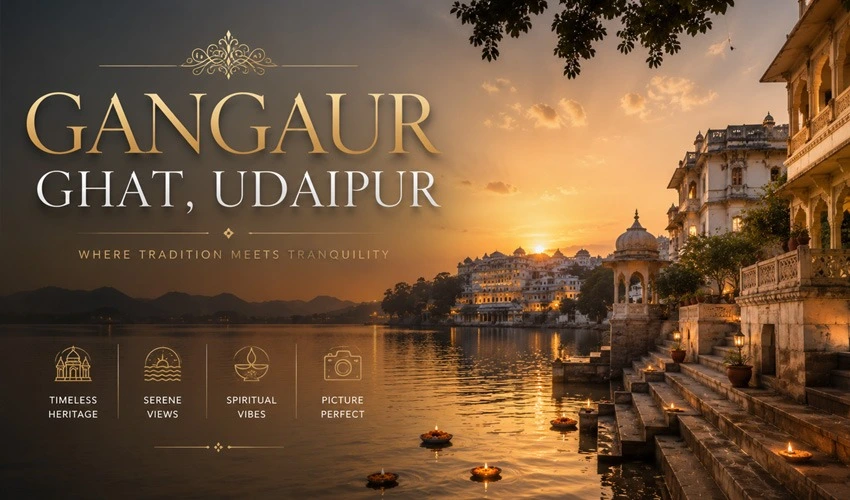
Along the eastern shore of Lake Pichola, framed by carved stone steps, whitewashed havelis, and temple spires, sits one of Udaipur’s most beloved public spaces — Gangaur Ghat, also known as Gangori Ghat. Small in size but rich in atmosphere, this waterfront ghat near the Jagdish Chowk area is where the city’s everyday rhythms and centuries-old traditions meet. Locals arrive at dawn for rituals and a wash by the lake, photographers wait patiently for that perfect golden-hour reflection, and travelers simply come to sit on the steps and watch Udaipur unfold in front of them. This guide covers everything you need to know before visiting — history, timings, entry details, things to do, festivals, nearby attractions, and practical tips.
A Brief History of Gangaur Ghat
Gangaur Ghat’s story is tied closely to the Mewar dynasty, which ruled the region for centuries and shaped much of Udaipur’s architectural and cultural identity. The ghat takes its name from the Gangaur festival, one of Rajasthan’s most cherished celebrations, held in honor of Goddess Gauri, a manifestation of Parvati and the consort of Lord Shiva. In its earliest days, the festival was observed primarily by royal women of the Mewar court, who gathered at the ghat to pray for the wellbeing and longevity of their husbands. Over generations, the celebration expanded well beyond the palace walls, evolving into a citywide tradition embraced by people from every part of Udaipur.
Architecturally, the ghat reflects the patronage of Mewar’s rulers, who were dedicated supporters of art and craftsmanship. Palaces, temples, and havelis built around this stretch of Lake Pichola still stand as reminders of that legacy, their carved facades and ornamental detailing giving the area a distinctly regal character even today. What began as a ceremonial site reserved for royalty has, over time, become a shared community space — part place of worship, part cultural venue, and part everyday gathering spot for locals and visitors alike.
Location and How to Reach Gangaur Ghat
Gangaur Ghat sits right in the heart of Udaipur’s old city, along the eastern bank of Lake Pichola, just a short walk from Jagdish Temple and the City Palace complex. Its central location makes it easy to reach from almost anywhere in the city.
- By taxi or auto-rickshaw: Autos and cabs can drop you at the streets near the ghat; from there, a short walk through narrow old-city lanes leads you to the waterfront.
- On foot: Since it sits close to several major landmarks, many travelers simply walk over as part of a broader old-city heritage stroll.
- By rail: Udaipur Railway Station is only a few kilometers away, with taxis and autos readily available for the short ride into the old city.
- By air: Maharana Pratap Airport is roughly 25 kilometers from the ghat, with pre-paid taxis available for the drive in.
Do note that the roads leading directly to the ghat are narrow, so larger vehicles may need to park a short distance away, leaving the final stretch to be covered on foot — which, honestly, is part of the charm, as the lanes are lined with small shops, cafés, and glimpses of everyday old-city life.
Timings and Entry Fee
One of the best things about Gangaur Ghat is how accessible it is. The ghat itself remains open to the public throughout the day, and there is no entry fee to visit. That said, some special cultural programs or events held here occasionally may involve separate ticketing.
While you’re free to visit anytime, the ghat is at its most atmospheric during the early morning and late evening. Mornings bring a quiet, contemplative calm — perfect for watching local rituals unfold and for photography without crowds. Evenings shift into a livelier mood, with locals strolling along the waterfront, an aarti sometimes taking place, and the sky turning gold and pink over the lake as the sun dips behind the Aravalli hills.
Best Time of Year to Visit
Udaipur’s climate plays a big role in shaping the visitor experience at Gangaur Ghat, and the sweet spot for a visit is October to March, when the weather is pleasant, the skies are typically clear, and lake views stay crisp and photogenic. Winter mornings can be cool enough for a light jacket, but the mild daytime temperatures make it comfortable to explore the ghat and the surrounding old-city lanes at a relaxed pace.
If your trip falls during the summer months (April to June), plan around the heat by visiting early in the morning or later in the evening, and carry water with you, especially if you intend to explore the old city on foot. The monsoon season (July to September) brings dramatic skies and a refreshing change in scenery, but the stone steps leading to the water can get slippery when wet, so extra caution is advised if you’re visiting after rainfall.
Things to Do at Gangaur Ghat
Despite its modest size, Gangaur Ghat offers a surprising range of experiences for different kinds of travelers.
Watch the sunrise or sunset. The ghat is widely considered one of the best spots in Udaipur to watch the sun set over Lake Pichola, with the City Palace, Lake Palace, and Jag Mandir all visible from its steps. Sunrise, on the other hand, offers a softer, quieter version of the same magic, with far fewer people around.
Take a boat ride on Lake Pichola. Shared and private boat rides are available near the ghat, letting you see the ghat, the surrounding palaces, and the old city skyline from the water. Private sunset cruises tend to cost more than shared rides, and prices can shift depending on the season.
Photograph the architecture and reflections. Between the ghat’s tiered stone steps, ornamental carvings, and the neighboring Tripolia gateway, there’s no shortage of frames here. The interplay of whitewashed walls, blue lake water, and warm evening light makes it a favorite among both amateur and professional photographers, and it has also served as a filming location for various productions over the years.
Explore Bagore Ki Haveli next door. Just steps away from the ghat stands Bagore Ki Haveli, an 18th-century mansion built by Amar Chand Badwa, a former prime minister of Mewar. The haveli houses a museum showcasing royal artifacts, mirror work, and frescoes, and hosts the popular Dharohar folk dance show in the evenings — a great way to pair history with live culture right after visiting the ghat.
Wander the surrounding lanes. The narrow streets leading up to the ghat are filled with small shops, cafés, and stalls, making the walk to and from the waterfront an experience in itself. It’s a good place to pick up local handicrafts or simply sit at a rooftop café overlooking the lake.
Simply sit and take it in. Many visitors say the best thing to do at Gangaur Ghat is nothing at all — just sitting on the stone steps, watching boats drift by and locals go about their day, offers a slower, more genuine feel for Udaipur than a packed sightseeing itinerary ever could.
Festivals Celebrated at Gangaur Ghat
The ghat’s name and identity are deeply tied to the Gangaur Festival, typically held in March or April, which honors the union of Lord Shiva (Gan) and Goddess Gauri (Parvati). The celebration, which can stretch across many days, features a grand procession that begins at the City Palace and winds through the city, led by decorated palanquins, chariots, bullock carts, and folk performers. Women dressed in traditional attire, adorned with jewelry and henna, join the procession and gather at the ghat, where the idols of Gan and Gauri are eventually carried out on boats and immersed in the waters of Lake Pichola.
Another significant celebration connected to the ghat is Jal-Jhulni Ekadashi, observed on the eleventh day of the lunar month’s waxing and waning phases. During this festival, processions carrying idols of Bal Gopal — Lord Krishna in his childhood form — converge at the ghat from different parts of the city. Devotees then gently swing the idols over the lake’s waters, a ritual symbolizing the playful spirit of Krishna’s childhood.
If your visit happens to align with either of these festivals, it’s well worth timing your trip around them, since the ghat transforms into one of the most vibrant, colorful corners of the entire city.
Nearby Attractions
Gangaur Ghat’s central location means it pairs effortlessly with several other major Udaipur landmarks, making it easy to build a full day of sightseeing around it:
- Bagore Ki Haveli – directly adjacent to the ghat
- Jagdish Temple – a short walk away
- City Palace – Udaipur’s grand royal palace complex, just minutes from the ghat
- Lake Pichola – the lake itself, with boating options right from the ghat
- Ambrai Ghat – located across the lake, offering a different perspective for sunset views
- Lal Ghat – another nearby ghat worth a quick visit
- Clock Tower – a well-known old-city landmark close by
Practical Tips for Visitors
- Footwear: If you plan to get close to the water’s edge for rituals or photos, be prepared to remove your shoes.
- Photography etiquette: Always ask permission before photographing locals performing rituals or going about daily activities at the ghat.
- Timing your visit: Early mornings offer soft light and quiet surroundings, while evenings bring energy, sunset views, and a livelier social atmosphere.
- Combine with a heritage walk: Since the ghat sits within walking distance of several major sites, consider exploring the old city on foot rather than relying solely on vehicles.
- Safety after dark: The ghat is accessible at night, but it’s best to visit before late hours and stick to well-lit areas.
- Carry water in summer: The old-city lanes involve some walking, and shade can be limited during the hotter months.
Final Thoughts
Gangaur Ghat may not have the grandeur of a palace or the scale of a fort, but it captures something equally valuable — the living, breathing culture of Udaipur. It’s a place where history, faith, and daily life intersect quietly on a set of stone steps by the lake. Whether you’re chasing a perfect sunset photograph, exploring the neighboring Bagore Ki Haveli, timing your trip around the Gangaur Festival, or simply looking for a peaceful spot to pause during a busy sightseeing day, Gangaur Ghat offers an authentic, unhurried slice of the City of Lakes that’s hard to find anywhere else in Udaipur.