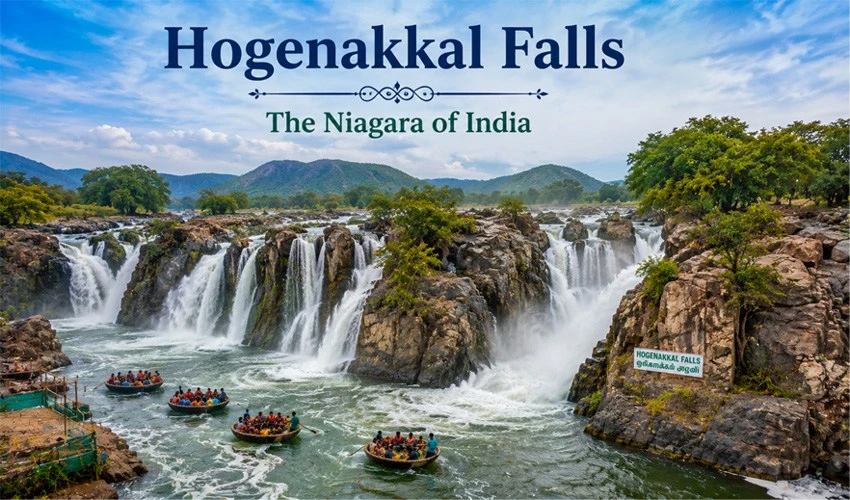
There are few sights in South India as viscerally powerful as Hogenakkal Falls in full monsoon flow — a thundering, mist-wrapped curtain of white water crashing over ancient carbonatite rock formations, filling the air with a roar that you feel as much as hear and sending cool spray drifting across the riverbank like a natural fog machine. Known as the “Niagara of India,” Hogenakkal is not merely a waterfall but an entire landscape experience: a wild stretch of the Kaveri River where the water fractures into dozens of cascading channels, carved over millions of years through one of the oldest rock formations on the planet. Located in the Dharmapuri district of Tamil Nadu, close to the border with Karnataka, Hogenakkal draws visitors from across South India and beyond, offering a potent combination of natural spectacle, river adventure, and the singular pleasure of an oil massage on a rocky riverbank. Whether you are planning a day trip or a short overnight stay, here is everything you need to know about visiting Hogenakkal Falls.
What Makes Hogenakkal Unique
The name Hogenakkal comes from two Kannada words — “Hoge” meaning smoke and “Kal” meaning rock — translating roughly as “smoking rocks.” The name is instantly understood by anyone who has stood near the falls and watched the mist rising from the churning water below, exactly like smoke curling up from the ancient stone. What makes Hogenakkal geologically extraordinary is the rock over which the Kaveri falls: carbonatite, an extremely rare igneous rock found in only a handful of places worldwide. These rocks are estimated to be over 2,500 million years old, making them among the oldest exposed rock formations on earth. For geologists, Hogenakkal is a site of global scientific significance. For everyone else, the rocks create a dramatic, jagged landscape of dark stone, rushing white water, and swirling green pools that is unlike anything else in India.
The falls do not form a single dramatic plunge in the manner of, say, Jog Falls. Instead, the Kaveri spreads across a wide, rocky gorge and descends in multiple streams and channels, creating an archipelago of cascades, islands, and pools. This diffuse, multi-channelled character is what gives Hogenakkal its unique charm and makes exploration by coracle — the traditional round boat of the region — so extraordinarily rewarding.
Best Time to Visit Hogenakkal Falls
Choosing the right time to visit Hogenakkal dramatically affects the quality of your experience, and different seasons offer genuinely different spectacles.
Monsoon Season: July to October (Most Spectacular)
This is when Hogenakkal is at its absolute, thunderous best. The Kaveri receives its full monsoon flow, and the falls swell to an awe-inspiring volume of water. The spray extends far beyond the riverbank, the roar is deafening, and the sheer visual power of the scene is unforgettable. However, the ferocity of the water means that coracle rides and swimming are typically suspended during peak monsoon for safety reasons. The surrounding landscape is intensely green, and the mist and cloud add a dramatic atmosphere. If you want visual drama and are happy to admire the falls from the bank, the monsoon months deliver the most spectacular show.
Post-Monsoon: November to February (Best Overall)
The period from November through February is widely considered the ideal time to visit Hogenakkal. The monsoon has ended, but the river is still carrying a strong, healthy flow that keeps the falls impressive. Crucially, the water levels have receded enough to make coracle rides and fishing activities safe and enjoyable. The weather is pleasantly cool — particularly from December to February — making outdoor activities comfortable. This is the window when you can truly experience everything Hogenakkal has to offer: good waterfall views, safe boating, riverside relaxation, and agreeable temperatures. Weekends during this season are busy, so arriving early or visiting on a weekday is advisable.
Summer: March to June (Quieter but Hotter)
By March the river begins to drop, and by May and June — before the new monsoon arrives — Hogenakkal can look considerably less dramatic, with the falls reduced to narrower channels between exposed rock. The heat on the plains leading to Hogenakkal is intense from April onwards. That said, the falls are still active, coracle rides are available, and the crowds are thinner on weekdays. If you are visiting from nearby cities like Bengaluru, Salem, or Dharmapuri and want a quieter experience, a summer weekday visit is perfectly viable, provided you prepare for the heat and arrive early in the morning.
Boating at Hogenakkal: The Coracle Experience
No visit to Hogenakkal is complete without a ride in a coracle — the iconic, circular, basket-like boats made of woven bamboo and coated with animal hide or plastic sheeting that have been used on South Indian rivers for centuries. At Hogenakkal, coracle rides are operated by local boatmen, most of whom belong to fishing communities who have worked this stretch of the Kaveri for generations. Watching an experienced boatman navigate a round, seemingly unsteerable vessel through turbulent water with nothing but a single wooden paddle is itself a remarkable spectacle of human skill.
What to Expect on a Coracle Ride
Coracle rides at Hogenakkal typically last between 30 and 60 minutes, depending on the route and negotiation with the boatman. The rides weave through the network of channels, rocky islands, and cascades that make up the Hogenakkal waterfall system, getting close enough to individual falls for the spray to drench you thoroughly. Many boatmen will navigate to the base of specific falls, creating extraordinary close-up views that are impossible to access any other way. The sensation of spinning gently in a round boat while surrounded by roaring water, ancient dark rock, and mist is genuinely exhilarating.
Coracle Ride Charges
Coracle ride prices at Hogenakkal are not fixed by a single authority and are subject to negotiation with individual boatmen. As of recent estimates, rates typically range from ₹200 to ₹600 per person for a standard 30–45 minute ride, with longer rides or routes covering more falls priced higher. Group bookings can often be negotiated at a better per-person rate. It is advisable to agree clearly on the duration, route, and price before boarding, and to keep small denomination notes handy for payment. Life jackets are provided and must be worn throughout the ride — do not board any coracle that does not supply them.
Entry Fee at Hogenakkal
Hogenakkal is managed jointly by the Tamil Nadu government and local authorities. The entry is free for most areas of the falls, though specific facilities and activities carry charges:
- General entry to the falls area: Free
- Coracle rides: ₹200–₹600 per person (negotiable, varies by boatman and route)
- Oil massage: ₹150–₹400 per person (rates vary by masseur and duration)
- Parking fee: ₹30–₹50 for two-wheelers; ₹50–₹100 for cars (approximate)
- TTDC boat rides (where available): Fixed government rates, typically lower than private coracle operators
Note that fees and charges are subject to revision. It is always wise to check current rates at the site or via the Tamil Nadu Tourism website before visiting, as prices may have been updated.
Things to Do at Hogenakkal Falls
1. Watch the Falls from the Viewing Points
The most straightforward and universally accessible activity at Hogenakkal is simply watching the falls. Several designated viewing areas along the riverbank and on elevated rocks offer different perspectives of the cascades. The view from the main ghat area, where dozens of channels of white water pour over the dark carbonatite rock into churning green pools below, is the classic Hogenakkal image. Early morning visits reward you with golden light and thinner crowds; late afternoon light casts beautiful warm tones across the water and rock.
2. Coracle Ride Through the Falls
As described above, a coracle ride is the centrepiece experience at Hogenakkal and should not be missed by any able-bodied visitor. Getting drenched is part of the deal — wear clothes you do not mind getting soaked, leave valuables securely behind, and carry a waterproof bag for phones and cameras.
3. The Famous Hogenakkal Oil Massage
One of the most distinctive and beloved traditions of Hogenakkal is the riverside oil massage offered by local masseurs on the rocky banks of the Kaveri. These masseurs — many of whom have learned the craft from their fathers and grandfathers — give vigorous full-body massages using traditional herbal oils, often followed by a dip in the river. The experience is simultaneously relaxing and invigorating, and the combination of massage, river breeze, and the sound of the falls in the background makes it genuinely therapeutic. Both male and female masseurs are available (ladies are served by female masseurs in separate areas). The experience typically lasts 20 to 40 minutes, and the rates are modest. This is not a luxury spa treatment — it is a raw, outdoor, traditional practice — but that is precisely what makes it so memorable.
4. Swimming in the River Pools
During the post-monsoon and summer seasons, when water levels are lower, designated areas of the river near the falls are used for swimming by visitors. The water is cool, clear, and refreshing. However, swimming in the Kaveri requires caution — the current is deceptively strong in places, and the rocks are slippery. Swim only in clearly designated areas, never venture into deeper or faster-moving water, and keep children under strict supervision at all times.
5. Fresh Fish Fry at Riverside Stalls
The fishing communities of Hogenakkal are justifiably famous for their freshly caught river fish, grilled or fried on charcoal at simple open-air stalls along the riverbank. The fish — typically freshwater species from the Kaveri — are seasoned with local spices and served with rice or bread. Eating fresh fish fry beside a roaring waterfall, with your clothes still damp from a coracle ride, is one of those simple travel pleasures that stays in the memory long after more elaborate restaurant meals have been forgotten. Look for the busiest stalls — high turnover means fresher fish.
6. Photography
Hogenakkal is an exceptional photography destination in any season. The dark carbonatite rocks, the white water, the round coracles, the mist rising from the falls, the green tropical forest on the far bank, and the dramatic sky during monsoon all combine to create endlessly compelling images. Early morning offers the best light, and the mist at dawn can produce ethereal, atmospheric photographs. A waterproof phone case or a dry bag for your camera is essential if you plan to photograph from a coracle.
7. Nature Walks in the Surrounding Forest
The area surrounding Hogenakkal is part of a protected forest zone and offers pleasant nature walks with good birdwatching opportunities. The riparian forest along the Kaveri supports a variety of species including kingfishers, cormorants, herons, and various raptors. Mornings are the best time for birdwatching, before the tourist crowds arrive and the noise of the falls is overlaid with human activity.
How to Reach Hogenakkal Falls
From Bengaluru: Approximately 180 km via Hosur and Dharmapuri. The drive takes around 3.5 to 4 hours and is one of the most popular day-trip routes from the city.
From Salem: Approximately 100 km via Dharmapuri, taking about 2 to 2.5 hours. Salem is the nearest major railway junction.
From Chennai: Approximately 350 km, making it a long day trip or a comfortable overnight journey. The most common route goes via Krishnagiri and Dharmapuri.
By Bus: Tamil Nadu State Transport Corporation (TNSTC) operates regular bus services to Hogenakkal from Dharmapuri, Salem, and Bengaluru. Private buses and shared taxis are also available from Dharmapuri town.
By Train: The nearest railway station is Dharmapuri (approximately 46 km from Hogenakkal), with onward connection by bus or taxi.
Practical Travel Tips
Arrive Early: The falls area gets extremely crowded on weekends and public holidays, particularly between November and February. Arriving by 7:00–8:00 AM gives you the best chance of securing a good coracle ride without long waits and lets you enjoy the site before the peak crowds descend.
Wear Appropriate Clothes: You will get wet — either from coracle spray, swimming, or the oil massage and river dip. Wear light, quick-drying clothes and bring a change of outfit. Secure footwear with good grip on slippery rocks is essential.
Safeguard Your Valuables: Waterproof pouches or dry bags for phones, cameras, and money are highly recommended. There are no secure left-luggage facilities at the site.
Stay Hydrated: Carry sufficient water, particularly if visiting in summer. The combination of heat, physical activity, and excitement can lead to dehydration more quickly than expected.
Respect the Environment: Hogenakkal’s beauty is fragile. Do not litter, do not disturb the rock formations or riverbank flora, and avoid using plastic bags or single-use plastic — many areas now enforce plastic-free zones.
Accommodation: While most visitors come on day trips, basic guesthouses and TTDC facilities are available in Hogenakkal for those who wish to spend the night and experience the falls at dawn. Dharmapuri town offers a wider range of hotels for those seeking more comfortable lodging.
Final Thoughts
Hogenakkal Falls occupies a rare category among Indian travel destinations: it is a place where natural wonder, cultural tradition, adventure, and simple pleasure coexist in perfect, unhurried harmony. The roar of the Kaveri over ancient rock, the spin of a coracle through the mist, the fireside warmth of a fish fry on the bank, the surprising therapy of a riverside oil massage — these experiences combine into something greater than the sum of their parts. Hogenakkal does not need embellishment or marketing gloss. It simply needs to be visited, preferably more than once, and in different seasons, each of which reveals a different face of the same extraordinary place.
Go before the rains for the coracles. Go during the rains for the spectacle. Go after the rains for the best of both. Just go.