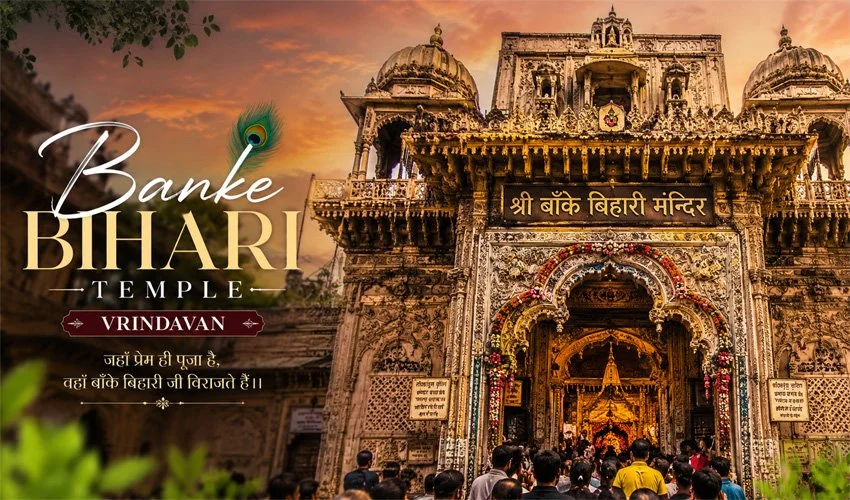
Vrindavan pulls in millions of devotees every year, and at the heart of this sacred town sits one of India’s most beloved shrines — the Banke Bihari Temple. If you’re planning a trip here, it helps to know what you’re walking into before you arrive, because this isn’t a quiet, leisurely temple visit. It’s an experience shaped by crowds, unique darshan customs, and a rhythm that’s unlike almost any other pilgrimage site in India. Here’s everything you should know before you go.
A Temple Unlike Any Other
Banke Bihari Temple houses a black stone deity of Lord Krishna, depicted in his “Banke” (bent in three places) form alongside Radha. The idol is believed to have been discovered by the saint Swami Haridas in the 16th century, and devotees consider it self-manifested rather than sculpted. What makes this temple genuinely different from other Krishna shrines is a peculiar and touching tradition: the curtain in front of the deity is repeatedly drawn and closed throughout the day.
Legend has it that the deity’s gaze is so powerful and enchanting that if devotees stared continuously, they might lose themselves entirely, forgetting to blink or even breathe. So the priests periodically cover the idol with a curtain, giving darshan in short bursts rather than one continuous viewing. This single detail changes how you should plan your visit, because it means darshan here isn’t a slow, contemplative walk past the deity — it’s a series of brief, intense glimpses, and timing matters enormously.
Temple Timings You Need to Know
Banke Bihari Temple doesn’t follow the same all-day-open schedule you might expect from other major temples. It opens for a few hours in the morning and a few hours in the evening, with a long midday closure in between.
Typically, the temple opens around 7:45 AM to 8:00 AM in summer and slightly later, around 8:30 AM to 9:00 AM, in winter. It then closes by early afternoon, usually around noon, and reopens in the evening around 5:30 PM to 6:00 PM, staying open until 8:30 PM or 9:00 PM depending on the season. These timings shift slightly with the seasons and change further during festivals, so it’s worth checking closer to your travel dates rather than relying on a fixed schedule.
The key takeaway: don’t assume you can just show up whenever you like. If you arrive during the midday closure, you’ll be standing outside a shut temple with nothing to do but wait, so plan your day around these windows.
Best Time of Day to Visit Banke Bihari Temple, Vrindavan
Mornings tend to be calmer than evenings, especially on weekdays. If you’re someone who wants a slightly less chaotic experience, aim to reach the temple right when it opens, ideally 30 to 45 minutes before the gates open so you’re near the front of the queue.
Evenings, particularly around Shringar Aarti time, draw much larger crowds because this is when the deity is dressed in elaborate attire and jewelry, and the atmosphere becomes genuinely festive with bhajans, chanting, and a palpable energy in the air. If you want that immersive, high-energy experience, go in the evening and accept that you’ll be sharing the space with a lot of people. If you’d rather have a more personal, less overwhelming darshan, mornings are the better bet.
Best Season and Months to Visit
Vrindavan sits in a region with intense summers, so if you’re not used to North Indian heat, avoid visiting between April and June, when daytime temperatures often climb past 40°C. The most pleasant months to visit are October through March, when the weather is cool and comfortable enough for walking around the town without exhaustion setting in.
That said, festival seasons bring their own calculus. Janmashtami (Krishna’s birthday, usually in August), Holi, and Radhashtami see the temple and the entire town swell with pilgrims. These are spiritually powerful times to visit if you don’t mind serious crowds and want to witness Vrindavan at its most vibrant, but if your priority is a peaceful, unhurried visit, it’s better to steer clear of these peak dates.
Getting There
Vrindavan is well-connected, sitting close to Mathura, about 15 kilometers away, and roughly 180 kilometers from Delhi. Most visitors arrive by road, either via a self-driven trip, bus, or taxi from Delhi, Agra, or Mathura. The nearest major railway station is Mathura Junction, which has good connectivity to Delhi, Agra, and several other cities, and from there it’s a short auto-rickshaw or taxi ride into Vrindavan itself.
The nearest airport is in Agra, though many travelers find it more convenient to fly into Delhi and then take a train or road trip down, since Agra’s flight connectivity is more limited. Once you’re in Vrindavan, the town itself is compact enough that autos, e-rickshaws, and even walking can get you between major sites without much trouble, though the narrow lanes around the temple itself get congested, especially during peak hours.
What to Expect Once You Arrive
The lanes leading up to Banke Bihari Temple are narrow, lined with shops selling flowers, prasad, religious items, and souvenirs. During busy periods, especially evenings and weekends, these lanes get packed shoulder to shoulder, and the temple entrance itself can involve significant pushing and jostling as everyone tries to get a glimpse before the curtain closes again.
This isn’t a place for a slow, meditative stroll toward the sanctum. Be mentally prepared for a more physical, energetic crowd experience, similar to what you might encounter at other extremely popular Hindu pilgrimage sites. Keep your belongings secure, hold onto children or elderly companions firmly, and don’t carry more cash or valuables than necessary.
Footwear isn’t allowed inside, so you’ll need to leave your shoes at designated stands outside, usually for a small fee. It’s worth wearing shoes that are easy to slip on and off quickly.
Dress Code and Etiquette
While there’s no strictly enforced dress code, modest clothing is expected and appreciated. Men and women should avoid sleeveless tops, shorts, or anything overly revealing. Loose, comfortable clothing that covers your shoulders and knees is the safest choice, both out of respect for the sanctity of the space and for practical comfort given how crowded things get.
Photography and videography are generally not permitted inside the temple, particularly near the sanctum sanctorum, and mobile phones may need to be kept away or on silent. It’s worth checking current rules when you arrive, since these are sometimes adjusted, but assume you won’t be able to photograph the deity itself.
Nearby Places Worth Combining With Your Visit
Since you’re already in Vrindavan, it makes sense to combine your Banke Bihari darshan with a few other nearby sites. The ISKCON Temple (Krishna Balaram Mandir) is a short ride away and offers a completely different, more spacious and orderly darshan experience. Prem Mandir, known for its intricate marble carvings and stunning evening light displays, is another must-visit that contrasts sharply with the intimate, crowded feel of Banke Bihari. Radha Raman Temple and the Nidhivan area, associated with mystical legends about Krishna and Radha’s nightly rasleela, are also worth exploring if time permits.
Mathura, Krishna’s traditional birthplace, is close enough to visit on the same trip, so many pilgrims plan a combined Mathura-Vrindavan itinerary over two or three days rather than rushing through in a single day.
Practical Tips for a Smoother Visit
Carry a small bag with just the essentials, since larger bags may need to be deposited outside or could slow you down in the crowd. Keep some cash handy in small denominations for donations, prasad, or footwear stands, as card payments aren’t always available at smaller stalls. Stay hydrated, especially if visiting in warmer months, and consider carrying a refillable water bottle.
If you’re traveling with elderly family members or young children, factor in that standing in queues and navigating crowded lanes can be physically demanding. Arriving early, before the rush builds, is the single best way to reduce stress for vulnerable travelers.
Lastly, keep an open mind about the pace of the visit. Darshan at Banke Bihari might last only a few minutes given the curtain tradition, but that brevity is part of what makes it distinctive. Many devotees describe the fleeting glimpse of the deity as more powerful precisely because it isn’t prolonged.
Final Thoughts
A visit to Banke Bihari Temple is as much about soaking in the devotional energy of Vrindavan as it is about the darshan itself. Go in with realistic expectations about crowds and timings, dress respectfully, plan around the temple’s unusual open-and-close schedule, and pair your visit with a few of the town’s other remarkable temples. Do that, and you’ll come away with an experience that captures why this small temple in a small town continues to draw pilgrims from across the world, year after year.