Tucked away in the quiet lanes of Old Manali, the Manu Temple is one of the most spiritually significant yet peacefully underrated attractions in Himachal Pradesh. While most tourists flock to Manali’s mainstream sights like Solang Valley or Hidimba Temple, the Manu Temple offers something different — a slower, more reflective experience surrounded by deodar forests, the sound of the Beas River, and mountain silence. If you’re planning a trip to Manali and want to include a destination that blends mythology, architecture, and natural beauty, this temple deserves a spot on your itinerary.
This guide covers everything you need to know before visiting — the temple’s history, timings, entry fee, how to reach it, and the best attractions nearby that you can club with your visit.
About Manu Temple
The Manu Temple holds a unique place among India’s religious sites because it is dedicated to Sage Manu rather than a traditional Hindu deity. According to Hindu mythology, Manu is regarded as the progenitor of the human race — the first man on earth after a great deluge. Legend has it that the town of Manali itself derives its name from this sage, believed to have meditated at the very spot where the temple now stands.
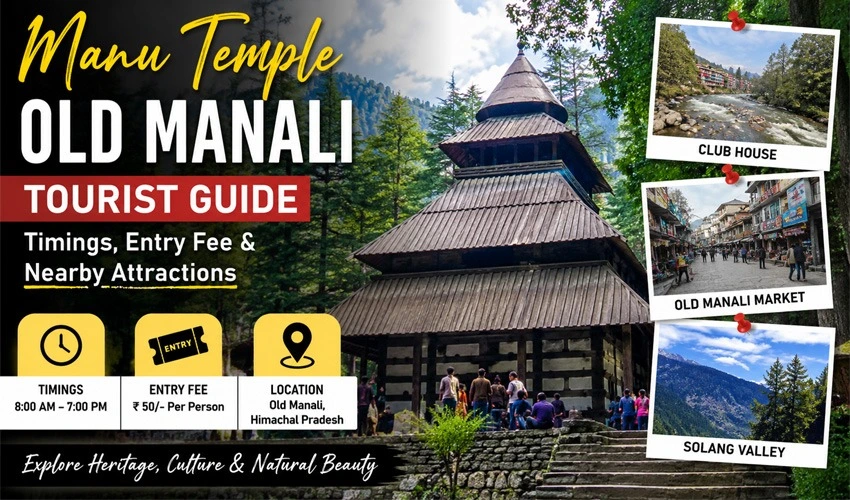
Unlike the elaborately carved and heavily visited temples elsewhere in Himachal, Manu Temple has a distinct pagoda-style structure built in traditional Himachali wooden architecture, featuring detailed carvings on its doors and a sloped, tiered roof designed to withstand heavy snowfall. Set amid tall deodar trees on the banks of the Beas River, the temple’s setting is as memorable as its mythology, offering visitors a tranquil escape from the more commercialized parts of Manali.
Manu Temple Timings
The temple generally remains open through the day, allowing visitors flexibility in planning their visit:
- Opening Time: 6:00 AM
- Closing Time: 5:00 PM to 6:00 PM (timings can vary slightly depending on the season and local customs)
Early mornings and late afternoons tend to be the most peaceful times to visit, with fewer crowds and softer light for photography. During major local festivals, timings may be extended, so it’s a good idea to check with locals or your hotel before planning a visit around a specific date.
Manu Temple Entry Fee
One of the most appealing aspects of visiting Manu Temple is that it is completely free of cost. There is no entry fee or ticket required for tourists or devotees. While the temple does not charge for entry, many visitors choose to make a small voluntary donation as a mark of respect, which goes toward the temple’s upkeep. This makes it an accessible and budget-friendly addition to any Manali itinerary, regardless of your travel budget.
How to Reach Manu Temple
Manu Temple is located approximately 3 kilometers from Manali’s main market, within the village of Old Manali. Here’s how you can get there:
- By Taxi or Auto-Rickshaw: The easiest way to reach the temple is by hiring a local taxi or auto-rickshaw from Manali’s Mall Road, which takes around 15-20 minutes.
- By Foot: If you enjoy walking, you can trek from Old Manali market, though the final stretch involves a short, somewhat steep uphill path.
- By Self-Drive: If you have a rented scooter or car, you can drive most of the way, though the road narrows as you approach the temple, so parking may need to be arranged a short distance away.
Keep in mind that the road leading to the temple is narrow in parts, and traffic congestion in peak season can add time to your journey, so it’s wise to keep some buffer time in your schedule.
Best Time to Visit Manu Temple
While the temple is accessible throughout the year, certain months offer a more pleasant experience:
- April to June: Ideal weather with clear skies, making it comfortable to explore both the temple and surrounding trails.
- September to November: Post-monsoon months bring lush greenery and clear mountain views, along with fewer tourist crowds.
- December to February: Winter months bring snowfall, offering a magical, snow-covered setting, though the uphill path can become slippery and challenging to navigate.
For most travelers, the summer and early autumn months strike the best balance between pleasant weather and manageable trekking conditions.
Tips for Visiting Manu Temple
- Wear comfortable footwear — the final approach to the temple involves an uphill walk on uneven terrain.
- Dress modestly — as with most temples in India, covering your shoulders and knees is appreciated and, in some cases, required.
- Photography restrictions — photography inside the sanctum is generally discouraged or restricted, so it’s best to check with temple caretakers before clicking pictures.
- Maintain silence and respect — the temple’s calm atmosphere is part of its charm, so visitors are encouraged to keep noise to a minimum.
- Carry water and light snacks, especially if you plan to combine your visit with a walk through Old Manali’s cafes and trails.
- Visit early morning for a quieter, more spiritual experience before the afternoon crowd builds up.
Nearby Attractions to Combine with Your Visit
The beauty of visiting Manu Temple lies in how easily it can be combined with other popular attractions in and around Old Manali. Here are some nearby places worth exploring:
Old Manali Market
Just a short walk or drive from the temple, Old Manali’s market area is known for its laid-back cafes, boutique shops, and backpacker-friendly vibe. It’s a great spot to relax after your temple visit and try some local and continental food options.
Hidimba Devi Temple
One of Manali’s most iconic attractions, this ancient wooden temple dedicated to Hidimba Devi is surrounded by a dense cedar forest and is easily combined with a Manu Temple visit, given their proximity within Manali town.
Vashisht Hot Water Springs
Located a short drive away, Vashisht is known for its natural hot sulfur springs, believed to have healing properties. It’s a popular stop for travelers looking to relax after a day of sightseeing and walking.
Jogini Waterfall
For those who enjoy light trekking, the trail to Jogini Waterfall starts near Vashisht village and offers scenic views of the Manali valley along the way, making it a great half-day add-on to your temple visit.
Manu Rishi Ghat and Beas River Banks
Since the temple sits close to the Beas River, many visitors enjoy a quiet walk along the riverbanks nearby, especially in the late afternoon when the light is soft and the crowds have thinned.
Manali Sanctuary and Nature Trails
Nature lovers can explore short trails within the Manali Wildlife Sanctuary, which lies close to Old Manali and offers a peaceful walk through pine and deodar forests.
Why Manu Temple Deserves a Place on Your Itinerary
While Manali is often associated with adventure sports and its bustling Mall Road, the Manu Temple offers a contrasting experience — one centered on mythology, architecture, and quiet reflection. Its free entry, easy accessibility, and proximity to several other popular attractions make it simple to include in even a tightly packed Manali itinerary. Whether you’re a spiritual traveler, a history enthusiast, or simply someone looking to escape the crowds for an hour, a visit to Manu Temple adds a meaningful and memorable layer to your Himachal Pradesh trip.
Final Thoughts
The Manu Temple in Old Manali may not have the grandeur of India’s larger pilgrimage sites, but its unique dedication to Sage Manu, peaceful setting by the Beas River, and easy accessibility make it a worthwhile stop for any traveler visiting Manali. With no entry fee, manageable timings, and several attractions nearby, it fits smoothly into both short weekend trips and longer Himachal itineraries. Plan your visit during the cooler months for the most comfortable experience, and take the time to soak in the calm that has made this temple a quiet favorite among those who seek more than just the usual tourist trail.