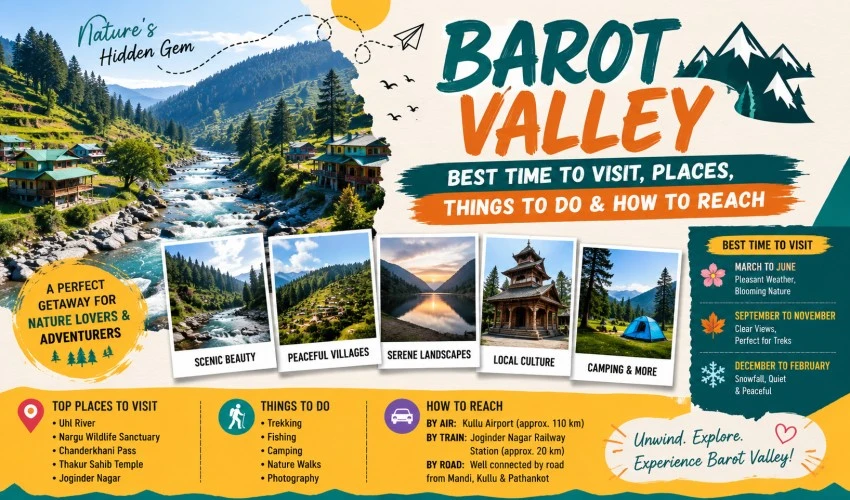
Tucked away in the Mandi district of Himachal Pradesh, Barot Valley remains one of the state’s best-kept secrets. While tourists flock to Manali, Shimla, and Dharamshala, this quiet riverside hamlet along the Uhl River continues to charm those who stumble upon it with untouched forests, trout-filled waters, and a pace of life that feels wonderfully unhurried. Surrounded by dense deodar and pine forests, with the Uhl River cutting through the valley, Barot is the kind of place where you go to slow down, breathe fresh mountain air, and reconnect with nature away from the crowds. If you’re considering a trip here, this guide covers everything you need to know, from the best time to visit to how to actually get there.
About Barot Valley
Barot was originally developed as a project colony by the British in the early 20th century, when they built a hydroelectric power project on the Uhl River. That colonial-era infrastructure, including old wooden guesthouses and the powerhouse itself, still stands today, giving the valley a distinct old-world charm layered over its natural beauty. Sitting at an elevation of around 1,900 meters, Barot enjoys a pleasant climate for most of the year and offers sweeping views of the surrounding Dhauladhar range.
What makes Barot particularly special is its relative obscurity. Unlike more commercialized hill stations, it has retained its rustic character, with apple orchards, terraced fields, and small wooden homes dotting the hillsides. It’s an ideal destination for travelers seeking peace, trout fishing, gentle treks, and a genuine slice of rural Himachali life.
Best Time to Visit Barot Valley
Barot Valley can be visited throughout the year, but each season offers a distinctly different experience, so choosing the right time depends on what you’re hoping to see and do.
Summer (March to June) is generally considered the best time to visit. The weather during these months is pleasant and cool, a welcome escape from the heat of the plains, with daytime temperatures typically staying comfortable and evenings turning refreshingly crisp. This is also the ideal season for trekking, sightseeing, and trout fishing, as the trails are clear and the river conditions are favorable.
Monsoon (July to September) transforms Barot into a lush, green paradise, with the surrounding hills draped in mist and the Uhl River swelling with fresh mountain water. However, this season also brings the risk of landslides and slippery trekking trails, so travelers should exercise caution and check road conditions before setting out.
Winter (October to February) brings a completely different character to the valley. Temperatures drop significantly, and Barot occasionally receives snowfall, particularly in December and January, transforming the landscape into a serene white wonderland. While the cold can be intense, this is a wonderful time for travelers who enjoy quiet, snow-draped scenery and don’t mind bundling up. Do note that some higher trekking routes may become inaccessible during heavy snowfall.
For most travelers, the months of March, April, May, September, and October strike the best balance between pleasant weather, accessibility, and natural beauty.
Top Places to Visit in Barot Valley
1. Uhl River
The Uhl River is the lifeline of the entire valley, and simply spending time along its banks is one of the most rewarding experiences Barot has to offer. The clear, cold water flowing over smooth stones creates a calming soundtrack to daily life here, and it’s also the primary location for trout fishing, one of the valley’s biggest draws. Walking along the riverside trails, especially early in the morning when mist still clings to the water, is a peaceful way to start any day here.
2. Barot Fish Farm
Established decades ago, the Barot Trout Fish Farm remains one of the most popular attractions in the valley. This government-run hatchery breeds rainbow trout in a series of connected ponds fed by the Uhl River. Visitors can walk through the farm, observe the breeding process, and even try their hand at fishing with the required permit. It’s an educational stop for families and a delight for anyone curious about aquaculture in a Himalayan setting.
3. Barot Dam and Powerhouse
The century-old hydroelectric project that put Barot on the map is still worth a visit today. The dam and powerhouse, originally constructed by the British, showcase impressive colonial-era engineering set against a dramatic mountain backdrop. Walking around the reservoir area offers lovely reflections of the surrounding peaks on calm days, and the sound of rushing water from the dam adds to the valley’s tranquil ambience.
4. Billing
A short distance from Barot lies Billing, one of the world’s most renowned paragliding destinations. While most visitors approach Billing from Bir, it’s also accessible via a scenic road from Barot, making it an easy addition to your itinerary. Even if you’re not up for paragliding yourself, the views from Billing’s high-altitude meadows, overlooking layered valleys and distant snow-capped peaks, are absolutely worth the detour.
5. Rajgundha Village
For travelers interested in trekking, the trail to Rajgundha, a remote village nestled deep in the mountains, is a rewarding journey through dense forests, wildflower meadows, and small streams. The village itself offers a glimpse into a simple, self-sufficient way of life largely untouched by modern conveniences. Many trekkers combine this route with a further trek to Rajgundha’s associated high-altitude meadows for an even more immersive wilderness experience.
6. Barot Wildlife Sanctuary
Adjoining the valley is the Barot Wildlife Sanctuary, a protected forest area home to a variety of Himalayan flora and fauna, including species like the Himalayan black bear, musk deer, and numerous bird species. Nature lovers and birdwatchers will find plenty to explore here, with quiet forest trails winding through dense stands of deodar and oak.
7. Nargu Wildlife Sanctuary
A little further from the main valley, the Nargu Wildlife Sanctuary offers another opportunity to explore Himachal’s rich biodiversity. This lesser-visited sanctuary is known for its dense coniferous forests and populations of Himalayan monal, the state bird of Himachal Pradesh, along with other wildlife. It’s best explored with a local guide, given its remote and relatively unmarked trails.
Things to Do in Barot Valley
Trout Fishing: Barot is widely regarded as one of the best trout fishing destinations in North India. With a permit from the local fisheries department, visitors can spend hours along the Uhl River trying their luck at catching rainbow trout, a peaceful and rewarding activity for both beginners and experienced anglers.
Trekking: The valley serves as a gateway to several scenic trekking routes, including the trail to Rajgundha and onward toward Kullu valley through high-altitude meadows. These treks range from moderate day hikes to more demanding multi-day adventures, suitable for a range of fitness levels.
Camping: With its riverside meadows and forest clearings, Barot offers excellent opportunities for camping under a sky full of stars. Several small operators set up riverside camps, and the sound of the flowing Uhl River makes for one of the most peaceful camping experiences in Himachal.
Nature Walks and Birdwatching: The dense forests surrounding Barot are rich with birdlife and offer wonderful opportunities for quiet nature walks. Early mornings are particularly rewarding for birdwatchers hoping to spot Himalayan species in their natural habitat.
Photography: Between the misty mountains, colonial-era architecture, terraced farmland, and the ever-photogenic Uhl River, Barot offers no shortage of picturesque frames for both amateur and professional photographers.
Exploring Local Culture: Spending time in the small local markets and interacting with residents offers insight into traditional Himachali mountain life, largely centered around apple farming, fishing, and small-scale agriculture.
How to Reach Barot Valley
Barot’s relative remoteness is part of its charm, but it does require a bit of planning to get there.
By Air: The nearest airport is Bhuntar Airport (Kullu-Manali Airport), located roughly 65 kilometers away. From there, travelers can hire a taxi or take connecting local transport to reach Barot. Alternatively, Gaggal Airport near Dharamshala is another option, though it’s a somewhat longer drive.
By Train: The nearest railway station is Joginder Nagar, located about 40 kilometers from Barot, and it’s connected to the narrow-gauge Kangra Valley Railway, a scenic route in itself. From Joginder Nagar, regular buses and taxis are available for the onward journey to Barot. For those coming from further afield, Pathankot is the nearest major broad-gauge railway station, from which one can take a bus or taxi to Joginder Nagar and then continue to Barot.
By Road: Barot is well-connected by road to major towns in Himachal Pradesh. It’s approximately 65 kilometers from Mandi and around 60 kilometers from Palampur, both of which have good road connectivity to the rest of the state. Regular Himachal Road Transport Corporation (HRTC) buses run between Mandi and Barot, though private taxis offer a more comfortable and flexible option, especially for those short on time. The drive itself, winding through pine forests and small villages, is scenic enough to be an attraction in its own right.
For travelers coming from Delhi, the most common route involves taking an overnight bus or train to Mandi or Pathankot, followed by a road journey to Barot. The total travel time from Delhi is typically around 12 to 14 hours, depending on the route and mode of transport chosen.
Where to Stay in Barot Valley
Accommodation options in Barot are limited but charming, ranging from a few HPTDC (Himachal Pradesh Tourism Development Corporation) guesthouses to small private homestays and riverside camps. Given the valley’s growing popularity among offbeat travelers, it’s wise to book accommodations in advance, particularly during peak summer months and around major holidays. Homestays are particularly recommended for those wanting an authentic experience, often including home-cooked local meals as part of the stay.
Final Thoughts
Barot Valley is proof that some of Himachal Pradesh’s most magical destinations aren’t necessarily the most famous ones. With its trout-filled river, colonial-era history, gentle trekking trails, and unhurried rhythm of life, Barot offers a refreshing alternative to the state’s busier hill stations. Whether you’re casting a fishing line into the Uhl River, hiking toward Rajgundha, or simply sitting by the water with the mountains for company, Barot Valley promises a quiet, memorable escape into the heart of Himachal’s countryside.