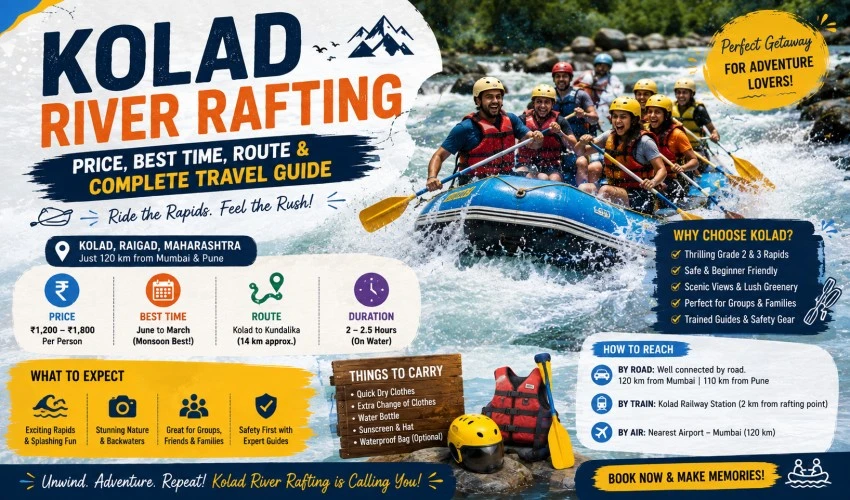
Tucked away in the Sahyadri hills of Raigad district, barely three hours from Mumbai and Pune, the small town of Kolad has quietly become Maharashtra’s most reliable white-water destination. What sets it apart from the more famous rafting circuits of Rishikesh or Coorg is simple: Kolad doesn’t depend on the monsoon. The Kundalika River, on which all the rafting action happens, is fed by controlled releases from the Bhira and Rawalje dams, which means the rapids show up on schedule every single morning, regardless of whether it rained the night before. That reliability, combined with an easy drive from two of India’s biggest cities, has turned Kolad into a weekend staple for first-time rafters, college groups, and adrenaline regulars alike.
This guide walks you through everything you need before you book — what it costs, when to go, what the actual route looks like, and the practical details that rarely make it into the brochures.
Why Kolad Works When Other Rivers Don’t
Most rafting rivers in India are rain-dependent. When the monsoon eases off, so does the water, and operators shut down until the next season. Kolad is different because the Kundalika’s flow is entirely artificial — it’s released from the Rawalje dam for irrigation purposes, and rafting operators simply time their sessions around that release window each morning. This is why Kolad markets itself as one of the few rafting spots in India that runs almost year-round, closing only briefly during the peak of summer when water levels get too low and temperatures too high for a good rafting experience.
For someone deciding between destinations, this predictability matters. You’re not gambling on weather reports or hoping last week’s rainfall was enough. If the dam releases water that morning, you’re rafting.
Kolad River Rafting Price (2026)
Pricing at Kolad varies quite a bit depending on the operator, the season, whether you’re rafting on a weekday or weekend, and how many add-ons you bundle in. Here’s a realistic breakdown based on current listings across the major operators in the area.
Standard rafting session (12–12.5 km, roughly 10 rapids, about 2 to 2.5 hours):
- Weekdays: approximately ₹1,200 per person
- Weekends: approximately ₹1,700 per person
Shorter or basic runs: Some operators offer a trimmed-down version of the route starting around ₹900, useful if you’re short on time or traveling with nervous first-timers.
Packages with extras: Add lunch for roughly ₹350, or a banana boat/bumper ride for around ₹400. Combo packages that bundle rafting with kayaking, river crossing, and a zipline typically run between ₹1,500 and ₹2,200 depending on weekday or weekend timing.
Overnight camping + rafting packages: If you want to turn this into a full getaway, two-day-one-night packages with tent stays start from around ₹1,300–1,350 per person and go up depending on the campsite’s facilities.
Rafting with transport included from Mumbai or Pune: Operators offering door-to-door pickup and drop typically charge somewhere between ₹2,400 and ₹3,500 per person, since this covers the full day — travel, rafting, meals, and sometimes a resort stopover.
Bungee jumping and premium add-ons: A few operators near Kolad now offer bungee jumping as an add-on activity, priced around ₹1,500–1,600.
A quick note on booking: prices tend to inch up slightly each season, and weekend slots — especially the popular 7:30 AM batch — sell out well in advance during peak months. It’s worth confirming the exact rate directly with your chosen operator rather than relying on numbers you find online, since discounts and seasonal offers shift frequently.
Best Time for Kolad River Rafting
Because the water is dam-released rather than rain-fed, Kolad technically offers rafting across a wider window than most Indian rivers. That said, not every season delivers the same experience.
- Monsoon (July to September): This is Kolad’s headline season. The surrounding hills turn a deep green, waterfalls appear along the drive in, and the rapids run at their most exciting because the dam release combines with natural rainfall to boost the flow. If you want the classic Kolad postcard experience — mist, greenery, and punchy rapids — this is when to go. It’s also the busiest period, so book ahead.
- Winter (October to March): A gentler, more comfortable season. The weather is pleasant for the drive and for hanging around the riverside campsites afterward, and the rafting itself is calmer since water levels are more moderate. This window suits families, first-timers, or anyone who finds the monsoon rapids a little too aggressive.
- Summer (March to June): Rafting is technically possible early in this window, and it appeals to travelers looking to cool off in the heat, but as summer progresses the water levels drop and many operators either shorten the route or pause rafting entirely closer to peak summer, resuming once the season turns.
For most first-time visitors, the sweet spot is either peak monsoon for maximum thrill or the winter months for a calmer, more scenic outing. Whichever season you pick, try to book the early morning slot — the 7:30 AM batch is consistently rated as offering the best water flow and the fewest crowds on the river.
The Route: What Actually Happens on the Water
The standard Kolad rafting route covers roughly 12 to 12.5 kilometers of the Kundalika River, starting near the Rawalje dam and running down toward the Kolad bridge area, where most sessions conclude. The full stretch takes about 2 to 2.5 hours to complete, factoring in briefing time, safety gear fitting, and the actual float.
Along the way, rafters pass through around 10 named rapids, graded mostly between Grade II and Grade III, with occasional stretches that operators rate closer to Grade IV depending on how much water the dam has released that day. These grades aren’t extreme by international rafting standards, which is part of why Kolad works well for beginners — you get genuine white-water excitement without needing prior experience.
A typical session unfolds like this:
- Reporting and briefing: You arrive at the designated point about an hour before your slot, sign in, and get fitted with a helmet, life jacket, and paddle. Guides run through basic safety instructions and paddling commands.
- Launch and early rapids: The first stretch usually eases you in with smaller rapids, giving your raft crew time to sync up their paddling before the bigger drops arrive.
- Mid-route rapids: This is where the bulk of the excitement happens — a sequence of closely spaced rapids that keep the raft bouncing and the crew paddling hard.
- Calm floating stretches: Between rapids, the river opens into quieter sections where you can simply float, take in the hills on either side, and catch your breath. Some operators pause here for a quick swim if conditions allow.
- Final rapids and finish: The route wraps up with one or two closing rapids before the raft pulls in near the Kolad bridge, where transport back to the starting point (usually by shared auto or your own vehicle) is arranged.
Because the rafting point and the finish point are several kilometers apart, most packages either include return transport or expect you to arrange your own — this is one detail worth confirming before you book, since unexpected auto charges at the end of a rafting session can catch first-timers off guard.
How to Reach Kolad
Kolad sits on NH66 (formerly NH17), the highway connecting Mumbai to Goa, which makes it an easy day trip or weekend drive from both major nearby cities.
- From Mumbai: Roughly 110–120 km, taking about 2.5 to 3 hours by road via the Mumbai-Goa highway.
- From Pune: Around 100 km, also about 2.5 hours by road.
- By train: Kolad has its own railway station on the Konkan Railway line, making it accessible by train from Mumbai in around 3 hours — a good option if you’d rather skip the drive.
If you’re relying on an operator’s transport package, pickup points are usually arranged in central Mumbai or Pune, with the whole day — travel, rafting, and drop-off — wrapped into a single itinerary.
Practical Tips Before You Go
Age and health requirements: Most operators set a minimum age of around 14, along with a weight range (commonly 40–120 kg) to ensure participants fit safely into standard-issue life jackets and rafts. If you have a heart condition, are pregnant, or have recent surgery in your history, it’s best to check with the operator beforehand.
- What to wear: Quick-dry clothing, secured footwear (sandals with back straps or old sports shoes), and a change of clothes for afterward. Cotton clothes take forever to dry and aren’t ideal.
- What to carry: A waterproof bag for your phone and valuables, sunscreen, and a towel. Most rafting points have basic changing facilities, but don’t expect luxury.
- Book ahead on weekends: Weekend slots, especially the early morning batch, fill up fast during the monsoon and can be sold out weeks in advance. If your dates are fixed, book early rather than hoping to walk in.
- Combine it with a stay: Given the distance from Mumbai and Pune, many travelers extend the trip into an overnight stay at one of the riverside resorts or campsites around Kolad, which also gives access to activities like kayaking, zip-lining, and river crossing the next morning.
- Check network coverage: Mobile connectivity near the rafting point can be patchy, so it helps to download offline maps or confirm meeting instructions with your operator the night before.
Final Thoughts
Kolad has earned its reputation as Maharashtra’s go-to rafting destination for a good reason — it’s close, it’s dependable, and it doesn’t ask beginners to commit to an extreme white-water experience just to have a good time on the river. Whether you’re chasing the lush, high-energy rapids of monsoon season or a calmer winter float with friends, the Kundalika delivers a solid half-day adventure without requiring a long trip or advanced skills. Book your slot early, pick your season based on how intense you want the ride to be, and you’ll likely find yourself planning the next visit before you’ve even dried off from this one.