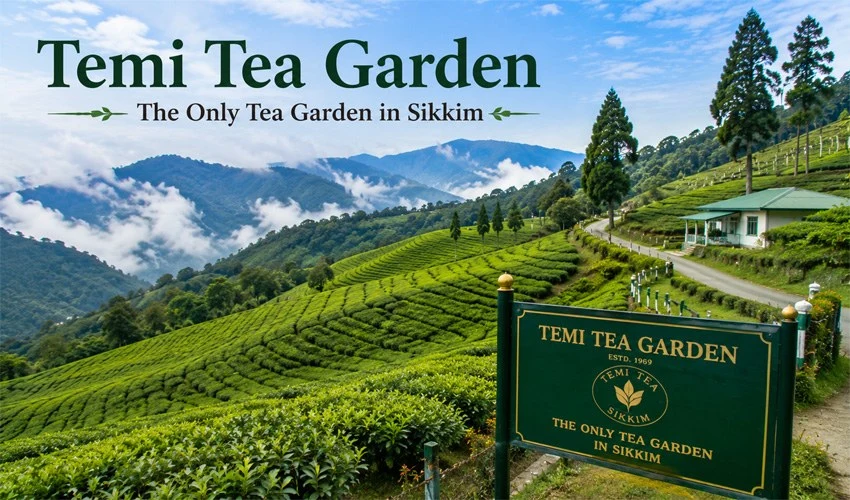
Tucked into the hill slopes of South Sikkim, where the Tendong range rolls down toward the Rangit valley, Temi Tea Garden is one of those destinations that quietly steals the show on any Sikkim itinerary. It’s the only tea garden in the entire state, spread across roughly 440 acres of neatly terraced tea bushes that seem to cascade endlessly down the hillside. Established by the Sikkim government in 1969, Temi has since built a reputation as one of the finest organic tea estates in the world, its leaves commanding serious attention — and serious prices — at international tea auctions.
For first-time visitors, though, the appeal isn’t just about the tea itself. It’s about the setting: rows of glossy green bushes framed by snow-capped peaks, the occasional burst of cherry blossoms or rhododendrons along the pathways, and an overall sense of calm that’s hard to find elsewhere. If you’re planning your first trip here, these practical tips will help you make the most of it.
When to Visit
Timing your trip to Temi Tea Garden can dramatically change what you see and experience. The estate has two standout seasons, each offering something different.
Spring, from roughly March to May, marks the first flush harvest — considered the most delicate and prized tea of the year. Visiting during this window means you’ll likely catch the plucking process in action, with workers moving methodically through the bushes collecting the youngest leaves. This season also coincides with blooming rhododendrons and orchids scattered across the surrounding valley, adding vibrant color to the already scenic hillsides.
Autumn, particularly October and November, brings a completely different kind of beauty. This is cherry blossom season, when pink blooms line the pathways leading into the garden, creating a dreamlike contrast against the deep green tea bushes. Many visitors consider this the most photogenic time to visit, and it also tends to bring cooler, more comfortable weather for walking around the estate.
Whichever season you choose, try to arrive early in the morning. Not only does the soft morning light make for far better photographs, but you’ll also beat the bulk of the day-trippers who tend to arrive from Namchi, Ravangla, or Gangtok later in the day.
Getting There
Temi Tea Garden sits between the Damthang settlement and Temi Bazaar, and while it’s remote, it’s far from inaccessible. The nearest airport is Bagdogra in West Bengal, roughly 125 kilometers away, well connected to major Indian cities like Delhi, Kolkata, and Guwahati. From Bagdogra, you’ll need to continue by road, as Sikkim’s mountainous terrain means the state has no railway network of its own. The closest railheads are New Jalpaiguri and Siliguri, both around 115 kilometers from the nearby town of Namchi.
Most travelers treat Temi as a day trip from Namchi, Ravangla, or Gangtok, hiring a private taxi for the journey. This is generally the most flexible option, since shared cabs and buses run on set schedules that may not align well with a leisurely tea garden visit. If you’re relying on public transport, the state-run bus service connects to Namchi, from where you can hire a taxi to complete the trip. Foreign nationals should double-check permit requirements before traveling, since certain areas of Sikkim require special permits — while Temi itself typically doesn’t, it’s worth confirming with local authorities or a travel agent in advance.
How Much Time to Set Aside
A basic walk through Temi Tea Garden — enjoying the views, strolling along the paths between the bushes, and snapping a few photos — can comfortably be done in about two hours. However, if you want the fuller experience, including a factory tour to see how the leaves are processed and a proper tea-tasting session afterward, it’s worth blocking out closer to half a day. Morning visits work best for this, both because the light is better and because factory operations and tea-tasting sessions are often more active earlier in the day.
For genuine tea enthusiasts, some travelers choose to stay overnight near the estate rather than treating it as a quick stop. A stay allows for a slower, more immersive experience — walking the grounds at sunrise, avoiding the midday crowd of day-trippers entirely, and soaking in the mountain views without needing to rush back to your next destination.
What to Do Once You’re There
The core experience at Temi revolves around walking through the tea bushes themselves, watching pluckers at work during harvest season, and understanding how raw leaves are transformed into the finished product at the on-site factory. Guided tours typically walk you through each stage, from plucking to withering, rolling, and drying, giving you a genuine appreciation for the craftsmanship behind every cup.
Don’t skip the tea-tasting session at the end. A small tea shop on the property lets visitors sample different varieties produced at the estate, and it’s the perfect opportunity to pick up a few packets to take home — there’s something special about drinking tea that you watched being made just hours earlier.
Beyond the tea itself, take time to simply enjoy the surroundings. The panoramic views here stretch out toward Mount Kanchenjunga and the Teesta River on clear days, and the walking paths bordered by cherry blossom trees or blooming orchids (depending on the season) are worth a slow, unhurried stroll rather than a rushed photo stop.
Practical Tips Worth Knowing
Comfortable walking shoes are essential, since the estate’s paths wind across sloped terrain that can be uneven in places. Layered clothing is a good idea too, as temperatures at this altitude can shift noticeably between morning and afternoon, even during the warmer months.
Bring a camera or make sure your phone is charged, since the combination of tea bushes, mountain backdrops, and seasonal blossoms creates some genuinely stunning photo opportunities that are easy to underestimate until you’re actually standing there. If you’re visiting during peak cherry blossom or first flush season, expect slightly larger crowds, so an early arrival will serve you well both for photography and for a more peaceful experience overall.
Finally, pair your visit with the local food scene. Small cafes and eateries near the tea garden serve up regional Sikkimese dishes that complement a cup of Temi tea nicely, giving you a fuller taste of the local culture beyond just the plantation itself. Many visitors also combine their trip with nearby attractions like Namchi’s Samdruptse or other South Sikkim sightseeing spots, making it easy to build a full day around the visit rather than treating Temi as an isolated stop.
Final Thoughts
Temi Tea Garden may be Sikkim’s only tea estate, but it more than holds its own against the more famous gardens of neighboring Darjeeling. Its organic farming practices, dramatic mountain setting, and seasonal bursts of color make it a memorable stop for any first-time visitor to the region. With a little planning around timing, transportation, and what you want to get out of the visit, Temi offers a peaceful, scenic, and genuinely educational glimpse into one of Sikkim’s most treasured industries — one best enjoyed slowly, cup in hand, with the Himalayas rising in the distance.