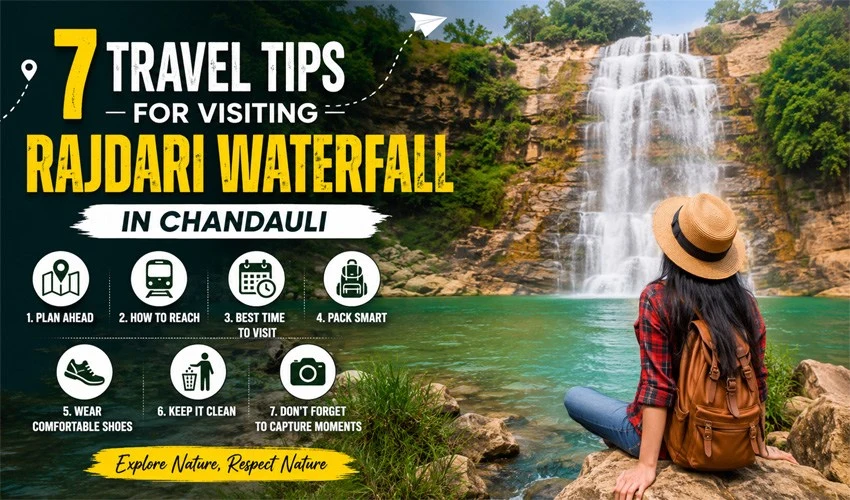
Tucked away inside the Chandraprabha Wildlife Sanctuary in Chandauli district, Rajdari Waterfall is one of Uttar Pradesh’s most underrated natural escapes. Located roughly 60 kilometres from Varanasi, this cascading waterfall offers a refreshing contrast to the temple crowds and ghats of Banaras. Water tumbles down a rocky cliff face into a natural pool below, surrounded by dense forest, sandstone outcrops, and the kind of quiet that’s hard to find near a major city.
Because Rajdari sits inside a wildlife sanctuary and remains relatively off the beaten tourist track, visiting it well requires a bit of planning. Roads can be rough in places, facilities are limited, and the experience changes dramatically depending on the season. Whether you’re coming from Varanasi for a day trip or exploring the wider Chandauli-Sonebhadra belt over a couple of days, these seven tips will help you make the most of your visit.
1. Time Your Visit Around the Monsoon and Post-Monsoon Months
The single biggest factor that determines whether your trip to Rajdari feels magical or underwhelming is timing. This is a seasonal waterfall, which means its flow depends heavily on rainfall.
The months from July to October, covering the monsoon and the weeks right after it, are when the waterfall is at its most spectacular. The water gushes down in full force during this period, and the surrounding sanctuary turns a lush, vivid green. Many visitors who have made the trip during the monsoon describe it as one of the most rewarding offbeat experiences near Varanasi, with the cascading water and green cliffs creating a scene that feels far removed from the plains of eastern Uttar Pradesh.
Winter, from November through February, is a different experience altogether. The waterfall’s flow reduces significantly, and in some years it can slow to little more than a trickle. However, this is also when the weather is at its most pleasant, and the sanctuary is calm and largely free of crowds, which some travellers actually prefer if their priority is a peaceful nature walk rather than a dramatic waterfall. Summer months, from March to June, are best avoided both because the waterfall tends to run dry and because daytime temperatures in this part of Uttar Pradesh can be uncomfortably high.
If seeing the waterfall in full flow is your priority, plan your trip for August or September, ideally a few days after a spell of good rain rather than during an active downpour.
2. Plan Your Route and Transport in Advance
Rajdari isn’t directly connected by convenient public transport, so getting there requires a bit of pre-planning. The nearest major hub is Varanasi, from where the waterfall is about a 60-kilometre drive, typically taking around two hours depending on road conditions and your starting point in the city.
If you’re travelling by train, Mughalsarai (now Pandit Deen Dayal Upadhyaya Junction) is the closest major railway station, roughly 50 kilometres away, while the smaller Jigna railway station lies closer still. From either station, you’ll usually need to arrange a shared jeep, taxi, or private vehicle to cover the final stretch, since local transport options thin out as you approach the sanctuary. The nearest airport is Varanasi’s Lal Bahadur Shastri Airport.
The most comfortable option for most travellers is hiring a private taxi or self-driving from Varanasi, since this gives you flexibility to combine the trip with other nearby sights and to leave whenever you’re ready rather than waiting for shared transport. If you’re relying on shared jeeps from Mughalsarai to Chakia and onward, build extra time into your schedule, as frequency and timing can be unpredictable, especially later in the day.
3. Carry Cash, Water, and Snacks
Once you’re near the Chandraprabha Wildlife Sanctuary, conveniences become sparse. While there are a handful of small eateries near the waterfall serving basic snacks and drinks, don’t expect much variety, and don’t assume digital payments will work smoothly in every shop. Carrying enough cash for entry fees, parking, and food is a simple precaution that saves a lot of hassle.
It’s equally important to carry your own drinking water, especially if you’re visiting in the warmer months or plan to explore the sanctuary beyond just the waterfall viewpoint. Light snacks or packed food are worth carrying too, particularly if you’re travelling with children or elderly family members, since the return journey to a proper restaurant can take a while.
There’s no accommodation available directly at Rajdari, so this is very much a day-trip destination. Plan to start early enough that you can enjoy the waterfall, have a relaxed break, and still head back to Varanasi or your base before dark, since the roads around the sanctuary aren’t particularly well lit at night.
4. Wear Proper Footwear and Dress for the Terrain
The path down to the waterfall and the rocks around the pool can get slippery, especially during and after the monsoon when moss and wet stone are unavoidable. Flip-flops or smooth-soled sandals are a common cause of slips here. Closed shoes with good grip, or at the very least sturdy sandals with textured soles, make a real difference in comfort and safety.
Dress in clothing that you don’t mind getting a little wet or muddy, and that allows easy movement, since you’ll likely be walking over uneven, rocky terrain to get the best views. If you’re visiting during the monsoon, a light raincoat or poncho is more practical than an umbrella, which can be awkward to manage on rocky paths. Carrying a change of clothes in the car is a small habit that pays off if you end up wading closer to the water than planned.
5. Be Careful Near the Water and Skip the Swim if Rocks Are Wet
Rajdari’s natural pool and rocky ledges are inviting, but caution matters more here than at a developed tourist spot. There are no lifeguards on duty, and the rocks near the base of the waterfall become extremely slippery when wet. Waterfalls like this can also have currents that aren’t obvious from the surface, particularly during or right after heavy rain.
If you’re travelling with children, keep a close watch near the edges, and avoid encouraging them to climb onto wet rocks for photos. Nearby Aurwatand canyon and waterfall, sometimes visited on the same trip, is even more untamed, with no railings or viewing platforms at all, so extra caution is essential there. As a general rule, admire the force of the water from a safe distance rather than getting right up against the flow, and skip swimming altogether if you’re unsure about depth or current strength.
6. Watch Out for Monkeys and Respect the Wildlife Sanctuary
Because Rajdari lies within the Chandraprabha Wildlife Sanctuary, an area originally set up to protect Asiatic lions and still home to a variety of birds and animals, you’re visiting a protected natural habitat, not a manicured park. Visitors commonly mention monkeys around the waterfall area, which can be bold around food. Keep snacks and loose items secured in bags, avoid feeding the monkeys, and don’t leave food unattended if you stop for a picnic.
Beyond the monkeys, treat the sanctuary with the respect any protected forest deserves. Avoid littering, don’t play loud music that could disturb wildlife, and stick to marked paths rather than venturing deep into the forest on your own. If you’re interested in birdwatching or spotting other wildlife, early morning visits tend to be more rewarding, as animals are more active before the day’s visitor traffic picks up.
7. Combine Your Trip with Nearby Attractions
Since Rajdari involves a reasonable drive from Varanasi, it makes sense to pair it with other nearby spots rather than treating it as a single, isolated stop. Devdari Waterfall, located close by within the same sanctuary, is often visited on the same trip and offers a similarly scenic, less-visited cascade. Some travellers with more time also extend their trip to the wilder Aurwatand canyon and waterfall, known for canyon-like rock formations that have drawn comparisons to miniature versions of much larger canyons abroad, or to the Chandraprabha Dam nearby.
If you’re building a fuller itinerary, consider spreading your visit across two to three days rather than rushing through as a single-day trip. This gives you breathing room to enjoy each waterfall without feeling like you’re racing the clock, and it allows for a more relaxed pace on roads that aren’t always in the best condition. For most visitors, though, a well-planned single-day excursion from Varanasi, leaving early morning and returning by evening, comfortably covers Rajdari and Devdari together.
Final Thoughts
Rajdari Waterfall rewards travellers who plan around its seasonal nature and come prepared for a genuinely offbeat destination rather than a polished tourist facility. Time your visit for the monsoon or early post-monsoon months for the best flow, sort out transport and cash in advance, wear sensible footwear, stay cautious around the water and wildlife, and consider clubbing your trip with Devdari or Aurwatand for a fuller experience. With a little preparation, Rajdari offers one of the most rewarding half-day escapes from Varanasi, a genuine slice of Uttar Pradesh’s wilder, lesser-known side.