Some beaches are famous for their nightlife, some for water sports, and others simply for scenic beauty. Dandi Beach, in Gujarat’s Navsari district, is famous for something far rarer — it changed the course of a nation’s history. This unassuming stretch of coastline on the Arabian Sea is where Mahatma Gandhi ended his historic Salt March in 1930, turning a quiet fishing village into one of the most symbolically powerful locations in India’s independence movement. Nearly a century later, Dandi Beach still carries that weight, while also offering visitors clean sands, a peaceful coastal atmosphere, and a handful of attractions that make it well worth a place on any Gujarat itinerary.
Here’s a closer look at what makes Dandi Beach so special, what there is to see and do, and how to plan your visit.
The Historical Significance That Sets Dandi Apart
To understand why Dandi Beach matters, you have to go back to 1930, when Mahatma Gandhi decided to challenge the British government’s monopoly on salt production through a deliberate act of peaceful civil disobedience. At the time, British law made it illegal for Indians to produce or sell salt independently, forcing them to buy heavily taxed salt controlled by the colonial government — a policy that affected nearly every household in the country, regardless of class or region.
Gandhi’s response was as symbolic as it was strategic. He set out on a roughly 390-kilometer march from Sabarmati Ashram in Ahmedabad, accompanied by around 80 fellow satyagrahis, walking for over three weeks until he reached the coastal village of Dandi. His destination was deliberately chosen: its proximity to the sea allowed him to make salt from seawater in full public view, directly and openly defying the British salt laws. What began as a localized act of protest snowballed into a nationwide movement, inspiring millions of Indians to join the resistance against colonial rule through nonviolent means. Thousands of supporters reportedly gathered along the route to cheer the marchers on as they passed.
Today, two monuments stand at Dandi Beach to commemorate this moment — one resembling a gate structure celebrating the successful breaking of the salt law, and another featuring a statue of Gandhi holding a handful of saline mud, capturing the exact symbolic act that shook an empire. Walking along this same stretch of coastline today, knowing its role in shaping modern India, adds a layer of meaning that few beaches anywhere in the world can offer.
The National Salt Satyagraha Memorial
Just a short distance from the beach itself stands the National Salt Satyagraha Memorial, often simply called the Dandi Memorial — one of the most compelling tributes to the Salt March you’ll find anywhere. Designed as an experiential journey, the memorial recreates the spirit and energy of the original 1930 march, guiding visitors step-by-step through the story of the Satyagraha and its role in eventually helping secure India’s independence.
The memorial’s centerpiece is a series of life-sized statues depicting Gandhi and his fellow marchers, positioned in the exact formation they walked in, making for a striking and surprisingly moving visual. Pathways within the complex mirror the original route of the march, letting visitors symbolically retrace those historic steps. An artificial lake and carefully maintained landscaping surround the site, creating a calm, reflective atmosphere that feels less like a typical museum visit and more like a walk through a living piece of history.
Adjacent to the memorial complex is Saifee Villa, which served as Gandhi’s temporary residence during the march and now operates as a small museum. Inside, visitors can view rare photographs, personal artifacts, and original documents connected to the Salt March and the broader independence movement, offering a more intimate, personal glimpse into this chapter of history beyond the grand statues outside.
Natural Beauty Beyond the History Books
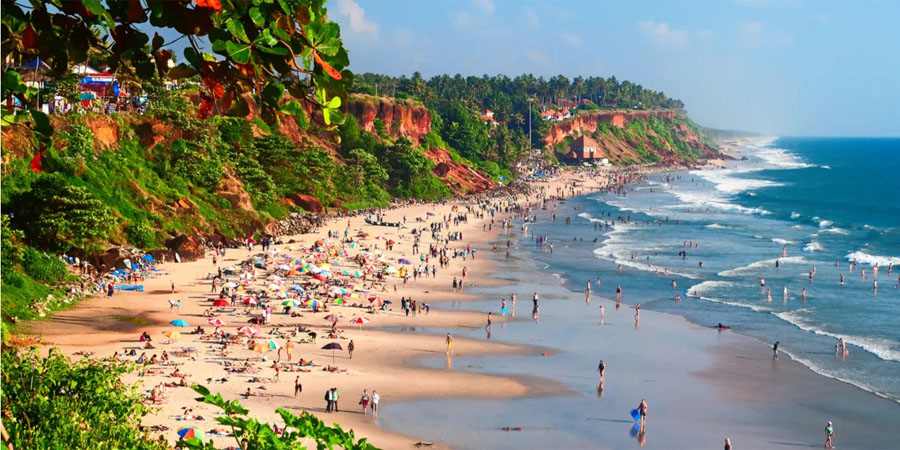
While its historical importance is what put Dandi on the map, the beach itself has plenty to offer purely as a coastal destination. Dandi Beach is often described as one of the cleaner beaches along this stretch of the Arabian Sea, with a long, unspoiled shoreline that contrasts strikingly with the deep blue of the sky and sea. Unlike heavily commercialized beach destinations, Dandi remains relatively quiet and undeveloped, giving it a tranquil, unhurried character that appeals to travelers looking for a break from crowded tourist spots.
The surrounding coastal ecosystem also supports a surprising amount of biodiversity, including migratory birds, coastal flora, and various marine species, making it an appealing stop for casual nature lovers as well as more dedicated birdwatchers. Nearby salt marshes and mangrove areas add further ecological richness, and the coastal paths around the beach offer pleasant walking routes for those who want to explore beyond the main shoreline.
Things to Do at Dandi Beach
Dandi Beach manages to blend historical reflection with a range of activities that suit different kinds of travelers.
Explore the memorial and museum. No visit to Dandi is complete without spending time at the National Salt Satyagraha Memorial and the Saifee Villa museum, both of which offer deep insight into the Salt March and its lasting impact on India’s independence movement.
Walk the shoreline. The long, clean stretch of sand is ideal for unhurried walks, whether at sunrise, sunset, or simply during a quiet afternoon. Many visitors find that walking the beach while reflecting on its history adds a uniquely contemplative quality to the experience.
Birdwatching and nature exploration. The presence of migratory birds and diverse coastal habitats makes Dandi Beach a worthwhile stop for nature enthusiasts, particularly during migratory seasons.
Water-based activities. For more adventurous visitors, some sections of the coast support activities like kayaking, paddleboarding, and windsurfing, generally supported by local rental services. Basic snorkeling in designated areas is also possible for those interested in the marine life of the Arabian Sea, though visitors should always check current conditions and safety guidance before entering the water, since swimming conditions can vary with the tides.
Visit nearby fishing villages. Small fishing communities along the coast offer a glimpse into traditional local livelihoods, giving visitors a chance to see a slower, more authentic side of coastal Gujarat away from the main tourist sites.
Shop for local crafts. Nearby markets and stalls sell handmade crafts and regional products, making for good souvenir options, alongside food stalls offering traditional Gujarati snacks for those looking to sample local flavors with a sea view.
Best Time to Visit Dandi Beach
The ideal time to visit Dandi Beach is between October and March, when Gujarat’s coastal weather is at its most pleasant — mild temperatures, comfortable humidity, and clear skies that make both beach walks and memorial visits far more enjoyable. Winter, in particular, is well suited to combining a beach visit with the more walking-intensive parts of the memorial complex, since the cooler weather makes it easier to explore for longer stretches without discomfort.
Visiting outside this window, particularly during the peak of summer, means contending with higher heat and humidity typical of Gujarat’s coastal plains, which can make extended outdoor exploration less comfortable.
How to Reach Dandi Beach
Dandi Beach is well connected by road and lies a manageable distance from several major Gujarat cities, making it an accessible day trip or weekend getaway.
- By Air: Surat International Airport is the nearest airport, roughly 56 kilometers away, with regular flights connecting to major Indian cities. From the airport, taxis or buses complete the journey to Dandi.
- By Rail: Navsari Railway Station is the closest, located about 20 to 23 kilometers from the beach, and is well connected to other parts of Gujarat. Taxis are readily available from the station for the short drive to Dandi.
- By Road: Dandi is accessible via NH 64 and NH 228, both offering scenic coastal drives. State-run buses and private taxis operate regularly from nearby cities including Surat, Navsari, and even farther hubs like Ahmedabad and Vadodara, making it a fairly straightforward drive for those touring southern Gujarat.
Why Dandi Beach Deserves a Spot on Your Gujarat Itinerary
Gujarat’s tourism map is full of striking contrasts — the otherworldly white expanse of the Rann of Kutch, the wildlife trails of Gir, the grandeur of Somnath’s temples — and Dandi Beach adds something none of those destinations quite replicate: a direct, tangible connection to the moment India’s freedom movement gathered unstoppable momentum. Few beaches in the world can claim to have altered the trajectory of a nation, and standing on that same sand, with the memorial’s statues nearby and the Arabian Sea stretching out ahead, offers a rare blend of historical gravity and coastal calm.
Whether you’re a history enthusiast eager to walk in Gandhi’s footsteps, a nature lover drawn to quiet, unspoiled shorelines, or simply a traveler looking for a meaningful stop along Gujarat’s southern coast, Dandi Beach delivers an experience that lingers well beyond the visit itself — a rare place where a walk on the beach doubles as a walk through history.