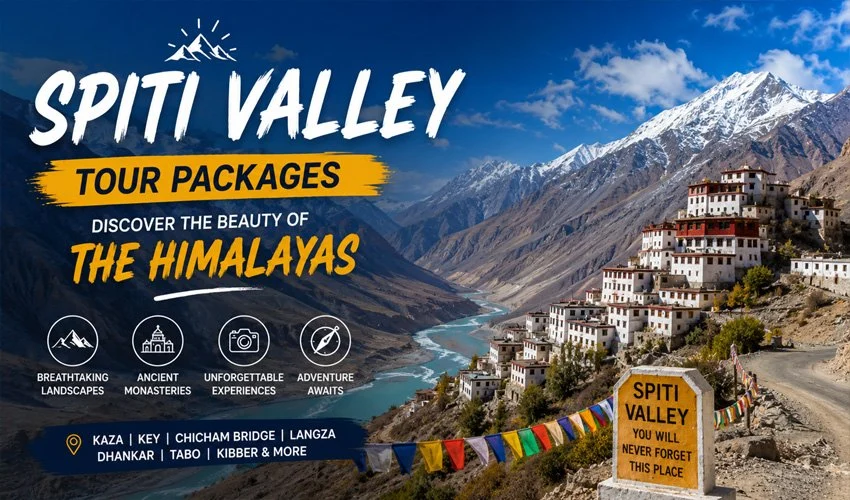
Somewhere between the lush green valleys of Himachal Pradesh and the high, arid plateaus of Tibet lies a landscape that feels almost otherworldly — Spiti Valley. Often called “Little Tibet,” this cold desert mountain valley is defined by barren brown hills, ancient monasteries clinging to cliff edges, turquoise lakes, and villages so remote they seem frozen in time. For travelers who want more than another hill-station holiday, a well-planned Spiti Valley tour package offers a rare mix of adventure, spirituality, and raw natural beauty that few destinations in India can match.
This guide walks you through everything you need to know before booking a Spiti Valley tour — the best time to go, how to get there, what a typical package includes, top places to visit, and practical tips to make your Himalayan journey smooth and memorable.
Why Spiti Valley Deserves a Spot on Your Bucket List
Spiti sits in the Lahaul and Spiti district of Himachal Pradesh, close to the Indo-Tibet border, and is one of the highest inhabited plateaus on Earth. The Spiti River carves its way through the valley, flanked by Himalayan peaks that often exceed 6,000 metres. Unlike the postcard-green hills of Manali or Shimla, Spiti’s charm lies in its stark, moon-like terrain — dramatic, silent, and largely untouched by mass tourism.
Add to this a deeply Buddhist culture, centuries-old monasteries, star-filled night skies uninterrupted by city lights, and villages that still run on age-old rhythms, and you get a destination that feels like stepping into an entirely different world without ever leaving India.
Best Time to Visit Spiti Valley
Timing your trip correctly can make or break the experience, since Spiti’s roads and weather change dramatically with the seasons.
May to June (Early Summer): This is when the valley starts shaking off its winter snow, roads begin reopening, and the landscape turns vibrant with meadows and blooming wildflowers. Since the Manali route is often still inaccessible early in this window, you can enjoy a quieter Spiti before the peak crowds arrive.
July to September (Peak Season): Both the Manali and Shimla routes are typically open during these months, making it the most popular time to visit. The weather is pleasant, all tourist facilities are functional, and you can explore practically the entire circuit, including Chandratal Lake and Kunzum Pass. Keep in mind that this is also monsoon season on the Shimla side, so occasional roadblocks are possible, though the Kinnaur-Spiti route generally stays more reliable than the Manali side during heavy rain.
September to October (Autumn): For travelers who prefer clearer skies, cooler air, and noticeably fewer tourists, this shoulder season is often considered the sweet spot. It’s especially good for photography and stargazing, since the skies tend to be at their clearest.
November to February (Winter): This is Spiti at its most extreme and most cinematic — snow-covered monasteries, silent white valleys, and a real chance of spotting elusive snow leopards. However, temperatures can plunge well below freezing, most roads become difficult or impossible to navigate, and this season is recommended only for experienced high-altitude travelers, not casual tourists.
If you want a simple rule of thumb: choose May to June for fresh snowmelt landscapes and lighter crowds, July to September for the fullest, most accessible experience, and September to October for calmer, photogenic weather.
How to Reach Spiti Valley
There are two primary routes into Spiti Valley, and most tour packages are built around one or the other — or sometimes both, forming a scenic loop.
Via Manali: This route takes you through Solang Valley, Rohtang Pass, Gramphu, Batal, Chandratal, and Kunzum Pass before reaching Kaza, Spiti’s main town. It’s shorter but tends to open later in the season, usually by late May, once the Border Roads Organisation clears snow from the high passes. If you’re traveling via Manali, you’ll also need a separate Rohtang Pass permit, which can be booked online in advance.
Via Shimla: This longer but more consistently accessible route passes through Narkanda, Rampur, Kalpa, Nako, Tabo, and Dhankar before arriving in Kaza. Because it runs at comparatively lower altitudes for longer stretches, the Shimla-Kinnaur route tends to stay open for most of the year, making it a safer bet outside peak summer months.
Many travelers structure their trip as a circuit — entering via one route and exiting via the other — to experience both the dramatic high-altitude passes of the Manali side and the ancient monastery towns along the Kinnaru-Spiti road.
Permits You Might Need
For Indian nationals, most of Spiti Valley — including Kaza, Tabo, Key Monastery, Kibber, and Chandratal — doesn’t require any special permit. However, if your itinerary includes areas closer to the Indo-China border, such as parts of Pin Valley beyond Mudh or regions near Sumdo, an Inner Line Permit for Kinnaur and Spiti may be required.
Foreign nationals, on the other hand, need an Inner Line Permit for the entire Spiti and Kinnaur region. This can usually be arranged through the SDM or DC office in Shimla, Reckong Peo, or Kaza, and the process has become considerably more streamlined in recent years, with an online application option also available. A good tour operator will typically handle this paperwork as part of your package, so it’s worth confirming this before booking.
What’s Usually Included in a Spiti Valley Tour Package
A standard Spiti Valley tour package is designed to take the logistical headache out of what is otherwise a demanding, high-altitude road trip. Most packages include:
- A private vehicle with an experienced local driver who knows the terrain
- Hotel and homestay accommodation on a twin or triple-sharing basis
- Daily breakfast and dinner
- All sightseeing as laid out in the itinerary
- Route permits and paperwork
- On-ground support throughout the trip
Better packages often go a step further, including oxygen cylinders for altitude emergencies and a local guide familiar with the region’s culture and hidden spots. Typically excluded are flights or train tickets to the starting point, lunch, personal expenses, travel insurance, and optional activities like river rafting or yak safaris.
Trip durations usually range from a compact 4-night getaway to a full 10-to-13-night circuit covering both the Manali and Shimla routes, with pricing scaling accordingly — shorter trips are naturally more affordable, while the extended circuit itineraries cost more but cover significantly more ground, including remote villages that shorter trips skip entirely.
Top Places to Visit in Spiti Valley
Kaza: The commercial and administrative hub of Spiti, and usually the base for acclimatization and onward sightseeing.
Key Monastery (Ki Gompa): One of the oldest and largest monasteries in the region, perched dramatically on a hilltop and home to a community of Buddhist monks.
Chandratal Lake: Meaning “Moon Lake,” this high-altitude lake is famous for its crescent shape and the way its colors shift through the day, from deep blue to turquoise.
Kibber Village: One of the highest motorable villages in the world, offering panoramic views and a good chance of spotting native wildlife.
Dhankar Monastery: A centuries-old monastery built into a narrow ridge overlooking the confluence of the Spiti and Pin rivers — as much an engineering marvel as a spiritual one.
Tabo Monastery: Often called the “Ajanta of the Himalayas,” this monastery houses centuries-old murals and manuscripts, revered as one of the oldest continuously functioning Buddhist centers in the region.
Pin Valley and Mudh Village: Known for its stark, isolated beauty and as one of the last habitats of the elusive snow leopard.
Nako Village and Lake: A picturesque village near the Tibet border, home to an old monastery and a calm lake framed by willow trees.
Practical Tips for a Smooth Spiti Trip
- Acclimatize before rushing ahead. Spend your first day at a relatively lower altitude, ideally in Kaza, before pushing on to higher points like Kunzum Pass or Chandratal, to reduce the risk of altitude sickness.
- Carry sufficient cash. ATMs are scarce outside Kaza, so plan your cash needs in advance.
- Fuel up whenever possible. Petrol pumps are limited to Kaza, so top up your tank at every opportunity rather than risk running low in remote stretches.
- Expect patchy mobile connectivity. BSNL tends to offer the best coverage in the region, while other networks may barely work outside major towns.
- Pack for extreme temperature swings. Even in summer, nights can turn sharply cold, so warm layers are essential regardless of season.
- Respect local customs. Spiti is deeply Buddhist; walk clockwise around monasteries and prayer wheels, remove your shoes before entering temples, and ask before photographing monks or locals.
- Book in advance during peak months. July and August see heavy demand for vehicles and homestays, so reserving your package several weeks ahead is a smart move.
Final Thoughts
A trip to Spiti Valley isn’t just another mountain vacation — it’s an encounter with a landscape and culture that few places on Earth can replicate. Whether you’re drawn by the ancient monasteries, the surreal cold-desert scenery, or simply the thrill of navigating some of the world’s most dramatic mountain roads, a well-planned Spiti Valley tour package takes care of the logistics so you can focus on the experience itself. Choose your season wisely, prepare for the altitude, and let Spiti’s quiet, rugged beauty do the rest.