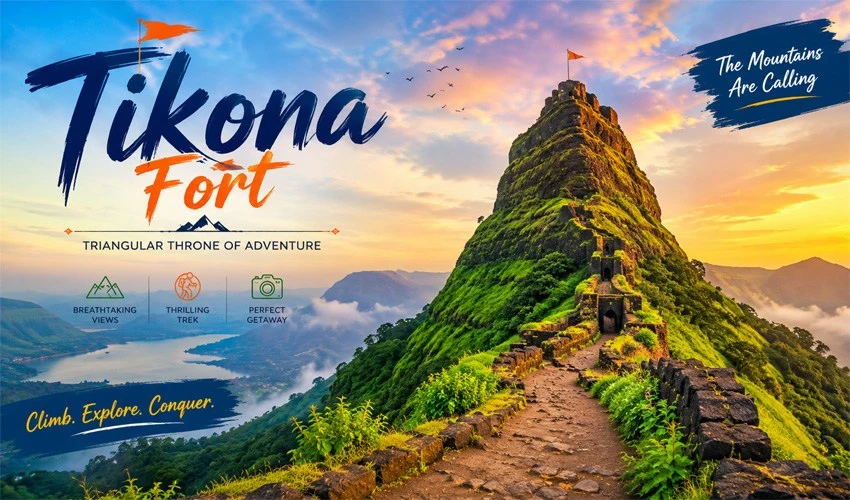
Tucked away in the Sahyadri mountain range near Pune, Tikona Fort — also known as Vitandgad — stands as one of the most rewarding short treks Maharashtra has to offer. With its distinctive triangular shape rising dramatically above the Pawna backwaters, this fort has become a favourite weekend destination for trekkers, history buffs, and families looking for an accessible yet thrilling adventure. Whether you’re a seasoned trekker or a first-timer, Tikona promises stunning views, a rich historical backdrop, and a trail that balances challenge with charm.
Where Is Tikona Fort Located?
Tikona Fort is situated in the Pune district of Maharashtra, close to the Mulshi and Pawna dam regions, roughly 60 kilometres from Pune city and around 110 kilometres from Mumbai. The fort sits at an elevation of about 3,500 feet above sea level, overlooking the picturesque Pawna Lake. Its name, “Tikona,” literally translates to “triangular” in Marathi, a fitting description of its pyramid-like silhouette that dominates the local skyline and is visible from several kilometres away.
The base village for the trek is Tikona Peth, easily reachable by road from Pune via Kamshet or Vadgaon. The drive itself is scenic, winding past the shimmering waters of Pawna Lake, lush green fields during monsoon, and rustic Maharashtrian villages that give visitors a taste of rural life before they even begin the climb.
A Glimpse Into Tikona’s History
Tikona’s historical roots run deep, dating back centuries before it came under the rule of the Maratha Empire. Local legend and historical records suggest that the fort’s original name, Vitandgad, has ancient origins, and the fort has weathered the rule of several dynasties before Chhatrapati Shivaji Maharaj captured it in 1657 as part of his expanding network of Sahyadri strongholds.
The fort played a strategic role in guarding trade routes and mountain passes connecting the Konkan coastal region with the Deccan plateau. Its commanding position gave defenders a clear vantage point over the surrounding valleys, making it nearly impossible for enemies to approach undetected. Later, Tikona also came under Mughal control for a period before returning to Maratha hands. Today, the ruins scattered across the fort — broken walls, old water cisterns, and remnants of gateways — stand as silent witnesses to this turbulent past.
The Trekking Experience
One of the biggest draws of Tikona is its accessibility. The trek is considered easy to moderate, making it ideal for beginners, families, and even children accompanied by adults. The climb typically takes between 1.5 to 2 hours to reach the top, depending on your pace and fitness level, while the descent is usually quicker.
The trail begins at the base village and winds through a mix of rocky patches, stone-cut steps, and gently sloping paths. As you ascend, the landscape transforms — dense patches of green during the monsoon give way to rocky outcrops higher up. About midway through the climb, trekkers encounter a small temple dedicated to the local deity, a popular spot for a quick breather and a moment of reflection.
Closer to the summit, the trail becomes slightly steeper, with a few sections requiring the use of iron railings and carved rock steps for support. These sections, while requiring a bit more caution, are not technically difficult and add an element of excitement to the otherwise straightforward climb. Sturdy trekking shoes with good grip are recommended, especially if you’re attempting the trek during or after the rainy season when rocks can become slippery.
What Awaits at the Summit
Reaching the top of Tikona Fort is a rewarding experience in every sense. The summit offers a panoramic 360-degree view that stretches across the Sahyadri range, with the sparkling expanse of Pawna Lake forming a stunning backdrop. On clear days, trekkers can also spot neighbouring forts such as Lohagad, Visapur, and Tung, all of which share a historical connection with Tikona as part of the same defensive network guarding the region.
At the summit, remnants of the old fort structures are still visible, including a small temple, a few cannons, and the foundations of what were once bastions and watchtowers. There’s also a flat plateau area perfect for sitting down, unpacking a picnic, and simply soaking in the tranquillity of the mountains. Many trekkers choose to time their visit for sunrise or sunset, when the changing light casts a golden glow over the lake and surrounding hills, creating unforgettable photo opportunities.
Best Time to Visit Tikona Fort
While Tikona can technically be trekked throughout the year, each season offers a distinctly different experience.
Monsoon (June to September): This is by far the most popular time to visit, as the entire region transforms into a lush green paradise. Waterfalls appear along the trail, the Pawna backwaters swell, and the cool, misty weather makes for a refreshing climb. However, trails can be slippery, so extra caution and proper footwear are essential.
Winter (October to February): This season offers the clearest skies and the most comfortable trekking conditions, with cool temperatures and excellent visibility for those panoramic summit views. It’s an ideal time for photography and camping.
Summer (March to May): The heat can make the climb more strenuous, and the landscape turns dry and brown. Trekkers attempting Tikona in summer should start early in the morning to avoid the harsh midday sun.
For most visitors, a monsoon or winter trek offers the best combination of comfort and scenic beauty.
Camping and Overnight Options
Tikona has also become a popular spot for camping, particularly along the banks of Pawna Lake near the base village. Many trekking groups and tour operators organize overnight camping trips that combine the fort trek with a night under the stars beside the lake. Bonfires, local Maharashtrian food, and the sound of water lapping against the shore make for a memorable evening after a day of climbing. Some trekkers also choose to camp directly atop the fort, though this requires carrying your own gear and being self-sufficient, as facilities at the summit are minimal to non-existent.
How to Reach Tikona Fort
By Road: The most convenient way to reach Tikona is by private vehicle or two-wheeler from Pune, via the Pune-Mumbai Expressway or the old Mumbai-Pune highway, exiting near Kamshet and following signs toward Tikona Peth. The drive takes around 1.5 to 2 hours from Pune.
By Public Transport: State transport buses run from Pune to Kamshet, from where shared jeeps or private taxis can take you the remaining distance to the base village.
From Mumbai: Visitors from Mumbai typically drive down via the Mumbai-Pune Expressway, taking the Kamshet or Talegaon exit, adding roughly 3 to 3.5 hours to the journey.
Tips for Trekkers
- Carry enough water and snacks, as facilities near the base and summit are limited.
- Wear proper trekking shoes with good grip, especially during monsoon when rocks are slippery.
- Start early to avoid crowds and, in summer, the intense afternoon heat.
- Carry a light rain jacket if trekking during monsoon season.
- Avoid littering — Tikona’s beauty depends on responsible tourism, so carry back all your waste.
- Inform someone about your plans, especially if trekking in a small group or solo.
- Check weather conditions before heading out, particularly during heavy monsoon spells when trails can become hazardous.
Why Tikona Deserves a Spot on Your Trekking List
What makes Tikona Fort stand out among Maharashtra’s countless fort treks is the perfect balance it strikes between accessibility and reward. Unlike some of the more strenuous treks in the Sahyadris that demand technical climbing skills or multi-day commitments, Tikona can be comfortably completed in a single day, even by beginners, while still delivering breathtaking views, genuine historical intrigue, and a real sense of adventure.
Its proximity to Pune and Mumbai makes it an ideal weekend getaway, and its combination of trekking, history, and lakeside camping means there’s something for every kind of traveller — whether you’re chasing adrenaline, scenery, solitude, or simply a break from city life. For anyone looking to explore the rich fort heritage of Maharashtra without an overly demanding commitment, Tikona Fort, or Vitandgad, is an experience well worth adding to your travel list.