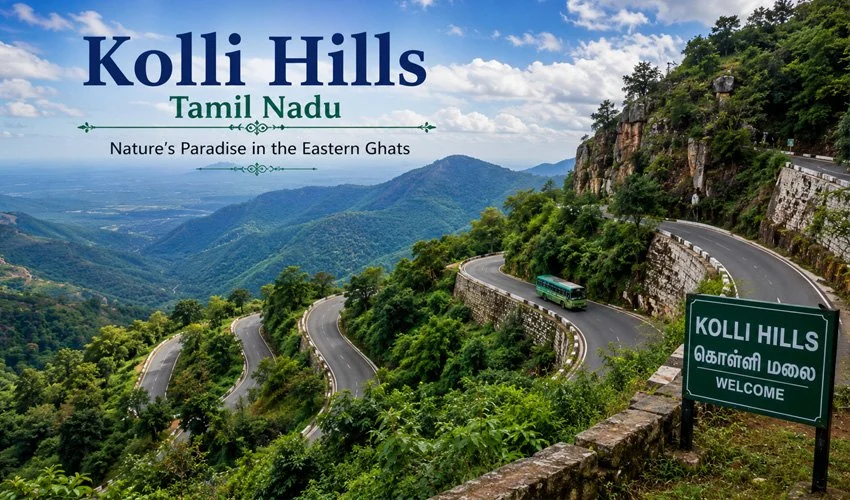
Tucked away in the Eastern Ghats of Tamil Nadu, Kolli Hills is one of those rare destinations that the mainstream tourist trail has yet to fully discover — and that is precisely its greatest charm. Known locally as Kolli Malai, this breathtaking hill range rises to an average elevation of around 1,300 metres above sea level in the Namakkal district, offering lush green valleys, mist-draped forests, roaring waterfalls, ancient temples, and a sense of untouched wilderness that is increasingly hard to find in modern India. For the adventurous soul who is tired of overcrowded hill stations, Kolli Hills offers something genuinely different: raw, unspoiled nature and a mountain experience that feels earned rather than packaged. Here is your complete guide to Kolli Hills — the best places to visit, the waterfalls that will take your breath away, the trekking trails worth every step, and the practical travel tips you need before you go.
Why Kolli Hills Is Special
What sets Kolli Hills apart from better-known Tamil Nadu destinations like Ooty or Kodaikanal is its sense of remoteness and authenticity. The region is home to the Malayali tribal community, who have inhabited these hills for centuries and continue to live in close harmony with the forest. The hills are famous for their medicinal herbs and plants — indeed, Kolli Hills has been called the “Kingdom of Herbs” — and many rare ayurvedic plants grow wild in its forests. The serpentine access road, with its famous 70 hairpin bends, is itself a legendary feature that both thrills and humbles visitors before they even reach the summit. The air is cool, the landscapes are green even in summer, and the crowds are mercifully thin. If you are looking for an adventure that combines natural beauty, spiritual heritage, and the quiet magic of tribal culture, Kolli Hills delivers on every front.
Best Places to Visit in Kolli Hills
1. Arapaleeswarar Temple
At the very heart of Kolli Hills, both geographically and spiritually, stands the ancient Arapaleeswarar Temple — the primary reason many pilgrims make the challenging ascent up the 70 hairpin bends in the first place. Dedicated to Lord Shiva in the form of Arapaleeswarar, this temple is believed to be over a thousand years old and is one of the most revered shrines in the Eastern Ghats. The presiding deity is accompanied by Goddess Kolli Paavai (also called Ettukai Amman), a fierce local deity whose legend is deeply intertwined with the history of the hills. According to tradition, the goddess guards the hill and protects its inhabitants. The temple’s architecture, the fragrance of camphor and flowers, and the surrounding greenery combine to create an atmosphere of profound peace. For pilgrims, a visit to Arapaleeswarar is the primary purpose of the journey; for other visitors, it remains one of the most atmospheric and memorable stops on the hill.
2. Agaya Gangai Waterfall
Among all the natural wonders of Kolli Hills, Agaya Gangai waterfall holds a special place in the hearts of visitors. Plunging dramatically from a height of approximately 300 feet through a narrow rock gorge surrounded by dense tropical forest, Agaya Gangai is one of the most spectacular waterfalls in Tamil Nadu. The name itself is evocative — “Agaya Gangai” means the Ganga from the sky, and when you stand at the base of the falls and look up at the white ribbon of water descending from the heavens into a cool, mist-filled pool, the name seems perfectly fitting. Reaching the waterfall requires a trek down several hundred steps through forest, which makes the journey part of the experience. The pool at the base is refreshing, and many visitors take a dip in the cool waters. The trail to Agaya Gangai passes through beautiful forest with interesting bird and butterfly life, making it rewarding even for those who are not particularly focused on the destination.
3. Seekuparai Viewpoint
For panoramic views of the surrounding valleys and the plains of Tamil Nadu stretching far below, Seekuparai Viewpoint is unmatched. On clear mornings, the view from Seekuparai encompasses an extraordinary sweep of landscape — green hillsides tumbling down into mist-filled valleys, distant peaks rising above the cloud line, and the vast plains of the Kaveri delta shimmering in the haze far below. Sunrise at Seekuparai is a genuinely moving experience, and many travellers make the effort to be at the viewpoint before dawn. The viewpoint is also a great spot for photography, with the play of light and cloud across the valleys constantly changing the scene. Small tea stalls near the viewpoint serve hot chai and snacks, which are particularly welcome on cool misty mornings.
4. Maasikatti Waterfall
While Agaya Gangai is the most famous waterfall in Kolli Hills, Maasikatti Waterfall is a quieter, equally beautiful alternative that sees far fewer visitors. Nestled deeper in the forest and requiring a longer walk to reach, Maasikatti rewards the effort with a serene, undisturbed natural setting that feels genuinely wild. The waterfall cascades over a series of rocks into a shallow pool fringed with ferns and wild flowers, and the surrounding forest is alive with the sounds of birds and insects. Because it is less visited, Maasikatti has retained a pristine quality that makes it feel like a personal discovery rather than a tourist attraction. It is an ideal spot for those who want to spend quiet time in nature, away from any crowds.
5. Kolli Hills Botanical Garden
The Kolli Hills Botanical Garden, maintained by the Forest Department, is a wonderful introduction to the extraordinary plant diversity of the Eastern Ghats. The garden showcases many of the medicinal plants and herbs for which Kolli Hills is famous, including rare species used in traditional Siddha and Ayurvedic medicine. Informative signboards help visitors identify plants and understand their traditional uses. The garden is particularly pleasant to walk through in the early morning, when the mist still clings to the trees and the air is filled with the scent of damp earth and herbs. It is an ideal stop for anyone interested in botany, traditional medicine, or simply the extraordinary biodiversity that makes these hills so ecologically significant.
6. Selur Needle Rock Viewpoint
The Selur Needle Rock is a striking natural formation — a tall, slender column of rock rising sharply from the hillside — that has become one of the visual symbols of Kolli Hills. The viewpoint near the Needle Rock offers sweeping views of the surrounding landscape and is a popular photography spot, particularly in the late afternoon when the light turns golden and the mist begins to roll in across the valleys. The drive to Selur itself is enjoyable, winding through dense forests and past small tribal settlements where life moves at an unhurried pace.
Waterfalls of Kolli Hills
Kolli Hills is a waterfall lover’s paradise, with numerous cascades hidden throughout its forests. Beyond Agaya Gangai and Maasikatti, the hills harbour several other notable falls:
Thadam Waterfalls are a series of smaller cascades accessible via a short trek and are particularly beautiful during and just after the monsoon season (July to September) when the water volume is at its greatest.
Arisi Patti Waterfalls and Ulaganda Kottai Falls are two more hidden gems that reward those willing to venture off the main tourist path with local guides. All waterfalls are at their most spectacular between July and October, when the monsoon fills every stream and river to capacity and the entire hillside seems to be in motion with flowing water.
Trekking in Kolli Hills
Kolli Hills offers some of the most rewarding trekking in Tamil Nadu, with trails ranging from relatively easy walks to challenging full-day expeditions through dense forest.
The Agaya Gangai Trek
The most popular trek in Kolli Hills follows the trail down to Agaya Gangai waterfall and back. The descent involves approximately 1,200 steps and takes around 45 minutes each way. While not technically demanding, the steep stone steps require good footwear and reasonable fitness. The forest on either side of the trail is rich with bird life, and lucky trekkers may spot langurs, porcupines, or even the occasional deer.
Forest Treks with Local Guides
For more serious trekkers, guided forest treks that venture deeper into the hills offer the chance to explore tribal villages, discover hidden waterfalls, and observe the remarkable flora and fauna of the Eastern Ghats up close. These treks typically last between four and eight hours and require a good level of fitness. Hiring a local guide from one of the tribal communities is strongly recommended — not only for navigation but also for safety and for the insight they provide into the forest and its ecology.
The Hairpin Bend Road Trek
Some enthusiastic trekkers choose to walk or run the famous 70 hairpin bends road rather than drive it. This is a genuinely challenging undertaking, covering approximately 24 kilometres with significant elevation gain, but the views along the way are extraordinary and the sense of achievement on reaching the summit is immense.
Best Time to Visit Kolli Hills
Kolli Hills is a year-round destination, but different seasons offer different experiences:
October to February is widely considered the best time to visit. The monsoon has ended, the hills are lush and green, the waterfalls are full, the air is crisp and clear, and temperatures are pleasantly cool. This is the ideal time for trekking, sightseeing, and photography.
March to May is warmer but still far cooler than the plains below, making it a popular escape during the Tamil Nadu summer. The hills are slightly drier but still beautiful, and the tourist crowds remain modest.
June to September is the monsoon season, when Kolli Hills receives heavy rainfall. The waterfalls are at their most spectacular during this period, and the forests are an extraordinary, vivid green. However, leeches are common on forest trails, road conditions can be challenging, and some viewpoints may be shrouded in cloud. Visitors who come prepared — with leech socks, waterproof gear, and a flexible itinerary — often find the monsoon season the most dramatic and memorable time to visit.
Travel Tips for Kolli Hills
Getting There: Kolli Hills is accessible from Salem (approximately 75 km) and Namakkal (approximately 65 km). The nearest major railway junction is Salem, which has good connections to Chennai, Coimbatore, Bengaluru, and other cities. From Salem or Namakkal, you can hire a taxi or take a local bus to Kolli Hills. If driving, the road from Arakkonam via Tiruchengode leads up through the famous 70 hairpin bends — a route that demands careful, unhurried driving.
Accommodation: Kolli Hills has limited but adequate accommodation options, ranging from Tamil Nadu Tourism Development Corporation (TTDC) guesthouses to small private resorts and homestays run by local families. Booking in advance is advisable during weekends and public holidays. For a more immersive experience, staying in a tribal homestay is highly recommended and provides both comfortable lodging and authentic insight into local life.
What to Carry: Light woollen layers or a fleece jacket for cool evenings and early mornings, comfortable trekking shoes, a rain jacket (especially between June and October), insect repellent, sunscreen, a reusable water bottle, and any prescription medicines you may need — the nearest well-equipped pharmacy is in Namakkal or Salem.
Responsible Travel: Kolli Hills is a fragile ecosystem and the home of indigenous communities who deserve respect. Carry all waste back with you — do not litter in forests or near waterfalls. Avoid plucking plants or disturbing wildlife. Seek permission before photographing tribal community members. Support local livelihoods by buying directly from tribal herb sellers and local food stalls rather than purchasing through intermediaries.
Mobile Connectivity: Network coverage in Kolli Hills is patchy. BSNL tends to have better coverage than private networks in remote areas. Download offline maps before you travel and do not rely solely on mobile navigation once in the hills.
Local Food and Culture
No visit to Kolli Hills is complete without sampling the local produce. The hills are famous for their honey, medicinal herbal oils, dried herbs, and a remarkable variety of traditional foods made from millets and forest produce. Local roadside stalls sell fresh corn roasted on charcoal, hot pongal, and aromatic herbal teas brewed from fresh-picked leaves — simple pleasures that somehow taste infinitely better at altitude in cool mountain air. The Malayali tribal community has a rich tradition of music, dance, and oral storytelling, and visitors who spend a few days here rather than rushing through are often privileged to witness aspects of this living cultural heritage.
Final Thoughts
Kolli Hills is not a destination that announces itself loudly. It does not have a famous brand name or a glossy tourism campaign. What it has is something far more valuable: genuine natural beauty, a living tribal culture, ancient spiritual heritage, and the rare gift of quietness. From the vertigo-inducing drive up 70 hairpin bends to the thunderous descent of Agaya Gangai, from the misty serenity of Seekuparai at sunrise to the cool green depths of a forest trek with a Malayali guide, Kolli Hills offers an experience that stays with you long after you have come back down to the plains. Go soon, go respectfully, and go ready to be surprised.