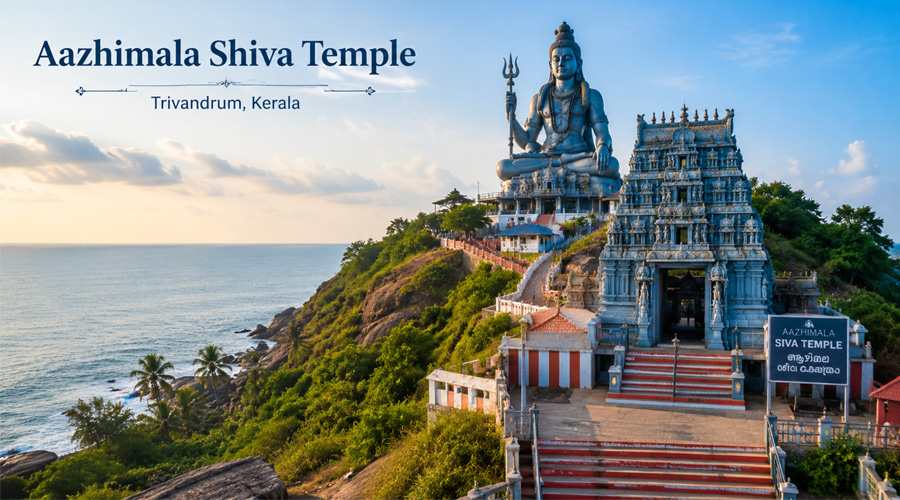
There are temples, and then there are places where divinity seems to breathe in the very air. The Aazhimala Shiva Temple, perched on a rugged clifftop along the Arabian Sea coast in Thiruvananthapuram, Kerala, is undeniably one of the latter. What draws thousands of pilgrims and travelers to this sacred site every year is not just the ancient sanctum or the crashing waves below — it is the towering presence of the Gangadhareshwara statue, a 58-foot masterpiece of devotion that stands as the tallest Shiva sculpture in all of Kerala. Whether you are a spiritual seeker, an architecture enthusiast, or simply someone chasing the extraordinary, this complete guide will walk you through everything you need to know about this magnificent destination.
The Name and Its Meaning
The very name of this temple carries poetry within it. “Aazhi” translates to “sea” and “Mala” means “hill” — together, Aazhimala means the “hill by the deep sea.” It is a name that perfectly encapsulates the temple’s dramatic setting: a sacred space anchored between sky, stone, and ocean. The presiding deity here is Lord Shiva worshipped in the form of Gangadhareshwara — the divine bearer of the holy river Ganga. This form of Shiva, one of the most symbolically rich in Hindu iconography, represents the moment when the mighty Lord caught the celestial river Ganga in his matted locks to prevent the earth from being shattered by her force.
History and Origins
The Aazhimala Shiva Temple is believed to date back to the 8th century AD, making it one of the more ancient temples of South Kerala. Historians and devotees alike associate its founding with the Pandya dynasty, the powerful Tamil rulers who were great patrons of Shaivite culture and temple architecture. The temple’s architectural style reflects clear influences from Tamil Nadu’s Dravidian tradition, blended harmoniously with Kerala’s own temple-building heritage — a visual reminder of the historical and cultural crossroads this coastal region has always been.
Legends, too, are woven deeply into this land. According to local lore, the Pandavas — the heroic brothers of the Mahabharata — passed through this very region during their years of exile. It is said that Bheema, the mightiest of the five brothers, struck the earth here to create a freshwater spring to quench Draupadi’s thirst. This sacred spring, known as Kaneerkuzhy, still exists within the temple premises and is considered to have healing properties.
The Giant Shiva Statue: Kerala’s Tallest
The undisputed crown jewel of the Aazhimala Shiva Temple complex is the colossal Gangadhareshwara statue. Standing 58 feet tall and mounted on a rock base that rises approximately 20 feet above the ground, the sculpture commands the coastal horizon in a way that leaves every visitor momentarily breathless.
The statue was sculpted by the noted artist P. S. Devadathan, whose meticulous craftsmanship took six full years to complete. On December 31, 2021, the statue was formally dedicated to public worship, instantly transforming the temple into one of the most talked-about spiritual landmarks in South India.
The sculpture depicts Shiva in a four-armed, seated posture full of calm authority. The back right hand holds a damaru (a small drum symbolizing creation), the front right hand rests gently on his thigh in a gesture of grace, the back left hand holds the trishula (trident), and the front left hand is raised into his matted jata — the dreadlocked hair from which Goddess Ganga flows. Around his neck coils Vasuki, the serpent king, and both his wrists and arms are adorned with rudraksha bead ornaments. The level of detail is extraordinary: the sculptor has rendered visible veins, individual strands of hair, and even the subtle musculature beneath the stone surface, giving the statue an almost living quality.
Beneath the rock on which the statue stands, a cave-like Dhyana Mandapam (meditation hall) spanning approximately 3,500 square feet has been built. Inside, additional sculptures narrate the stories and legends of Lord Shiva, and the history of the temple itself is carved into the walls — making the space both a place of contemplation and a living museum.
Temple Architecture
The Aazhimala Shiva Temple is a fine example of the architectural fusion that characterizes many temples of South Kerala. The main sanctum follows the Dravidian style with a distinct Tamil Nadu influence, featuring intricately carved gopuram elements, while the surrounding structures reflect traditional Kerala temple design. The interiors are adorned with paintings and sculptures depicting scenes from Hindu mythology, and sub-shrines within the complex are dedicated to deities including Ganesha, Parvati, Ayyappa, Vishnu, Kartikeya, and Hanuman. A sacred pond named Sivaganga adds to the serene and spiritually charged atmosphere of the complex. The temple is governed and maintained by the Aazhimala Shiva Temple Devaswom Trust.
Darshan Timings
The temple is open to devotees throughout the week, with no weekly holidays.
- Morning session: 5:30 AM to 10:30 AM
- Evening session: 5:00 PM to 7:30 PM
For the most peaceful experience, arriving before 7:00 AM during the morning session is highly recommended. The soft golden light of the early morning illuminates the statue and the sea simultaneously, creating an atmosphere that feels genuinely otherworldly. Evenings, particularly around sunset, are equally spectacular as the Arabian Sea turns amber and crimson behind the statue.
Entry Fee
There is no entry fee to visit the Aazhimala Shiva Temple. The complex is open to all devotees and visitors free of charge. However, devotees who wish to perform specific pujas or sevas will need to pay the applicable charges. These include:
- Udayasthamaya Pooja (morning to evening special pooja)
- Pradosha Pooja (offered on Pradosham days)
- Divasa Pooja (daily special puja)
- Uma Maheshwari Pooja — a deeply significant ritual performed for couples seeking blessings for a long and happy married life, at a cost of approximately ₹3,001
Festivals and Celebrations
The Aazhimala Shiva Temple is most vibrant during its festivals, which draw devotees from across Kerala and beyond.
Naranga Vilakku is among the most visually stunning festivals celebrated here, typically held between January and February. During this festival, devotees offer lamps lit atop lemons (naranga) as a sacred ritual believed to remove obstacles and bring peace and prosperity. On Tuesday evenings especially, hundreds of these flickering lemon-lamps are set afloat on the seashore, and the sight of the glowing lights reflected on the dark water is one of Kerala’s most magical and unforgettable spectacles.
Maha Shivaratri is the grandest celebration at the temple, observed in February or March. The temple is decorated elaborately with lights and floral arrangements, and thousands of devotees gather through the night for vigils, bhajans, and continuous ritual worship. The energy during Shivaratri at Aazhimala — with the waves of the sea providing a natural soundtrack — is something deeply moving.
Azhimala Utsavam, the annual festival held during the Malayalam month of Makaram (January–February), features cultural programs, processions, and vibrant decorations that fill the temple premises with color and joy.
How to Reach Aazhimala Shiva Temple
The temple is located approximately 20–25 kilometers from Thiruvananthapuram city center, near the Poovar–Vizhinjam coastal road in Pulinkudi.
By Air: Trivandrum International Airport is the nearest airport, roughly 16–27 km away depending on the route taken. Taxis and app-based cab services are readily available from the airport.
By Train: Thiruvananthapuram Central Railway Station is the nearest major railhead, approximately 18–22 km from the temple. From the station, taxis, auto-rickshaws, and local buses heading toward Vizhinjam or Balaramapuram provide easy onward connectivity.
By Road: Local KSRTC buses running toward Poovar or Vizhinjam stop at the Aazhimala Bus Stop, which is just about 100 meters from the temple entrance. Taxis, auto-rickshaws, and ride-hailing apps from Kovalam (about 14 km) and Thiruvananthapuram city are also convenient options.
Parking Note: During weekends and festival days, the narrow road leading down to the temple can get heavily congested. It is advisable to park at the top of the hill and walk down to the temple complex on such days.
Tips for Visitors
- Dress modestly. Men are expected to wear a dhoti or trousers with a shirt; women should wear a saree, salwar kurta, or similar traditional attire. Revealing clothing is not appropriate.
- Prohibited within the premises: Smoking, drinking alcohol, chewing tobacco or betel leaves, spitting, and touching or plucking plants inside the complex.
- Best visiting time: October to March offers pleasant coastal weather. Monsoon visits (June–September) are atmospheric but can be rough near the seafront.
- Photography: The statue and the coastal backdrop offer extraordinary photographic opportunities, especially during golden hour.
- Combine your visit with Aazhimala Beach and nearby Poovar Beach — both are just minutes from the temple and worth exploring.
Why Aazhimala Shiva Temple Is Worth the Journey
The Aazhimala Shiva Temple is not simply a temple — it is an experience that sits at the intersection of ancient legend, natural grandeur, and contemporary devotional art. The 58-foot Gangadhareshwara statue does not merely impress through its size; it communicates something more subtle through the extraordinary care and artistry poured into every inch of its form. Standing before it, with the Arabian Sea stretching endlessly in the background, it is easy to understand why this place has so quickly become one of Kerala’s most beloved spiritual destinations. For the pilgrim, the traveler, and the curious soul alike, Aazhimala is a place that stays with you long after you leave.