Introduction
Pune, often called the “Oxford of the East,” is not just a hub of education and IT — it is a city deeply rooted in devotion, mythology, and centuries-old spiritual tradition. Nestled in the lap of the Sahyadri mountains, this vibrant Maharashtra city is home to some of the most revered temples in India. Whether you are a devout pilgrim seeking divine blessings or a curious traveler drawn to ancient architecture and cultural heritage, Pune’s temples offer an experience that is both soul-stirring and historically enriching.
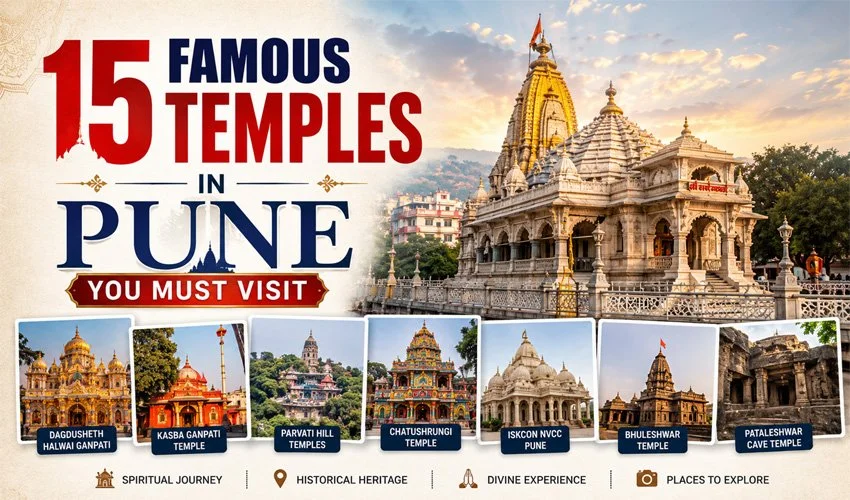
As we step into 2026, interest in spiritual tourism across India has grown dramatically. Pune stands tall as a destination that seamlessly blends modernity with tradition. From the thunderous chants at Dagdusheth Halwai Ganpati to the quiet serenity of Parvati Hill, every temple in Pune has its own story, its own energy, and its own reason to visit. Here is your complete guide to the 15 famous temples in Pune you absolutely must visit in 2026.
1. Dagdusheth Halwai Ganpati Temple
Arguably the most famous temple in Pune, Dagdusheth Halwai Ganpati draws millions of devotees every year. The idol of Lord Ganesha here is adorned with gold ornaments and precious jewels, making it one of the wealthiest Ganpati temples in Maharashtra. Built in the 19th century by a sweet merchant named Dagdusheth Halwai, this temple became a center of the independence movement when Bal Gangadhar Tilak used its platform to unite the masses. Located in Budhwar Peth, the temple is a must-visit for its spiritual atmosphere and stunning craftsmanship.
2. Parvati Hill Temple
Perched atop a hill in the heart of Pune city, the Parvati Hill Temple complex is one of the oldest surviving structures in the city. The climb involves around 108 steps, but the panoramic view of Pune from the top makes every step worthwhile. The hilltop houses temples dedicated to Lord Vishnu, Lord Shiva, Goddess Parvati, and Lord Kartikeya, along with a heritage museum. Built by the Peshwas in the 18th century, this complex reflects the grandeur of Maratha architecture and history.
3. Kasba Ganpati Temple
Known as the Gramdevata (presiding deity) of Pune, Kasba Ganpati holds a place of immense reverence among locals. This temple, located in the old Kasba Peth area, is believed to be over 350 years old. According to popular belief, Jijabai, the mother of Chhatrapati Shivaji Maharaj, installed this idol before he embarked on his campaigns. During Ganesh Chaturthi, Kasba Ganpati leads the procession as the first Manacha Ganpati, a tradition deeply embedded in Pune’s cultural identity.
4. Tambdi Jogeshwari Temple
Nestled in the heart of old Pune near Shaniwar Peth, Tambdi Jogeshwari Temple is dedicated to Goddess Jogeshwari, a fierce and protective form of Durga. The temple is especially crowded during Navratri, when devotees flock to seek the goddess’s blessings. The idol glows with a distinct orange-red hue, which gives the deity and the temple its name — “Tambdi” meaning copper-colored in Marathi. The spiritual energy here is palpable, and the temple’s ancient architecture adds to its mystical charm.
5. Chaturshringi Temple
Situated on a hillside in the Senapati Bapat Road area, Chaturshringi Temple is dedicated to Goddess Chaturshringi, a manifestation of Adi Shakti. The goddess is worshipped as the kuldaivat (family deity) by many Pune residents. With 125 steps leading to the main shrine, the climb is considered an act of devotion. During Navratri, the temple wears a festive look with illuminations, cultural programs, and a steady stream of thousands of pilgrims. The goddess is depicted with eight arms, holding various divine weapons, symbolizing power and protection.
6. Omkareshwar Temple
Located on the banks of the Mutha River in Shivajinagar, Omkareshwar Temple is dedicated to Lord Shiva and is one of the most serene temples in Pune. Built by the Peshwas in the early 18th century, this temple is renowned for its beautiful Hemadpanthi-style architecture. The temple stands gracefully beside the river, creating a picturesque and tranquil setting. It is a popular morning destination for devotees who come to offer prayers at sunrise, with the sound of bells and sacred chants echoing across the riverbank.
7. Sarasbaug Ganpati Temple
Located inside the lush Sarasbaug Garden in the heart of Pune, Sarasbaug Ganpati is one of the five Manacha Ganpatis and holds a position of great prestige. The temple, surrounded by a tranquil garden, provides a peaceful environment for worship and reflection. The idol is known for its calm and benevolent expression. The garden surrounding the temple makes it a favorite spot for both pilgrims and families who wish to combine spiritual visits with a leisurely stroll amidst greenery.
8. Pataleshwar Cave Temple
Carved out of a single basalt rock in the 8th century, the Pataleshwar Cave Temple is a testament to ancient craftsmanship. Dedicated to Lord Shiva, this rock-cut temple is located near Jangali Maharaj Road and predates many structures in the region. The cave contains a Shiva Linga, Nandi, and intricately carved figures of various deities. Despite being over 1,200 years old, the carvings remain remarkably well-preserved. The quiet, shaded surroundings make it a contemplative spot for history enthusiasts and devotees alike.
9. Trishund Mayureshwar Temple, Morgaon
Located about 65 kilometers from Pune in the town of Morgaon, the Trishund Mayureshwar Temple is the first of the eight Ashtavinayak temples — a pilgrimage circuit revered throughout Maharashtra. The presiding deity here is Lord Ganesha with three trunks, an exceptionally rare iconographic form. The temple, with its distinctive towers and ancient walls, is surrounded by a moat. Completing the Ashtavinayak yatra (pilgrimage) begins and ends at Morgaon, making this temple a cornerstone of Maharashtra’s spiritual geography.
10. Siddhivinayak Temple, Siddhatek
Another jewel in the Ashtavinayak circuit, the Siddhivinayak Temple in Siddhatek is approximately 100 kilometers from Pune. The Ganesha idol here is unique because the trunk turns to the right, which is considered highly auspicious and rare. Situated atop a hill surrounded by the Bhima River, the temple complex carries immense religious significance and has been patronized by the Peshwas. Devotees who visit believe their deepest wishes are granted by the Siddha (accomplished) deity here.
11. Jyotiba Temple, Wadi Ratnagiri
Though situated about 130 kilometers from Pune near Kolhapur, the Jyotiba Temple is deeply connected to Pune’s pilgrimage culture. Dedicated to Lord Jyotiba — a deity believed to be a combined form of Brahma, Vishnu, and Mahesh — this hilltop temple commands breathtaking views of the surrounding landscape. The temple sees enormous crowds during the annual Jyotiba Yatra. For those undertaking a spiritual road trip from Pune into the Deccan hinterlands, this temple is an unforgettable stop.
12. Khandoba Temple, Jejuri
Considered one of the most beloved folk deities of Maharashtra and Karnataka, Lord Khandoba’s most famous shrine stands in Jejuri, around 50 kilometers from Pune. The temple sits dramatically atop a hill and is surrounded by countless lamps, earning it the moniker “Sonai” (golden). The tradition of throwing turmeric powder on fellow devotees during festivals makes the Khandoba Temple a uniquely vibrant and visually spectacular pilgrimage experience. The deity is worshipped as a warrior god and is the kuldaivat for many Maharashtrian families.
13. Bhuleshwar Temple
Perched atop an isolated hill near Yavat village, roughly 45 kilometers from Pune, Bhuleshwar Temple is one of Maharashtra’s architectural marvels. Dating back to the Yadava dynasty of the 12th to 13th century, this Shiva temple is built in a style that blends Hemadpanthi and Islamic architectural influences, which is a historical curiosity. The temple walls are adorned with intricate carvings of deities, animals, and celestial beings. The remote hilltop setting, accessible after a short trek, adds a spirit of adventure to the visit.
14. Shreemant Dagdusheth Halwai Sansthan’s Guruji Talim Ganpati
Often overshadowed by its more famous namesake, the Guruji Talim Ganpati is another revered Manacha Ganpati in Pune. Located in Somwar Peth, this temple has its own devoted following and is especially significant during Ganesh Chaturthi. The idol is celebrated for its artistic detailing and is maintained by a trust with deep cultural connections to Pune’s wrestling and martial arts tradition. The atmosphere during the festival is electric, with traditional music, dhol-tasha performances, and colorful decorations.
15. Narayanpur Khandoba Temple, Narayanpur
Located near Shirur, about 60 kilometers from Pune, the Narayanpur Khandoba Temple is one of the key Khandoba shrines in the region and a significant pilgrimage site for devotees from across western Maharashtra. The temple is especially lively during the Champa Shashthi festival, which marks the legend of Lord Khandoba’s victory over the demons Mani and Malla. The festivities include dramatic folk performances, torch processions, and collective worship that reflect the deeply community-rooted nature of Maharashtra’s temple culture.
Tips for Visiting Temples in Pune in 2026
Planning a temple tour in Pune requires a little preparation. Most temples open early in the morning, typically by 5:30 or 6:00 AM, and close briefly in the afternoon before reopening in the evening. Modest, respectful clothing is expected at all shrines. Footwear must be removed before entering temple premises, and many temples provide free storage facilities. For outstation temples like Morgaon or Jejuri, consider hiring a taxi or booking a guided Ashtavinayak tour, which typically covers all eight Ganesha temples in two to three days.
Festivals like Ganesh Chaturthi (August–September) and Navratri (October) are the best times to experience Pune’s temple culture at its most vibrant, though expect large crowds. Visiting on weekdays or early mornings ensures a more personal, meditative experience.
Conclusion
Pune’s temples are far more than places of worship — they are living museums of history, art, community, and devotion. Each temple carries within it centuries of stories: of Peshwa rulers, of freedom fighters, of ordinary families finding solace in faith. Whether you are completing the sacred Ashtavinayak circuit, climbing the steps of Parvati Hill at dawn, or standing amid the jasmine-scented air of Dagdusheth Ganpati, you will find that Pune’s spiritual landscape is as layered and magnificent as the city itself. In 2026, make these 15 temples a part of your journey — and let Pune’s divine heritage leave its mark on your soul.