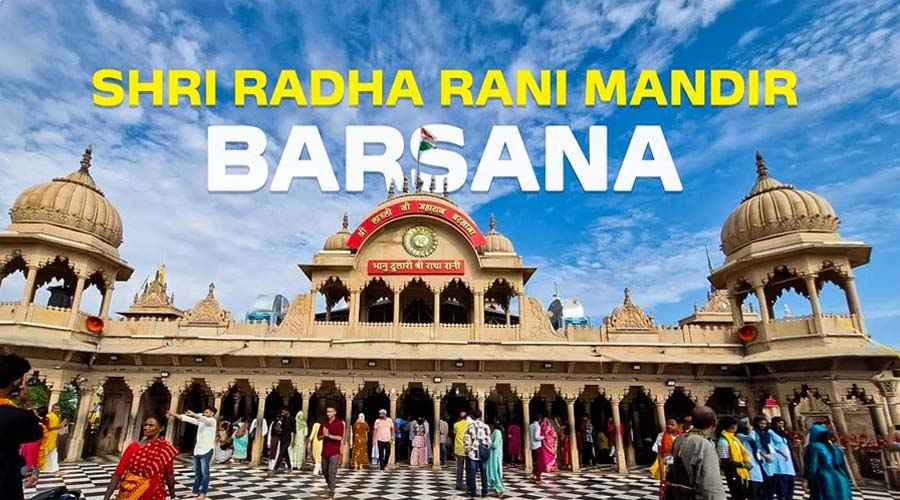
I climbed the last few steps to Shri Radha Rani Temple Barsana with my legs burning and my phone almost dead. And then I saw the main shikhara catching the evening light. Every bit of tiredness disappeared in that moment.
I’ve been writing about temples and pilgrimage routes for 10 years now. Few places hit me the way Shri Radha Rani Temple Barsana did.
Barsana sits at the heart of Braj Bhoomi, the land where Krishna grew up and where Radha was born. This isn’t just another stop on a Mathura-Vrindavan tour. It’s the place locals consider the soul of Radha’s story.
What makes Shri Radha Rani Temple Barsana different from other Krishna pilgrimage sites is simple. Here, Radha comes first. Krishna is the guest. That single detail changes the entire mood of the place.
In this guide, I’ll walk you through everything I learned during my visit to Shri Radha Rani Temple Barsana. History, timings, how to climb the hill, where to eat, and what nobody bothers to mention before you go.
About Shri Radha Rani Temple Barsana
Shri Radha Rani Temple Barsana sits on top of Bhanugarh Hill, one of four hills that surround the town. Locals also call it Ladli Ji Temple, and you’ll often hear it referred to as Shriji Temple too.
The temple is dedicated to Radha as Ladli Ji, meaning “the beloved one.” In most Krishna temples across India, Krishna’s idol takes the central spot. Here, Radha sits at the center, and Krishna’s image stands beside her.
That’s the spiritual significance of Shri Radha Rani Temple Barsana in one line. It flips the usual order. Devotees come here believing that pleasing Radha is the surest way to reach Krishna.
I noticed this the moment I stepped inside. The priests addressed Radha first during the aarti. Krishna’s name came right after, almost like an afterthought, but a respectful one.
History of Shri Radha Rani Temple Barsana
The legends here go back centuries. Local tradition says Barsana was the home of Vrishabhanu, Radha’s father, and that Radha herself was born in this town.
Braj culture treats Barsana as Radha’s paternal home, just as Vrindavan and Gokul are tied to Krishna’s childhood. The connection between Shri Radha Rani Temple Barsana and the wider Braj region runs through every festival, every song, every story the locals tell.
The current temple structure isn’t ancient in the architectural sense. Most of what stands today was built and rebuilt over the last few centuries, with major renovations during the 19th century. Earlier structures on the same hill likely existed long before that.
Various rulers and wealthy patrons from Rajasthan and other regions contributed to its upkeep over time. You can spot this in the carved stone work and the donor inscriptions near the main hall, if you take a moment to look.
Why Shri Radha Rani Temple Is So Famous
The biggest reason people travel here is Radha’s birthplace association. For devotees, standing at Shri Radha Rani Temple Barsana means standing close to where Radha was born and raised.
The spiritual atmosphere does the rest. I’ve visited dozens of temples for work. This one felt different. Maybe it’s the elevation, maybe it’s the chanting that echoes off the hill, but something about the place slows you down.
Among Krishna devotees, Barsana holds a status close to Vrindavan itself. Many pilgrims who do the full Braj parikrama treat a visit to Shri Radha Rani Temple Barsana as a non-negotiable stop.
During the Braj pilgrimage circuits, especially around festival months, the town fills up fast. Buses from Mathura, Vrindavan, and even Delhi bring thousands of visitors who come specifically for this temple.
Location of Shri Radha Rani Temple Barsana
Shri Radha Rani Temple Barsana sits in Barsana town, in the Mathura district of Uttar Pradesh. The temple itself is built on Bhanugarh Hill, which rises above the rest of the town.
Bhanugarh Hill gives the temple its commanding view. From the top, you can see the flat Braj countryside stretching out in every direction, dotted with smaller temples and ponds.
If you’re coming from Mathura, the distance to Shri Radha Rani Temple Barsana is roughly 50 km. From Vrindavan, it’s around 42 km. Both routes are doable in under 90 minutes by road, traffic depending.
How to reach Shri Radha Rani Temple Barsana
By road
This is the most common way to reach Shri Radha Rani Temple Barsana. State buses run from Mathura and Vrindavan to Barsana throughout the day. If you’d rather skip the wait, shared taxis and private cabs cover the same route in about an hour.
By train
The nearest railway station is Mathura Junction. From there, you’ll need a taxi or auto for the remaining distance to Shri Radha Rani Temple Barsana, since Barsana doesn’t have major rail connectivity of its own.
By air
The closest airport is Agra, about 70 km away. Delhi’s airport works too, especially if you’re combining this trip with other parts of Uttar Pradesh.
Local transport options
Once you’re in Barsana, autos and e-rickshaws handle the short hop from the bus stand to the base of the hill. Fares are cheap, but agree on the price before you get in. I learned that one the hard way.
Climbing to the temple
Traditional stair route
There’s a long staircase carved into the hill leading to Shri Radha Rani Temple Barsana, lined with smaller shrines and the occasional monkey eyeing your bag. It took me close to 25 minutes at a relaxed pace, with a couple of stops to catch my breath.
Ropeway facility
A ropeway now runs up part of the hill, and honestly, it’s a relief. The ride takes a few minutes and skips the steepest section of the climb.
Which option is better for families and seniors?
If you’re traveling with elderly parents or young kids visiting Shri Radha Rani Temple Barsana, take the ropeway up and walk down. That’s what I did on my second visit, and it made the whole trip far easier on everyone’s knees.
Shri Radha Rani Temple Barsana timings
Summer darshan timings
In summer, Shri Radha Rani Temple Barsana usually opens around 5:00 AM and stays open until late evening, with a midday break.
Winter darshan timings
Winter timings at Shri Radha Rani Temple Barsana shift slightly later in the morning, since the cold keeps both priests and devotees inside a bit longer.
Temple closure hours
There’s a midday closure for a few hours in both seasons, generally between late morning and mid-afternoon. Plan your Shri Radha Rani Temple Barsana visit around this gap.
Best time for peaceful darshan
Early morning, right after the doors open, is when Shri Radha Rani Temple Barsana feels calmest. Fewer crowds, cooler air, and the first aarti of the day.
Aarti timings at Shri Radha Rani Temple
- Mangala Aarti: the first aarti of the day, performed early morning
- Shringar Aarti: mid-morning, when the deities are dressed and decorated
- Rajbhog Aarti: around midday, before the temple closes for the afternoon break
- Sandhya Aarti: in the evening, as the temple reopens
- Shayan Aarti: the last aarti, just before closing for the night
I made it a point to attend the Sandhya Aarti. The lamps, the singing, the smell of incense drifting across the courtyard. It’s worth timing your visit around this one.
My darshan experience at the temple
Climbing the hill took longer than I expected, mostly because I kept stopping to look back at the view. Every few steps, Barsana looked a little smaller and the sky looked a little bigger.
The temple atmosphere hit me right at the entrance. There’s a hum of chanting, bells, and conversation that somehow doesn’t feel chaotic. It feels alive.
Crowd management was better than I expected, even on a weekend. There were lines, sure, but they moved. Volunteers kept things orderly without being pushy about it.
The spiritual feeling during darshan is hard to put into words. I’m not the type to get emotional easily, but standing in front of Radha Rani’s idol, with the priests singing and the whole hall glowing in lamplight, I felt something shift.
Photography opportunities are everywhere, especially from the outer courtyard looking down at the town. Just be respectful inside the main sanctum. Some areas don’t allow phones, and the staff will let you know.
Architecture of Shri Radha Rani Temple
The temple design at Shri Radha Rani Temple Barsana follows a traditional North Indian style, with tall towers and an open courtyard. Multiple smaller shrines surround the main sanctum.
Red sandstone makes up most of the structure, giving it a warm color that shifts with the light throughout the day. By sunset, the whole building looks almost orange.
The courtyard and carvings reward a slow look. Floral patterns, depictions of Krishna’s life, and detailed pillar work cover large sections of the walls.
Views from the hilltop are, honestly, half the reason to make this climb. You get a full panorama of Barsana, the surrounding hills, and on a clear day, fields stretching toward the horizon.
Festivals celebrated at Shri Radha Rani Temple
Radhashtami
This marks Radha’s birthday and is the biggest festival at Shri Radha Rani Temple Barsana. The temple gets decorated heavily, and the crowds are massive. Visitors who plan their trip to Shri Radha Rani Temple Barsana around this date get a completely different experience compared to a regular weekday.
Lathmar Holi
Barsana’s Lathmar Holi is famous across India. Women playfully hit men with sticks (lathis) as part of a centuries-old tradition tied to local Krishna-Radha folklore.
Janmashtami
Krishna’s birthday celebrations bring extended aarti sessions and a festive mood across the whole town, not just the temple.
Kartik month celebrations
Throughout Kartik, special evening lamps and extended prayers fill the temple complex. If you’re visiting during this month, expect a quieter but deeply devotional atmosphere.
Best time to visit Shri Radha Rani Temple Barsana
Weather-wise guide
October to March offers the most comfortable weather. Summers get brutally hot, and the climb up the hill becomes tough by mid-morning.
Crowd-wise guide
Weekdays, especially early mornings, are your best bet for a quieter visit to Shri Radha Rani Temple Barsana.
Festival season guide
If you want the full experience, including music, crowds, and decorations, plan around Radhashtami or Lathmar Holi. If you prefer peace, avoid those dates entirely.
Things to know before visiting
Dress code
Modest clothing is expected at Shri Radha Rani Temple Barsana. Cover your shoulders and knees. This applies to everyone, regardless of gender.
Footwear arrangements
Shoe stands sit near the base of the hill. There’s a small fee, and it’s worth it rather than carrying your shoes up the stairs.
Prasad options
Local shops near the entrance sell prasad, mostly sweets and dried fruit packets. Prices are reasonable, and quality is generally good.
Ropeway tips
Buy your ropeway tickets early, especially on weekends. The line for tickets can get longer than the ride itself.
Crowd avoidance strategies
Arrive before 7:00 AM if possible. By mid-morning, both the stairs and the temple courtyard fill up fast.
Nearby places to visit in Barsana
Kirti Mandir
A smaller but beautiful temple, often quieter than the main one, dedicated to Radha’s parents.
Prem Sarovar
A peaceful pond linked to local legends about Radha and Krishna. Good spot for a short break between sightseeing stops.
Nandgaon
About 16 km from Barsana, this town is associated with Krishna’s foster father, Nanda. Many visitors combine both towns in a single day.
Bhanugarh Hill
Beyond the temple itself, parts of the hill offer additional viewpoints and smaller shrines worth a short detour.
Suggested one-day Barsana itinerary
If you only have one day for Shri Radha Rani Temple Barsana, here’s how I’d structure it.
Morning darshan: Start early, reach Shri Radha Rani Temple Barsana before 7:00 AM, and take in the Mangala or Shringar Aarti.
Ropeway experience: After darshan, take the ropeway down if you walked up, or vice versa, just to experience both routes.
Local sightseeing: Head to Kirti Mandir and Prem Sarovar. Both are close enough to cover on foot or a short rickshaw ride.
Sunset views: If time allows, head back up partway for sunset. The light over Barsana at that hour is something else.
Shri Radha Rani Temple Barsana FAQs
Is photography allowed inside the temple?
Outside areas are generally fine. Inside the main sanctum, follow staff instructions, as some sections restrict phones.
How long does the climb take?
About 20 to 30 minutes on foot, depending on your pace and the crowd.
Is the ropeway worth the cost?
Yes, especially for families, seniors, or anyone visiting in summer heat.
Can I visit Barsana and Vrindavan in the same day?
It’s possible, but tight. I’d recommend giving Shri Radha Rani Temple Barsana its own half-day if you can.
Is Shri Radha Rani Temple Barsana suitable for first-time visitors to Braj?
Yes. It’s one of the easier temples to navigate, and the climb is manageable for most people with a reasonable fitness level.
Final thoughts
Shri Radha Rani Temple Barsana isn’t a quick photo stop. It’s a climb, a story, and a feeling all rolled into one hill.
I went in expecting another temple visit to check off my list. I left thinking about Radha’s place in this whole story differently than I had before.
If you’re planning a Braj Bhoomi trip, don’t treat Shri Radha Rani Temple Barsana as optional. Give it the morning, take the climb slowly, and let the place do what it does.