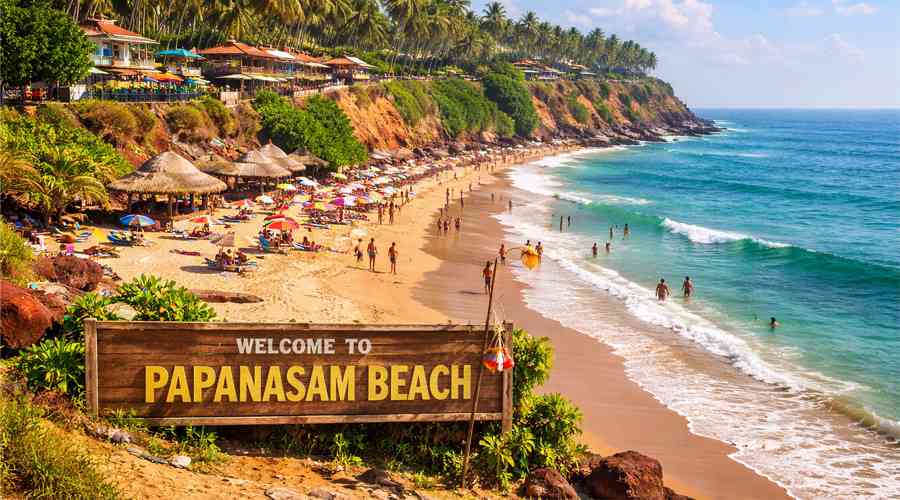
Nestled along the dramatic cliffs of Kerala’s Arabian Sea coastline, Papanasam Beach is far more than just a scenic stretch of golden sand. While tourists admire its sunsets and peaceful atmosphere, pilgrims from across India visit this sacred shore with a deeper purpose — to take a holy dip believed to cleanse sins and bring spiritual renewal. The name itself reveals its sacred identity: “Papanasam” translates to “destruction of sins” (Papa = sin, Nasam = destruction). But what truly makes this beach so spiritually powerful? Let’s explore the religious, historical, and cultural reasons behind its fame.
The Sacred Meaning Behind the Name
In Hindu belief, water is considered a purifying element. Rivers like the Ganga are revered for their ability to wash away sins. Similarly, Papanasam Beach holds a sacred reputation where devotees believe that bathing in its waters absolves past wrongdoings and purifies the soul.
The concept of spiritual cleansing is deeply rooted in Hindu philosophy. Pilgrims believe that sins accumulated knowingly or unknowingly can be dissolved through sincere prayer and ritual bathing. The sea at Papanasam is not just water — it is considered divinely blessed, making it a place of redemption and new beginnings.
Connection with Janardanaswamy Temple
One of the main reasons Papanasam Beach is spiritually significant is its close association with the ancient Janardanaswamy Temple. This 2,000-year-old temple dedicated to Lord Vishnu (Janardana Swamy) is a major pilgrimage center in Kerala.
Traditionally, devotees visit the temple after taking a holy dip at Papanasam Beach. The ritual sequence is important:
- Take a purifying bath in the sea.
- Offer prayers and perform rituals for ancestors.
- Visit the temple for darshan (divine viewing of the deity).
This sacred combination of sea bath and temple visit strengthens the spiritual aura of the beach. Many pilgrims believe that prayers offered after the holy dip are more powerful and readily accepted by the deity.
Rituals for Ancestors (Pitru Tarpanam)
Papanasam Beach is especially famous for performing ancestral rites, known as “Pitru Tarpanam” or “Shraddham.” Families gather at the shore to conduct rituals for departed loved ones, seeking peace and liberation for their souls.
During these ceremonies:
- Priests chant Vedic mantras.
- Offerings of rice balls (pindam) are made.
- Water rituals are performed facing the sea.
The belief is that the Arabian Sea at Papanasam serves as a spiritual medium connecting the earthly realm with the ancestral world. Performing these rites here is considered highly auspicious and spiritually rewarding.
Amavasya (new moon day) and Karkidaka Vavu (a special day in the Malayalam calendar) witness thousands of devotees arriving to perform these sacred rituals.
Mythological Significance
According to legend, Sage Narada once performed penance here to seek forgiveness for his mistakes. Another popular belief is that Lord Brahma himself blessed this land, making it sacred for purification.
Some stories also link the beach’s holiness to the presence of Lord Vishnu at the nearby temple. Devotees believe that divine energy radiates from the temple toward the sea, sanctifying its waters.
Though myths vary, the central theme remains the same — Papanasam is a place of forgiveness, renewal, and divine grace.
Unique Geographical and Spiritual Setting
Unlike many beaches in India, Papanasam is located at the base of the majestic Varkala cliffs. These red laterite cliffs are considered geologically unique and spiritually symbolic. The elevated land overlooking the sea gives the entire area a serene and meditative atmosphere.
The calm yet powerful waves of the Arabian Sea enhance the experience of spiritual surrender. Devotees often describe a sense of peace and emotional release after taking the holy dip.
The blend of natural beauty and religious faith creates a rare spiritual environment that attracts both pilgrims and spiritual seekers.
The Belief in Liberation (Moksha)
In Hinduism, moksha (liberation from the cycle of birth and death) is the ultimate spiritual goal. While attaining moksha is believed to require deep devotion and righteous living, certain sacred places are considered spiritually charged to help devotees progress toward liberation.
Many believe that performing rituals at Papanasam Beach can reduce karmic burdens and help ancestors attain peace in the afterlife. The sea becomes symbolic of infinity — absorbing pain, sins, and worldly attachments.
This strong connection between ritual bathing and liberation elevates Papanasam’s status beyond that of an ordinary pilgrimage site.
Major Religious Occasions
The beach becomes especially crowded during:
- Karkidaka Vavu Bali
- Amavasya (New Moon Day)
- Pitru Paksha period
- Temple festivals of Janardanaswamy Temple
On these days, thousands gather before sunrise to take the holy dip. The sight of priests performing rituals, devotees praying with folded hands, and the rising sun reflecting on the waters creates a deeply moving spiritual scene.
These events reinforce the beach’s sacred identity year after year.
Blend of Spirituality and Tourism
While its religious importance remains central, Papanasam Beach is also part of Kerala’s popular tourist circuit. Visitors exploring Varkala often combine spiritual rituals with leisure activities.
Interestingly, many tourists who initially come for sightseeing learn about the holy dip tradition and become curious about its spiritual meaning. This interaction between tourism and tradition helps preserve the beach’s cultural heritage.
Unlike purely commercial beach destinations, Papanasam maintains a balanced identity — sacred yet welcoming.
Emotional and Psychological Healing
Beyond religious belief, many visitors describe the holy dip as emotionally cleansing. Standing before the vast sea, offering prayers, and letting the waves wash over them can create a profound sense of relief and renewal.
For those grieving the loss of loved ones, performing rituals at Papanasam provides closure and comfort. The symbolic act of releasing offerings into the sea represents letting go of sorrow and finding peace.
Thus, the holy dip serves not only spiritual but also psychological healing purposes.
Cultural Heritage and Local Faith
For the local community in Varkala, Papanasam Beach is not just a tourist attraction — it is a sacred inheritance passed down through generations. Priests, temple authorities, and residents collectively maintain its religious traditions.
The continued observance of rituals, festivals, and ancestral ceremonies keeps the spiritual legacy alive. Even in modern times, faith in the holy dip remains strong, demonstrating how tradition and belief withstand changing lifestyles.
Why It Continues to Attract Devotees
Several factors contribute to Papanasam Beach’s enduring fame:
- Strong mythological roots
- Proximity to Janardanaswamy Temple
- Importance in ancestral rituals
- Belief in sin removal and karmic cleansing
- Unique cliffside coastal setting
- Deep emotional and spiritual impact
These combined elements create a sacred ecosystem where faith, nature, and tradition merge seamlessly.
Conclusion
Papanasam Beach in Varkala is famous for its holy dip because it represents much more than a ritual bath in the sea. It symbolizes forgiveness, renewal, remembrance, and liberation. Rooted in centuries-old traditions and strengthened by its association with the Janardanaswamy Temple, the beach stands as one of Kerala’s most spiritually significant coastal sites.
Whether one visits as a devoted pilgrim performing ancestral rites or as a traveler seeking meaning beyond scenic beauty, the experience of taking a holy dip at Papanasam Beach leaves a lasting impression. The waves may wash away footprints on the sand, but the spiritual memory of this sacred act stays with devotees long after they leave the shore.