Delhi is a city of monuments, markets, and madness — but tucked quietly within the dense green lungs of the Aravalli Ridge lies a sanctuary that most Delhiites either don’t know about or haven’t explored enough. Buddha Jayanti Park, spread across 96 acres in the heart of New Delhi, is undoubtedly one of the finest picnic spots the capital has to offer. Whether you are a nature lover, a history enthusiast, a family looking for a budget-friendly outing, or simply someone craving a few hours of silence away from the city’s roar, this park delivers it all.
A Park Born From a Milestone Moment
Buddha Jayanti Park was established in 1956, a year of immense historical and spiritual significance — it marked the 2,500th anniversary of the attainment of Enlightenment by Gautama Buddha. The Indian government, in partnership with Buddhist communities and dignitaries from across Asia, created this park as a living tribute to the Buddha’s teachings of peace, compassion, and mindfulness. The park was inaugurated on Buddha Purnima, which added a ceremonial weight to its very existence.
This origin story sets Buddha Jayanti Park apart from ordinary green spaces in the city. It was not merely planted for recreation — it was conceived as a spiritual gesture. That sentiment lingers in the air today. The moment you step past its gates, the city noise begins to fade, replaced by birdsong, the rustle of leaves, and a sense of calm that is increasingly rare in modern Delhi.
Location and Accessibility
The park is situated on the Ridge Road, near Chanakyapuri, in close proximity to the Rashtrapati Bhavan and diplomatic enclaves. Its address places it conveniently near several major landmarks, making it easily accessible from central and south Delhi. The nearest Metro station is Udyog Bhawan on the Yellow Line, from where the park is reachable by an auto-rickshaw or a short cab ride.
For those travelling by personal vehicle, parking is available near the main entrance. The park falls within a well-maintained part of the city, surrounded by embassies and government institutions, which means the surrounding roads are generally clean, orderly, and easy to navigate.
The Star Attraction: The Golden Buddha Statue
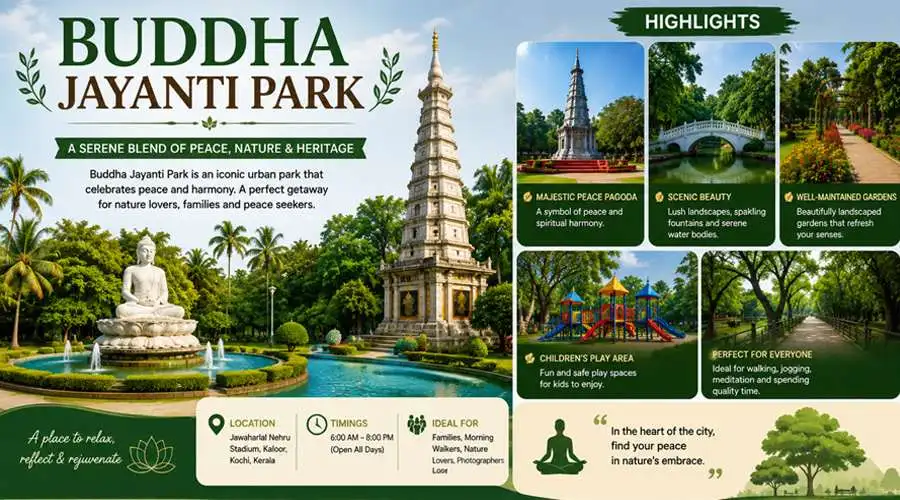
At the heart of the park stands a magnificent golden Buddha statue — serene, towering, and impossible to miss. The statue was gifted to India by the Government of Sri Lanka as a symbol of the shared Buddhist heritage between the two nations. It depicts the Buddha in a meditative posture, radiating a calm authority that draws visitors to sit quietly in its presence, even if only for a few minutes.
The statue is set within a beautifully landscaped area with low hedges, stone pathways, and benches positioned thoughtfully around it. Many visitors come specifically to photograph the statue during golden hour, when the light catches the metallic surface and transforms the setting into something almost otherworldly. Early mornings are equally stunning, when mist drifts through the surrounding trees and the statue emerges from the haze like a vision from an older, quieter world.
Why It Is Delhi’s Best Picnic Spot
The question is not just why Buddha Jayanti Park is a good picnic spot — the real question is why it consistently edges out the competition.
Sheer Size and Variety of Landscape: Unlike smaller neighbourhood parks, Buddha Jayanti Park’s 96 acres offer genuine diversity. There are open lawns ideal for spreading a picnic blanket, dense wooded paths for those who prefer a gentle walk under a canopy of trees, and quieter corners near water bodies that provide a completely different atmosphere. Families can choose a sunny clearing while couples might prefer a shaded bench along a winding trail.
Rich Flora and Fauna: The park sits on the Aravalli Ridge, one of Delhi’s last remaining natural forests. This ecological positioning means the biodiversity here is genuinely impressive. Over a hundred species of birds have been spotted within the park and surrounding ridge area, making it a favourite among birdwatchers. Peacocks are a common sight, often strutting across lawns quite unperturbed by visitors. The tree cover includes ancient ridge species like Dhak, Chamrod, and Khair, alongside ornamental plantings of bougainvillea and seasonal flowers.
Cleanliness and Maintenance: One of the perennial challenges with Delhi’s public parks is upkeep. Buddha Jayanti Park, managed by the New Delhi Municipal Council (NDMC), stands out for its relatively high standard of maintenance. The lawns are mowed regularly, pathways are cleared, and basic sanitation facilities are available for visitors. While it is not spotless by international standards, it is among the cleanest green public spaces in the capital.
No Commercial Noise: Unlike parks that have been converted into informal food courts or fairgrounds on weekends, Buddha Jayanti Park retains a dignified, low-commercial character. There are limited food stalls near the entry area, but the interior of the park is refreshingly free of hawkers, loudspeakers, and commercial distractions. This makes it genuinely conducive to relaxation.
Ideal for All Ages: Senior citizens find the flat walking paths easy to navigate. Children have open areas to run and play. Teenagers often bring books, sketchpads, or instruments. Young professionals treat it as a morning yoga and meditation spot. The park’s versatility across age groups is one of its defining strengths as a picnic destination.
Best Time to Visit
The ideal seasons to visit Buddha Jayanti Park are October through March, when Delhi’s weather is at its most forgiving. Winter mornings here are especially magical — the temperature is crisp, the air is clean, and the low golden sunlight filters through the ridge trees in long dramatic shafts. Spring, from February to mid-March, brings flowering trees and a burst of colour that makes the park look its most photogenic.
Summers (April to June) can be harsh but early mornings before 8 AM remain pleasant. The monsoon months (July to September) transform the park dramatically — the greenery deepens to a vivid emerald, the air smells of wet earth, and the ridge forest takes on a lush, almost tropical character. However, paths can become muddy and some sections waterlogged, so appropriate footwear is advisable.
Timings and Entry
The park is open from 5:00 AM to 7:30 PM throughout the year. Entry is free of charge, which makes it a genuinely accessible option for Delhi residents across economic backgrounds. There is no ticket counter, no queuing system, and no complicated rules — simply walk in, find your spot, and settle in.
Tips for the Perfect Picnic
- Carry your own food and water. While small snack stalls exist near the entrance, the options inside the park are minimal. Packing homemade food adds to the experience and helps keep the park clean.
- Bring a mat or rug. The grass is usually dry and clean, but a mat ensures comfort especially on longer visits.
- Arrive early on weekends. By mid-morning on Saturdays and Sundays, the popular open lawns can fill up. An early arrival guarantees the best spots.
- Carry binoculars if you enjoy birdwatching. The ridge area is a significant birding zone and early mornings between October and February offer the richest sightings.
- Avoid loud music and noise. The park has an unspoken but broadly respected culture of quiet enjoyment. Visitors who honour this find the experience far more rewarding.
A Space That Reflects What Delhi Can Be
Buddha Jayanti Park is more than a picnic spot. It is a reminder that Delhi, for all its noise and density, has preserved pockets of genuine natural beauty and civic grace. The decision to protect this ridge land, to dedicate it to the memory of a great teacher of peace, and to open it freely to all citizens is a quiet act of urban generosity that deserves far greater recognition.
In a city that rarely pauses, Buddha Jayanti Park invites you to do exactly that. Pack your basket, gather your people, and let the ridge do the rest.