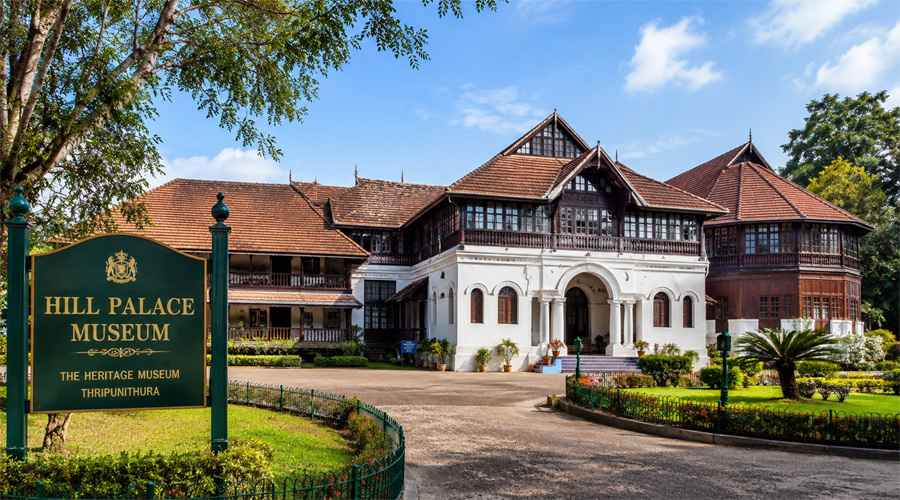
Nestled on a gentle hilltop in Tripunithura, just 12 kilometres east of Kochi, Hill Palace Museum stands as a living testament to the grandeur of the erstwhile Cochin royal family. Spread across a magnificent 52-acre estate with lush green gardens, it holds the proud distinction of being Kerala’s largest archaeological museum. Whether you are a history enthusiast, an art lover, or a curious traveller seeking to understand Kerala’s royal legacy, Hill Palace Museum offers a journey through centuries of culture, art, and aristocratic splendour unlike any other destination in the state.
A Royal Legacy Cast in Stone and Wood
The palace was originally constructed in 1865 as the official residence of the Cochin royal family — the Perumbadappu Swaroopam dynasty — who ruled the region under the suzerainty of the British Crown. The complex is not a single structure but an ensemble of 49 heritage buildings spread across the hillside, their architecture reflecting a distinctive blend of Kerala’s traditional wooden craftsmanship and colonial influences. The sloping tiled rooftops, carved wooden beams, and pillared verandas speak softly of a time when these corridors were walked by maharajas and dignitaries.
After Indian independence, the palace was taken over by the Archaeological Department of the Kerala government and transformed into a public museum in 1980. Since then, it has welcomed millions of visitors, preserving one of the most comprehensive collections of royal artefacts in South India.
What the Museum Holds: A Treasure Trove of Artefacts
The museum’s collection spans over 1,000 artefacts distributed across multiple galleries. Each section tells a different chapter of Kerala’s royal and cultural story.
Royal Portraits and Personal Belongings: One of the most captivating sections houses life-size portraits of the Cochin royal family members, dressed in the regal finery of their era. Personal belongings of the royals — including thrones, royal palanquins, ivory items, royal umbrellas (known as muthukuda), and ceremonial swords — are displayed with great care. These objects carry an intimate quality, bringing visitors face to face with the humanity behind the royalty.
Ancient Scriptures and Coins: The numismatic gallery is a historian’s delight, displaying coins from various ruling dynasties that once held sway over Kerala and neighbouring regions. Copper plates bearing royal edicts and ancient manuscripts written on palm leaves are preserved here, offering rare insights into the administrative and literary traditions of medieval Kerala.
Sculptures and Bronzes: A dedicated gallery showcases stone sculptures and bronze idols recovered from temples and archaeological sites across Kerala. Ranging from the 9th to the 18th centuries, these sculptures depict deities from the Hindu pantheon with extraordinary craftsmanship. The fluid lines of the bronze figures reflect the high artistic sensibility of Kerala’s artisans through the ages.
Paintings and Murals: The museum also houses a collection of traditional Kerala mural paintings and reproductions. These murals, once adorning the walls of temples and palaces, depict scenes from the Ramayana, Mahabharata, and Puranic lore in vivid earthy tones — ochre, indigo, green, and white — extracted from natural minerals and plant sources.
Royal Furniture and Imported Luxuries: Walk through galleries displaying European furniture, Belgian glassware, porcelain crockery, and ornate mirrors — luxuries imported by the Cochin royals during the colonial era. These items illuminate the cultural exchange that occurred at the intersection of Kerala’s maritime trade and colonial presence.
The Deer Park and Prehistoric Section
Beyond the main museum buildings, the sprawling estate harbours a charming deer park where spotted deer roam freely, making it a particularly delightful experience for families with children. The park adds a living, breathing dimension to what could otherwise be a purely indoor museum experience.
A separate prehistoric section within the museum grounds displays archaeological finds from megalithic sites across Kerala — burial urns, iron tools, terracotta pottery, and skeletal remains excavated from cairn circles and dolmens. This section pulls the story of human civilisation in Kerala back thousands of years, long before the age of kingdoms and palaces.
The Palace Gardens: Serenity in Every Step
Walking through the Hill Palace grounds is itself a meditative experience. The 52-acre estate is meticulously landscaped, with flowering trees, ornamental gardens, and shaded walkways connecting the various museum buildings. The elevated location means that portions of the estate offer sweeping views of the surrounding Tripunithura townscape. The blend of nature and heritage creates an atmosphere where time seems to slow — a rare and welcome quality in the frenetic pace of modern travel.
Special Exhibitions and Cultural Importance
The museum regularly hosts temporary exhibitions showcasing specific themes — traditional Kerala jewellery, textile history, or weapons of the medieval era — enriching the experience for repeat visitors. It also plays an important role in academic research, with scholars from universities and research institutions regularly consulting its archives of manuscripts and historical records.
For students of art, history, and archaeology, Hill Palace is as much a resource centre as it is a tourist destination. Schools and colleges frequently organise educational visits, making the museum an integral part of cultural education in the Kochi region.
Practical Information for Visitors
Location: Tripunithura, Ernakulam District, Kerala – approximately 12 km from Kochi city centre.
Timings: The museum is open from Tuesday to Sunday, 9:00 AM to 5:00 PM. It remains closed on Mondays and national holidays.
Entry Fee: Nominal entry fees apply for Indian adults, children, and foreign nationals, with concessions available for students and senior citizens. A separate ticket is required for the deer park and the prehistoric section.
How to Reach: Tripunithura is well connected by road and rail. The nearest railway station is Tripunithura (also called Kundannoor), and frequent KSRTC buses and auto-rickshaws are available from Ernakulam (Kochi). For those driving, the palace has parking facilities within the compound.
Best Time to Visit: October to March, when Kerala’s climate is cooler and more pleasant, is the ideal period to explore the outdoor gardens and park areas comfortably.
Why Hill Palace Museum Deserves a Place on Your Kerala Itinerary
Most travellers to Kochi prioritise Fort Kochi’s colonial charm or the backwaters of Alleppey. Hill Palace Museum, however, offers something neither of those destinations can — a deeply personal encounter with Kerala’s indigenous royal heritage, preserved in its original architectural setting. Unlike heritage displays in modern museums, the very buildings of Hill Palace are themselves artefacts. The palace does not merely display history; it inhabits it.
For those who wish to understand Kerala beyond its scenic postcards, Hill Palace Museum is an indispensable stop. It is a place where ivory thrones and bronze deities, palm-leaf manuscripts and ancient coins, combine to narrate a story that spans millennia — a story that is, at its heart, Kerala’s own.
A visit to Hill Palace is not simply a trip to a museum. It is a conversation with the past, conducted in the quiet language of objects that once belonged to kings.
Hill Palace Museum, Tripunithura, Ernakulam, Kerala – Open Tuesday to Sunday, 9:00 AM to 5:00 PM.