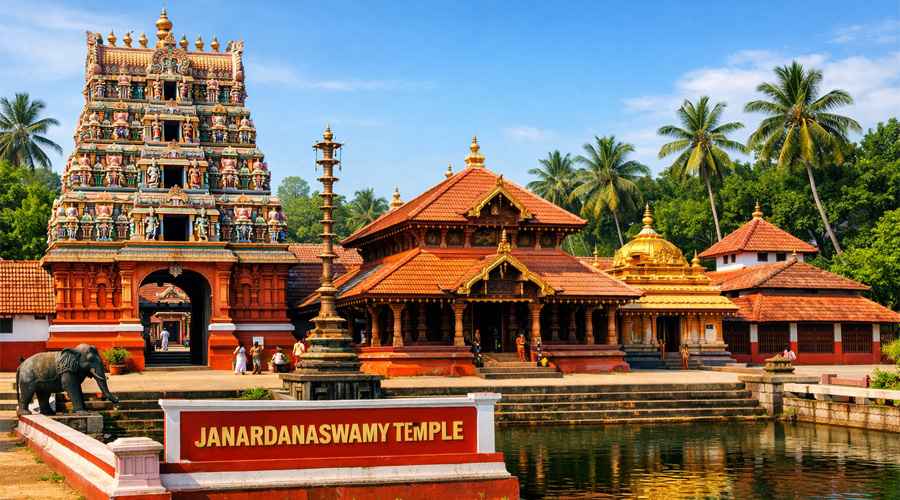
Nestled along the dramatic cliffs and golden sands of Kerala’s Arabian Sea coast, the Janardanaswamy Temple in Varkala is far more than a place of worship — it’s a timeless portal to India’s spiritual heart, architectural splendor, and cultural heritage. Drawing pilgrims, history buffs, and curious travellers alike, this ancient shrine offers a deeply immersive experience that transcends the ordinary. From divine legends and sacred rituals to architectural beauty and coastal serenity, here’s why this temple deserves a spot on every traveller’s bucket list.
A Temple Steeped in Myth and Legend
The Janardanaswamy Temple is believed to be over 2,000 years old, making it one of Kerala’s most venerable spiritual centres. Its origins are shrouded in legend — tradition says that the main idol of Lord Vishnu, in the form of Janardana (also known locally as Varkaleswara), was discovered in the sea by a Pandya king who rebuilt the temple after a divine dream directed him to its sacred presence.
This celestial connection isn’t just a story; it lies at the heart of the temple’s enduring charm. The very site is considered divinely chosen, and centuries of storytelling have woven the temple into the cultural consciousness of devotees across South India. For many visitors, experiencing this sense of living myth — where narrative and devotion meld — is one of the most compelling reasons to visit.
A Spiritual Epicentre of Ancestral Blessings
What truly sets the Janardanaswamy Temple apart is its profound spiritual purpose. Varkala has earned the titles “Dakshina Kashi” (Southern Kashi) and “Gaya of the South” because of the temple’s association with pitrkarma — ancestral rites performed for the peace and liberation of departed souls. Pilgrims come from far and wide to perform these sacred rites, believing that the divine energy here helps bring peace to ancestors and wash away karmic burdens.
In Hindu tradition, the concept of Pitru Moksha — liberation of ancestors — is deeply meaningful, and the rituals here are conducted with great reverence. Many visitors combine their temple visit with a holy dip at Papanasam Beach, the sacred shore just below the temple. Devotees hold that these waters can cleanse sins and soothe the soul, an act that turns a simple pilgrimage into a transformational journey.
Architectural Beauty and Historical Narrative
The architectural style of the Janardanaswamy Temple is a stunning blend of Kerala and ancient Pandya artistry, honored for its simplicity, balance, and serene elegance. The circular sanctum sanctorum — topped with a conical copper sheet roof — evokes a sense of harmony and grounded spirituality. Wooden carvings, especially the Navagrahas (nine planetary deities) on the mandapa ceiling, showcase the intricacy and craftsmanship of regional temple artisanship.
One of its most famous features is the ancient bell donated by a Dutch ship captain, whose vessel was reputedly stuck until he tied the bell to the temple — a blend of history, legend, and local lore that fascinates visitors of all backgrounds.
While the temple’s core structure is rooted in antiquity, historical inscriptions indicate renovations and additions over centuries, including work during the reign of Kerala’s legendary ruler Umayamma Rani in the late 17th century.
Festivals That Stir the Soul
Visiting during a festival brings the Janardanaswamy Temple to life in a way that transcends everyday experience. Chief among these celebrations is the ten-day Arattu Festival, held annually in the Malayalam month of Meenam (March–April). It begins with a flag-hoisting ceremony and culminates in a grand procession and arattu (holy bath of the deity) in the Arabian Sea behind the temple.
The streets of Varkala fill with colour, music, and the rhythmic beat of traditional art forms. Elaborate Kathakali performances, elephant processions adorned with vibrant ornaments, and devotional chants create a swirl of culture, devotion, and spectacle that is nothing short of unforgettable.
In addition to Arattu, other holy observances such as Ashtami Rohini (Lord Krishna’s birthday), Rama Navami, Vaikuntha Ekadashi, and Karkidaka Vavu enhance the temple’s spiritual calendar, offering many reasons to time your visit for deeper cultural immersion.
An Ambience of Peaceful Reflection
Even outside festival times, the temple exudes an aura of calm and depth. Gentle chants, the scent of incense, and the slow rhythm of temple bells create a meditative environment that draws visitors into introspection. It’s common to see devotees performing pradakshina (circumambulation) or quietly contemplating near the temple pond, while the backdrop of the Arabian Sea enhances the sense of spiritual spaciousness.
For travellers seeking inner peace rather than traditional tourism, the Janardanaswamy Temple offers a rare blend of sacred stillness and contemplative beauty — a place where the everyday world fades and a sense of timeless presence fills the spirit.
Cultural and Community Hub
Beyond its religious role, the temple stands as a cultural anchor for the community. Traditional art forms such as Kathakali and Carnatic music are often featured during celebrations, preserving and showcasing Kerala’s rich artistic heritage. In a region where culture and devotion are intertwined, the temple serves as a hub for rituals, festivals, and shared community identity.
Even non-pilgrims find themselves drawn into this cultural tapestry — the rhythm of daily life here is informed by centuries of tradition, hospitality, and a shared sense of belonging.
Proximity to Other Attractions Makes it Perfect for Travel
Located near some of Varkala’s most iconic attractions, the Janardanaswamy Temple is easy to combine with other experiences. A short walk leads down to Papanasam Beach for sunset views and sacred dips. Nearby cliffs offer panoramic views of the Arabian Sea, dotted with cafés, artisan shops, and quiet spots to watch the sun melt into the horizon.
The town itself, known for its relaxed coastal vibe and rich culinary scene, invites you to explore beyond the temple complex — from Ayurvedic treatment centres to backwater boat rides through lush canals and springs. Whether you’re a spiritual seeker, cultural enthusiast, or nature lover, there’s a blend of experiences waiting nearby.
Making the Most of Your Visit
Best Time to Visit:
While the temple welcomes visitors year-round, many pilgrims and tourists choose festive seasons like Arattu or Karkidaka Vavu for a richer cultural experience. Kerala’s cooler months (November–February) also provide pleasant weather for sightseeing.
Dress and Etiquette:
Respectful dress is encouraged — traditional attire such as dhoti for men and saree or salwar kameez for women is appreciated during temple visits. Modesty and reverence enhance the experience for everyone.
Accessibility:
Varkala is well connected by road and rail, with Varkala Sivagiri Railway Station only a short distance away. The nearest major airport is Trivandrum International Airport.
Conclusion: A Spiritual Must-Visit with Timeless Allure
The Janardanaswamy Temple in Varkala, Kerala is not just an ancient shrine; it is a living, breathing testament to India’s cultural depth, spiritual diversity, and architectural elegance. Whether you come seeking divine blessings, cultural celebration, or tranquil reflection, the temple offers a profound way to connect — with history, with community, and with something larger than yourself.
From its sacred rituals and legendary origins to its vibrant festivals and serene surroundings, this temple encapsulates the soul of Varkala — a coastal town where spirituality meets sea breeze, and tradition meets timeless beauty.