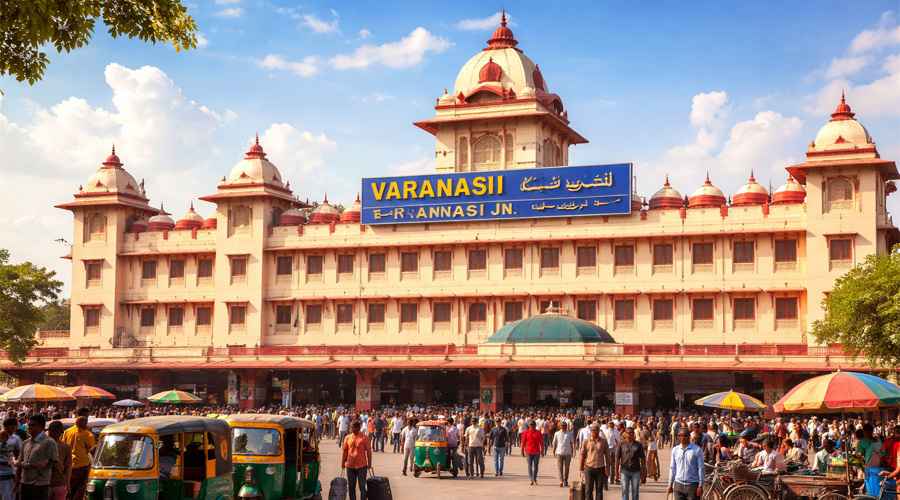
Varanasi Junction railway station (station code BSB) stands not merely as a transit point on the Indian Railways map — it represents a vibrant junction of history, culture, connectivity, and modern infrastructure. Serving the ancient city of Varanasi in Uttar Pradesh, India, this station is a lifeline for pilgrims, tourists, daily commuters, and freight movement alike. With over 400,000 passengers daily and hundreds of trains arriving and departing every 24 hours, it ranks among India’s busiest railway stations.
Historical Roots: From Colonial Tracks to Modern Rails
The story of the Varanasi Junction dates back to the 19th century when railway connectivity was rapidly expanding under British rule. The earliest rail line serving the holy city was constructed from Howrah (Kolkata) in 1862, guided by the East Indian Railway Company and engineered by George Turnbull. This strategic route opened a vital connection between eastern India and the Gangetic heartland.
In 1872, the railway extended lines towards Lucknow, further integrating Varanasi into northern India’s burgeoning rail network. The pivotal Malviya Bridge (formerly Dufferin Bridge) was completed in 1887, spanning the Ganges and linking rail systems on both riverbanks. This engineering feat connected the Oudh and Rohilkhand Railway with the East Indian Railway — facilitating seamless rail movement across regions.
Over time, the station evolved from a colonial outpost to a central junction that connects multiple major rail lines — including those to Lucknow, Rae Bareli, Sultanpur, Chhapra, Prayagraj, and Pandit Deen Dayal Upadhyaya Junction — making it a crossroads of north, east, and central India.
Strategic Importance and Connectivity
Varanasi Junction occupies a strategic geographic location, linking key rail corridors in India’s transport matrix. It serves as the main hub for Varanasi district and the wider region, handling hundreds of routes daily and linking to major cities like Delhi, Kolkata, Lucknow, Patna, and Chennai.
The station serves both passenger and freight traffic, playing a vital role in regional trade and economic activity. Freight lines from this junction support the movement of goods ranging from agricultural produce to industrial materials, cementing its status as a commercial artery for eastern Uttar Pradesh and beyond.
In addition to long-distance trains, the station supports numerous intercity and local connections, enabling daily commutes for students, professionals, and pilgrims. Its central location near the cantonment and Chetganj regions of Varanasi makes it easily accessible from all parts of the city.
Architecture and Station Layout
Varanasi Junction bridges practicality with cultural ambiance. Though primarily functional in design, its vast concourses, platforms, and waiting areas are often adorned with murals and design elements that echo the spiritual heritage of Varanasi — reflecting the city’s identity as a global pilgrimage site.
Platform and Track Infrastructure
- The station currently operates 11 numbered platforms and 1A (with additional platforms under construction), accommodating more than 300 trains per day.
- Tracks are electrified, enabling efficient operation of modern diesel and electric locomotives.
- Advanced Route Interlock System and modern signaling infrastructure ensure safe and reliable train movement across multitudes of arriving and departing services.
Despite its size, some passengers find platform arrangements and signage complex, especially when platforms like 11 and 12 are situated near platform 5, rather than in a sequential order — a quirk that often surprises even regular travelers.
Amenities and Passenger Facilities
Varanasi Junction offers a wide range of passenger facilities — balancing essentials with modern upgrades:
Basic and Essential Services
- Clean waiting halls and seating areas.
- Separate toilets and refreshment facilities on platforms and concourse.
- Cloakrooms, book stalls, and drinking water points.
- Digital display boards with real-time train status.
- Prepaid taxi booths, auto stands, and easily accessible entry/exit zones.
Enhanced and Accessibility Features
- Escalators and lifts assist passengers, particularly useful during peak hours and for those with mobility challenges.
- AC lounges provide comfort for reserved passengers.
- Wi-Fi coverage and digital announcements cater to information needs.
- Provisions for multilingual public announcements are planned to serve India’s diverse traveller base.
Safety & Security Enhancements
In early 2026, a new advanced CCTV control room was inaugurated, expanding surveillance coverage across platforms and yard areas. The system now processes live feeds from 186 cameras, enhancing overall station safety.
Modernization and Future Plans
Varanasi Junction is part of Indian Railways’ broader initiative to upgrade key stations into world-class transport hubs, aligning with the needs of future passenger volumes and regional growth.
Under redevelopment programs included in national railway plans:
- Renovation of station buildings and circulation areas is underway.
- New amenities such as modular catering kiosks, LED lighting, and stainless-steel seating are being installed.
- Expansion projects include yard remodeling, extension of platforms, and improved approach roads.
- Solar panels are already installed on rooftops, generating renewable energy — with plans to expand capacity further.
These upgrades not only elevate passenger experience but also support sustainability goals and operational efficiency for the station in the decades to come.
Trains and Services: Connecting the Sacred to the Nation
Varanasi Junction sees a mix of regular, premium, and regional express trains that connect it to destinations across India:
Premium Services
- Vande Bharat Express routes from Varanasi to New Delhi offer fast, modern rail travel with onboard amenities like Wi-Fi and automatic doors.
- Varanasi–Deoghar Vande Bharat Express connects Uttar Pradesh, Bihar and Jharkhand with premium service.
- Other premium expresses like Rajdhani Express and Mahamana Express also operate from this station.
Regular and Long-Distance Trains
Notable trains connecting Varanasi include:
- Kashi Vishwanath Express to New Delhi.
- Shiv Ganga Express and other long-haul connections stretching across the Indian rail grid.
Beyond scheduled services, Indian Railways frequently introduces special trains during peak seasons and festivals to handle the surge in pilgrim and tourist traffic.
Cultural and Economic Impact
Serving as a pivotal transport hub, Varanasi Junction significantly impacts:
- Religious tourism: Millions visit Varanasi for spiritual reasons, and the rail station is often their first welcome to the ancient city.
- Local economy: Surrounding businesses — from hotels and eateries to transport services — thrive on the daily flow of passengers.
- Regional connectivity: It connects rural and urban regions, bridging diverse cultures and economies across states.
Conclusion: More Than Just a Station
Varanasi Junction railway station has grown from a colonial rail node into a nationally significant transport hub — blending heritage with modernity. Whether it’s the pilgrim arriving for spiritual solace, the student heading to university, the business professional commuting across states, or the visitor arriving to experience the mystic ghats of the Ganges, this station remains a vital crossroads in India’s rail story.
A journey through Varanasi Junction isn’t merely a transit experience — it’s a passage into one of India’s oldest, most spiritually resonant cities, showcasing the power of railways to connect hearts, cultures, and lives across time.