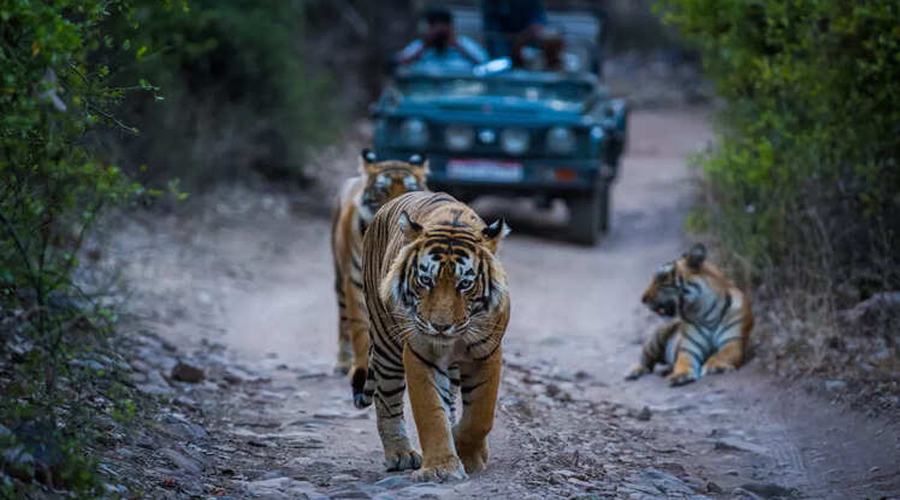
Watching a Royal Bengal tiger appear from the undergrowth is one of travel’s most thrilling wildlife encounters — and India is where most of those encounters still happen. Below is a carefully chosen list of the top 10 tiger safaris in India, with what makes each special, the best time to visit, and a quick tip to help you maximize your chances of a sighting.
1. Ranthambore National Park (Rajasthan)
Ranthambore is the poster child of tiger tourism in India — famous for large, photogenic tigers that roam relatively openly among ruins, lakes and granite outcrops. Because of its accessibility from Jaipur and Delhi and the park’s history of high tiger visibility, Ranthambore remains a top pick for first-time tiger chasers. Expect dramatic sightings near waterholes and around the old fort walls.
- Best time: October–April.
- Tip: Book Zone 3 or 4 safaris early; these zones are known for regular tiger activity.
2. Bandhavgarh Tiger Reserve (Madhya Pradesh)
Bandhavgarh has one of the highest tiger densities in India — meaning that probability is in your favour. The reserve’s soft, deciduous forests and open meadows make tiger spotting easier, and many famous individual tigers have been photographed here. Safaris in Bandhavgarh often produce prolonged, close encounters.
- Best time: November–June.
- Tip: The Tala zone is the most sought-after for tiger sightings; secure permits well in advance.
3. Kanha National Park (Madhya Pradesh)
Kanha’s varied landscape of grassy meadows and sal forest is not only beautiful — it’s tiger habitat at its finest. The park’s management and buffer-zone conservation have helped recover populations and increase sightings. Kanha is also a great place to see other central-Indian wildlife like barasingha (swamp deer).
- Best time: October–June.
- Tip: Book morning and late-afternoon safaris; the light is perfect and animals are active.
4. Tadoba Andhari Tiger Reserve (Maharashtra)
Tadoba is Maharashtra’s premier tiger reserve and is prized for dry-season visibility when tigers congregate around shrinking water sources. The reserve’s open teak forests and clear sightlines make it one of the most reliable places in India to see tigers at close range.
- Best time: February–June (dry season best).
- Tip: Stay in a lodge near the Moharli or Kolara zones for faster access to sightings.
5. Jim Corbett National Park (Uttarakhand)
India’s first national park and a founding site of Project Tiger, Corbett mixes riverine habitat, hills and grasslands. Its long conservation history and large area mean a robust tiger population and varied safari experiences — from jeep safaris to nature walks. Corbett is also one of the most accessible tiger parks from Delhi.
Corbett National Park
- Best time: November–June.
- Tip: Dhela and Jhirna zones are often recommended for tiger activity.
6. Pench National Park (Madhya Pradesh / Maharashtra)
Pench, the inspiration for many of Rudyard Kipling’s jungle stories, features open landscapes that make animal spotting straightforward. Its relatively small core area concentrates wildlife, and visitors often see both tigers and their prey species in the same outings.
Big Cats India
- Best time: October–June.
- Tip: Pench’s mixed zones offer good birdlife too — pair your tiger mornings with birdwatching in the buffer areas.
7. Panna National Park (Madhya Pradesh)
After a successful conservation turnaround following local declines, Panna now offers reliable sightings and excellent jeep safaris. The park’s rivers and waterfalls add scenic variety, and it’s increasingly popular with photographers looking for less crowded tiger experiences.
- Best time: October–May.
- Tip: Combine a safari with a visit to nearby Ken Gharial Sanctuary to see crocodiles and river birds.
8. Satpura Tiger Reserve (Madhya Pradesh)
Satpura’s rugged terrain and less-touristed trails make it a favorite for travelers who want solitude and a wilder-feeling safari. Sightings here can be exceptional because the forest structure forces animals into clearings and river valleys where they’re easier to spot. If you want a more intimate, low-volume safari, Satpura is a strong choice.
- Best time: October–May.
- Tip: Consider a walking safari (where permitted) — it’s a very different way to experience tiger country.
9. Nagarahole / Bandipur / Kabini (Karnataka)
This group in southern India (Nagarahole and Bandipur are often visited together, with Kabini on the backwaters of the Kabini reservoir) offers excellent tiger and elephant sightings, set in the lush Western Ghats fringes. Karnataka’s tiger reserves have received new anti-poaching investments and are comfortable, scenic safari destinations.
- Best time: October–May.
- Tip: Kabini’s boat-and-jeep combinations give you two very different views of wildlife.
10. Sundarbans National Park (West Bengal) — the boat safari
Sundarbans is unlike any other tiger reserve: a vast mangrove delta where tigers are sometimes sighted from boats. Tigers here are uniquely adapted to tidal, forested islands; sightings are rarer but unforgettable. The Sundarbans is a specialist safari — bring patience and a guide familiar with local channels and tiger behaviour.
- Best time: November–February.
- Tip: Use an experienced local operator; safety, tides and seasonality matter here more than in other parks.
Practical tips for a successful tiger safari
- Book early: Popular zones and lodges fill months ahead — secure permits and vehicles early.
- Go with good guides and trackers: Local trackers vastly increase sighting odds.
- Choose the dry season: Visibility improves when grass is low and animals cluster at water. (Generally November–June across most parks.)
- Be patient and respectful: Keep noise low, follow vehicle rules, and allow tigers space — ethical viewing keeps reserves open.
- Carry binoculars and a telephoto lens: Even when tigers are seen at distance, optics make the experience memorable.
India’s tiger safaris range from the dramatic fort-fronted views of Ranthambore to the mangrove boat journeys of the Sundarbans. Each reserve has a distinct character — and a different kind of chance to see a tiger. If you’re planning a trip, pick a park that matches your priorities (high sighting probability, landscape type, accessibility or solitude), plan for the dry season, and book a trusted guide. With luck and good timing, you’ll catch that heart-stopping moment when a tiger steps into the light.