Nestled in the quiet suburb of Madambakkam on the southern outskirts of Chennai, the Sri Dhenupureeswarar Temple stands as a magnificent testament to South India’s rich Chola heritage, spiritual legends, and enduring religious traditions. Over 1,000 years old, this ancient temple dedicated to Lord Shiva represents not just a place of worship but also a bridge to a remarkable continuum of history, architecture, and devotion in Tamil Nadu.
Historical Significance
The origins of the Sri Dhenupureeswarar Temple trace back to the 10th century CE, constructed during the reign of Parantaka Chola II—also known as Sundara Chola (circa 956–973 CE), the father of the illustrious Raja Raja Chola I, builder of the famed Brihadeeswarar Temple in Thanjavur.
What makes this temple particularly fascinating is its Dravidian architectural style and historical layers that reflect the evolving artistry of South Indian temple design. The temple’s garbhagriha (sanctum sanctorum) is built in a rare apsidal shape (gajapristha vimana)—resembling the back of a sleeping elephant—a feature seen in only a few Chola-period structures in and around Chennai.
During the reign of Kulothunga Chola I, the temple was consolidated in stone, enhancing its durability and grandeur. Inscriptions and sculptures from later Vijayanagara periods further enrich its historical narrative, showcasing contributions from successive rulers and patronage that expanded its cultural footprint.
Legend and Mythology
The sacred lore of Sri Dhenupureeswarar Temple is deeply rooted in devotion, penance, and redemption. According to the temple’s sthala purana (local legend), a revered sage named Kapila sought moksha (liberation) through intense worship of Lord Shiva. However, a ritual mistake—holding the Shiva lingam in his left hand while offering milk—incurred a sin that denied him liberation.
Reborn as a cow, Kapila continued his devotion by daily pouring milk over a buried Shiva lingam hidden beneath the earth. A cowherd once punished the cow for wasting precious milk, causing it to kick the earth in pain. At that moment the buried Shiva Linga was unearthed, revealing a swayambhu (self-manifested) Lingam that bore a scar from the cow’s hoof, still visible today. Shiva appeared and granted Kapila moksha for his devotion, forgiving the cowherd as well. The deity here—Dhenupureeswarar—derives his name from dhenu (cow), signifying the divine bovine connection.
Architecture and Artistic Marvels
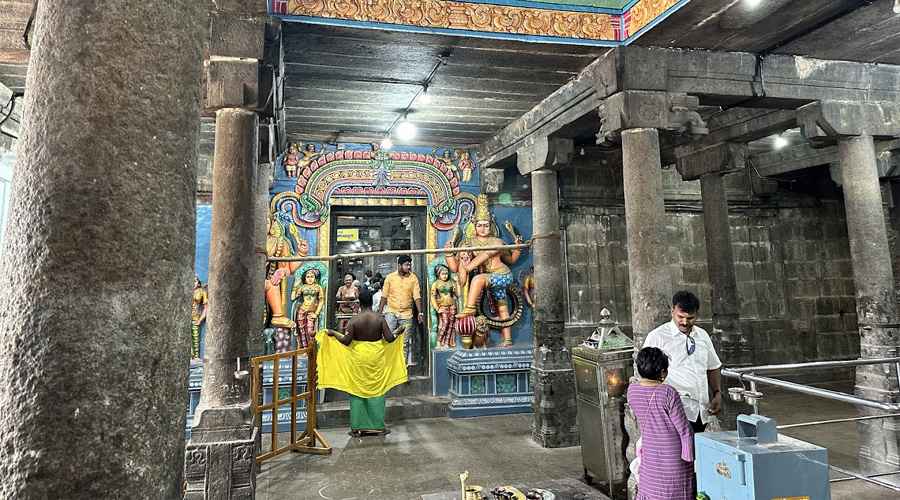
The temple’s architectural design is a treasure trove for enthusiasts of South Indian temples art. Its apsidal sanctum is a standout feature, harking back to earlier temple constructions that blended Vedic symbolism with architectural ingenuity. Intricate pillared mandapams, decorated with fine carvings depicting various forms of Shiva and other deities, speak volumes about the artistic excellence of the artisans who served the Chola dynasty.
Within the temple complex, you’ll find shrines not only to Lord Dhenupureeswarar (facing east) but also to his consort Goddess Dhenukambal and other subsidiary deities. The site also houses representations of Murugan, Sarabeswara, Dakshinamurthy, Durga, and other important figures in the Shaivite pantheon.
The temple’s sculptures—including scenes of Shiva-Parvati’s divine union and rare iconographic depictions like Uchchishta Ganapati—are significant for both their artistic detail and religious importance. These carvings preserve the nuances of medieval iconography and narrate stories of mythic proportions carved in stone.
Religious Practices and Festivals
Devotees throng the Sri Dhenupureeswarar Temple throughout the year, drawn by its spiritual ambiance and religious events. Traditional Agamic Shaivite rituals guide daily worship, with abhishekam performed several times a day. A notable observance is the special puja to Lord Sarabeswarar on Sunday evenings, particularly during Rahu Kalam, which draws devotees seeking relief from astrological afflictions.
Annual festivals like Pradosha, Panguni Uthiram, and Navaratri are celebrated with grandeur. During Panguni Uthiram, the temple often hosts vibrant processions, community gatherings, and devotional music, honoring the divine union of Shiva and Parvati and reinforcing communal bonds.
A celestial phenomenon called Bhaskara Abhishekam also occurs annually around April 20–22, when the early morning sun’s rays fall directly on the Kapila Naathar Lingam. Devotees regard this celestial alignment as especially auspicious, and many perform special abhishekam with milk and tender coconut water, believing it can bless worshippers with improved vision and spiritual merit.
Heritage Preservation and Cultural Importance
Recognized by the Archaeological Survey of India (ASI) as a monument of national importance, the temple is under protective conservation. Restoration efforts have been undertaken to preserve its structural integrity, ensuring that this ancient marvel remains intact for future generations. These conservation measures have also restricted construction in the temple’s immediate vicinity, safeguarding it against urban encroachments.
Beyond its religious role, Sri Dhenupureeswarar Temple continues to be a focal point for community life in Madambakkam. Its sprawling temple tank (theertham), sacred trees, and tranquil surroundings serve as an oasis of calm amid Chennai’s expanding urban sprawl. Residents and visitors alike frequent the temple not just for worship but also for cultural connection, historical curiosity, and spiritual reflection.
Conclusion
The Sri Dhenupureeswarar Temple in Madambakkam is far more than an ancient structure—it is a living chronicle of devotional fervor, architectural brilliance, and enduring cultural heritage. Each pillar, legend, and ritual reflects a narrative woven across centuries, bringing together the profound spirituality and artistic legacy of Tamil Nadu’s temple tradition. Whether you’re a history enthusiast, spiritual seeker, or cultural traveler, a visit to this temple promises an enriching exploration of India’s sacred past and vibrant present.