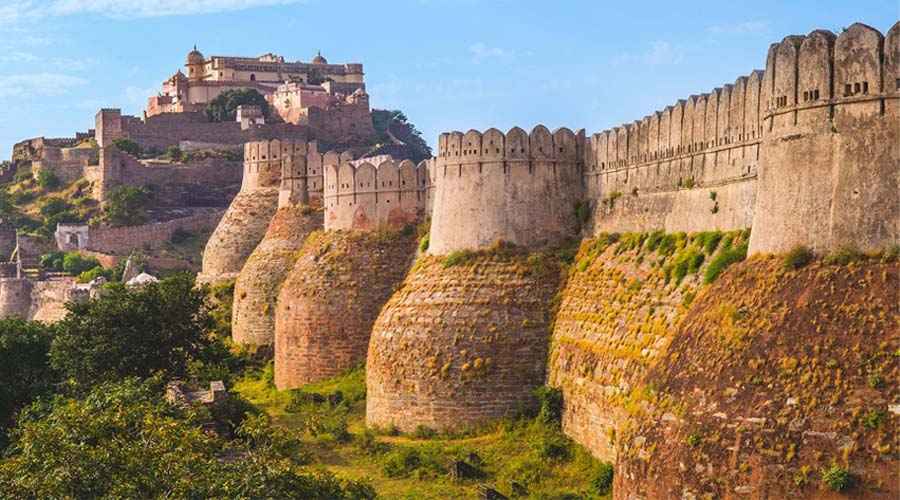
Kumbhalgarh Fort stands as one of the most magnificent and historically significant hill forts in India, located in Rajasthan’s Rajsamand district. Built during the 15th century under the reign of Rana Kumbha, this fort is not only an architectural marvel but also a symbol of Rajput valor, spirituality, and political resilience. Spanning an impressive 36 kilometers of fortified walls, second only to the Great Wall of China, Kumbhalgarh Fort offers visitors a journey into the rich heritage of the Mewar kingdom through its monumental walls, sacred temples, and historic citadels.
The Imperial Walls: A Marvel of Defense and Engineering
Kumbhalgarh Fort is renowned for its enormous defensive walls that snake across the Aravalli hills. These walls stretch more than 36 kilometers, making them one of the longest continuous fortifications in the world. About 15 feet wide and fortified with 700 battlements and seven gateway entrances, the walls were designed to be virtually impregnable. Constructed using stone and lime mortar, they blend harmoniously with the natural terrain, utilizing the steep hills and rugged landscape as natural defense. This strategic location atop the hills allowed ample sightlines for defenders to monitor approaching enemies and safeguard the fort’s inhabitants. Notably, the fort withstood multiple sieges by formidable armies such as those of the Delhi Sultanate and the Mughal Empire due to the strength of these defenses.
The fort was conceived as a refuge of great security, where the rulers of Mewar, including their families, could retreat during times of conflict. Its thick forest surroundings and steep access paths added layers of natural protection. The wall was not just a military barrier but also a lifeline for the fertile lands within, encircling 360 temples and residences — a testament to the thriving community it guarded.
Temples: Spiritual Anchors Within the Fortress
One of the defining features that sets Kumbhalgarh Fort apart is the presence of many beautiful temples within its walls, making it a spiritual sanctuary as well as a military stronghold. The presence of these temples underscores the deep religious faith of the Rajput rulers who saw the fort both as a seat of power and a sacred space.
Among the most prominent temples is the Neelkanth Mahadev Temple dedicated to Lord Shiva, revered for its architectural elegance and spiritual significance. The Trikuta Temple, dedicated to the Hindu trinity of Brahma, Vishnu, and Shiva, stands out with its intricate stone carvings and towering shikharas (spires). These temples served not only as places for worship but also as symbols of divine protection believed to shield the fort and its residents during tumultuous times.
Within the fort complex, smaller shrines and temples are abundant, representing various deities important to the Rajput clans and local communities. The Banmata temple once inside the fort was considered protectress, though it was destroyed during invasions. The religious architecture within Kumbhalgarh blends honor to spiritual traditions with the practicality of allowing soldiers and residents to maintain their faith even during siege or exile.
Historic Wonders and Legacy
Kumbhalgarh Fort holds a distinguished place in Indian history beyond its defensive might and religious significance. It was the birthplace of Maharana Pratap, one of Rajput’s most celebrated warriors, who is legendary for his fierce resistance against Mughal Emperor Akbar. Using Kumbhalgarh as a refuge, Maharana Pratap continued his campaigns to protect his kingdom and uphold Rajput pride and independence. This legacy makes the fort an emblem of courage and patriotism for the people of Rajasthan and beyond.
The fort also played a political role by safeguarding the ruling family during power struggles and external threats. A notable historical episode involved the young prince Udai Singh, who was protected here by his loyal nursemaid Panna Dhai, who sacrificed her own child to save him — a story highlighting the human aspect of the fort’s history. The architecture also includes palaces such as the Kumbha Palace and Badal Mahal, which served residential and administrative functions amid the harsh martial environment.
Architectural Splendor and Strategic Design
Designed by the famed architect Mandan, who served Rana Kumbha, the fort’s construction displays a blend of military prowess and artistic brilliance. Mandan was a scholar of Vastukala (the ancient Indian science of architecture), and his expertise is evident in how the fort was integrated with the hills, forming a natural yet formidable fortress.
The fort’s layout includes cleverly positioned bastions, watchtowers, underground passages, and water reservoirs ensuring it could sustain extended sieges. Its elevation on a 1,000-meter-high ridge adds to its defense, making direct attacks extremely difficult for invading armies. The seven gates of the fort, called ‘pols’, were heavily fortified with defensive mechanisms, each serving as a line of resistance. This comprehensive design ensured that the fort remained unconquered for centuries except for a brief siege by Mughal forces, further cementing its reputation as an impregnable citadel.
Visiting Kumbhalgarh Fort Today
Today, Kumbhalgarh Fort is a UNESCO World Heritage Site and an essential stop on Rajasthan’s historical tourism circuit. Visitors can wander its immense walls, explore ancient temples, and admire centuries-old palaces. The fort offers breathtaking panoramic views of the Aravalli hills and the surrounding wilderness. Guided tours and informational plaques allow tourists to delve into the rich stories of valor, spirituality, and architecture.
The fort also hosts the Kumbhalgarh Festival, a vibrant celebration showcasing Rajasthani folk art, dance, and music set against the backdrop of the illuminated fort walls, connecting modern visitors with the cultural heritage of the Mewar kingdom.
In Conclusion
Kumbhalgarh Fort is not just a military fortress, but a living symbol of the Rajput spirit encompassing devotion, defense, art, and history. Its towering walls and sacred temples invite awe and reflection, making it a must-visit historic wonder in India’s cultural landscape. Exploring it provides a profound appreciation of the foresight, skill, and resilience that shaped this extraordinary fortress that stood the test of time.
